 English
  Български
  简体中文(中国)




Show map events
Saturday 14 November 2026
09 November 2026 - 15 November 2026
October 2026

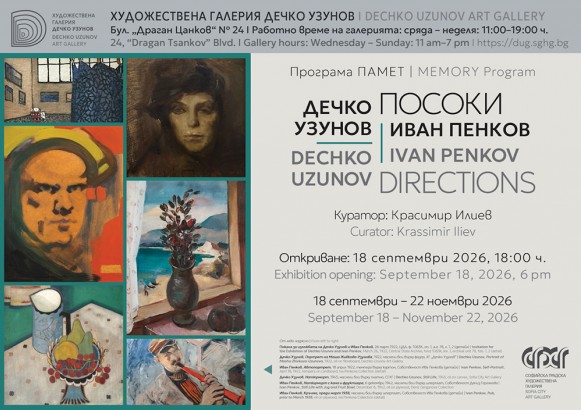 18.09.2026 - 22.11.2026
DECHKO UZUNOV/IVAN PENKOV – DIRECTIONS
Memory Programme
DECHKO UZUNOV/IVAN PENKOV – DIRECTIONS
Opening: September 18, 6:00 p.m.
The exhibition Dechko Uzunov/Ivan Penkov: Directions is part of the Memory Programme at the Dechko Uzunov Art Gallery, a branch of the Sofia City Art Gallery, which aims to contribute to raising awareness of the life and work of Dechko Uzunov by presenting research-based exhibitions that reveal different aspects of his oeuvre through artists who were part of his journey. This exhibition showcases the different paths taken by two fellow townsmen and friends during the interwar period.
In 1919, Ivan Penkov and Dechko Uzunov enrolled at the State School of Drawing; that same year, Uzunov painted a portrait of his friend that poked fun at his fascination with folk art. Three years later, the two organised a joint exhibition in Sofia to fund their studies at the Munich Art Academy. The young artists’ exhibition was noticed by Joseph Herbst, who wrote:
“Now, on the occasion of their departure abroad, the two artists had exhibited most of their works, from which their strong talents could be seen quite well. Dechko Uzunov promises to develop most in portrait painting. [...] Ivan Penkov is primarily a decorator with a strong sense of composition and a keen sensitivity to line” (J.H., Razvigor, April 1, 1922, no. 60, p. 4).
In an ironic twist of fate, the older of the two, Penkov, would go on to graduate from the Academy of Art under Prof. Uzunov. In 1939, with Uzonov’s active support, Ivan Penkov won the competition for a permanent teaching position in decorative art.
The selected works invite us to seek similarities amidst the differences between these two constantly experimenting artists during the period when Bulgarian visual arts were coming of age.
Presented in this exhibition are pieces from the collections of the Sofia City Art Gallery, the Dechko Uzunov Art Gallery, the Kazanlak Art Gallery, the Central State Archives, and private collections.
The exhibition also features the film Ivan Penkov: The Crossed-Out Classic (Bulgarian National Television, 2006), by screenwriter: Oskar Kristanov; cinematographer: Yaroslav Yachev; directors: Oskar Kristanov and Kosta Bikov; sound engineer: Petar Yosifov; music arrangement: Georgi (Johnny) Penkov. Duration: 48 min.
DECHKO UZUNOV/IVAN PENKOV – DIRECTIONS
Opening: September 18, 6:00 p.m.
The exhibition Dechko Uzunov/Ivan Penkov: Directions is part of the Memory Programme at the Dechko Uzunov Art Gallery, a branch of the Sofia City Art Gallery, which aims to contribute to raising awareness of the life and work of Dechko Uzunov by presenting research-based exhibitions that reveal different aspects of his oeuvre through artists who were part of his journey. This exhibition showcases the different paths taken by two fellow townsmen and friends during the interwar period.
In 1919, Ivan Penkov and Dechko Uzunov enrolled at the State School of Drawing; that same year, Uzunov painted a portrait of his friend that poked fun at his fascination with folk art. Three years later, the two organised a joint exhibition in Sofia to fund their studies at the Munich Art Academy. The young artists’ exhibition was noticed by Joseph Herbst, who wrote:
“Now, on the occasion of their departure abroad, the two artists had exhibited most of their works, from which their strong talents could be seen quite well. Dechko Uzunov promises to develop most in portrait painting. [...] Ivan Penkov is primarily a decorator with a strong sense of composition and a keen sensitivity to line” (J.H., Razvigor, April 1, 1922, no. 60, p. 4).
In an ironic twist of fate, the older of the two, Penkov, would go on to graduate from the Academy of Art under Prof. Uzunov. In 1939, with Uzonov’s active support, Ivan Penkov won the competition for a permanent teaching position in decorative art.
The selected works invite us to seek similarities amidst the differences between these two constantly experimenting artists during the period when Bulgarian visual arts were coming of age.
Presented in this exhibition are pieces from the collections of the Sofia City Art Gallery, the Dechko Uzunov Art Gallery, the Kazanlak Art Gallery, the Central State Archives, and private collections.
The exhibition also features the film Ivan Penkov: The Crossed-Out Classic (Bulgarian National Television, 2006), by screenwriter: Oskar Kristanov; cinematographer: Yaroslav Yachev; directors: Oskar Kristanov and Kosta Bikov; sound engineer: Petar Yosifov; music arrangement: Georgi (Johnny) Penkov. Duration: 48 min.
Exhibitions

 17.09.2026 - 08.11.2026
JAPANESE PRINTS: 18th–20th CENTURIES
The Palace The National Gallery collection – one of the most representative of Japanese prints in Southeast Europe – follows the development of the major movements and graphic techniques over the past two centuries. The works have been acquired in various ways: through purchases, from exhibitions in 1957 and 1963, from the International Print Biennial in Varna (founded in 1981), donations from artists at their exhibitions in Bulgaria between the 1970s and the late 20th century. Of crucial importance was the 1975 Agreement on Cooperation between Bulgaria and Japan, which led to the expansion of the exchange of exhibitions and other cultural initiatives. An event of key importance is the exhibition organised jointly with the Japan Foundation in Sofia fifty years ago.
The current exhibition has been included in the programme of the 37th Days of Japanese Culture in Bulgaria. The earliest presented period is associated with the well-known UKIYO-E woodblock print, occupying a central place in the development of Japanese printmaking during the Edo period (1603–1868). In the early 20th century, two new trends emerged: shin-hanga (‘new prints’) and sōsaku-hanga (‘creative prints’). Although developing practically simultaneously, they were based on a different understanding of the role of the artist and the process of creating a graphic work.
SHIN-HANGA emerged in the early 20th century as an attempt to breathe fresh life into traditional ukiyo-e. The established production model was preserved, where the creation of a print was the result of joint work between the publisher, artist, carver and printer.
SŌSAKU-HANGA established a different principle: the artists alone designed the composition, processed the woodblock and printed the work themself. In their prints, the tradition of Japanese woodcut engraving was combined with the artistic principles of European Modernism.
After the end of the Second World War, Japanese artists gradually revived their international contacts, some of them established ties with China, the USSR, and the countries of Eastern Europe. It was in such a context that one of the early acquisitions was included in the newly established Department of Foreign Art at the National Gallery – In 1957, the Bulgarian state purchased works shown in an exhibition organised by graphic artist Mircho Yakobov at the Union of Bulgarian Artists gallery, at 125, G.S. Rakovski Street in Sofia.
The late 1950s marked a pivotal period where Japanese graphics entered an era of significant technical and artistic diversity. Moving beyond woodcuts, lithography, etching, dry point, mezzotint and various mixed techniques were increasingly used. In the second half of the 20th century, Japanese artists actively took part in international exhibitions and biennales, achieving major recognition on the world graphic scene. This period is extensively represented in the National Gallery collection. Media partner: BTA / Bulgarian News Agency.
The current exhibition has been included in the programme of the 37th Days of Japanese Culture in Bulgaria. The earliest presented period is associated with the well-known UKIYO-E woodblock print, occupying a central place in the development of Japanese printmaking during the Edo period (1603–1868). In the early 20th century, two new trends emerged: shin-hanga (‘new prints’) and sōsaku-hanga (‘creative prints’). Although developing practically simultaneously, they were based on a different understanding of the role of the artist and the process of creating a graphic work.
SHIN-HANGA emerged in the early 20th century as an attempt to breathe fresh life into traditional ukiyo-e. The established production model was preserved, where the creation of a print was the result of joint work between the publisher, artist, carver and printer.
SŌSAKU-HANGA established a different principle: the artists alone designed the composition, processed the woodblock and printed the work themself. In their prints, the tradition of Japanese woodcut engraving was combined with the artistic principles of European Modernism.
After the end of the Second World War, Japanese artists gradually revived their international contacts, some of them established ties with China, the USSR, and the countries of Eastern Europe. It was in such a context that one of the early acquisitions was included in the newly established Department of Foreign Art at the National Gallery – In 1957, the Bulgarian state purchased works shown in an exhibition organised by graphic artist Mircho Yakobov at the Union of Bulgarian Artists gallery, at 125, G.S. Rakovski Street in Sofia.
The late 1950s marked a pivotal period where Japanese graphics entered an era of significant technical and artistic diversity. Moving beyond woodcuts, lithography, etching, dry point, mezzotint and various mixed techniques were increasingly used. In the second half of the 20th century, Japanese artists actively took part in international exhibitions and biennales, achieving major recognition on the world graphic scene. This period is extensively represented in the National Gallery collection. Media partner: BTA / Bulgarian News Agency.
Exhibitions
 30.10.2026 - 01.11.2026
MARKETING HACKERS CONFERENCE 2026
MHC is Bulgaria’s largest business conference dedicated exclusively to launching and scaling profitable online businesses.
Business Events
 23.09.2026 - 18.11.2026
Piano Extravaganza Festival 2026
Within this year’s edition, Piano Extravaganza Festival will present four piano recitals and two chamber music concerts. We hope that our extraordinary artists and the variety of the repertoire for those 6 events would satisfy even the most sophisticated connoisseur. We would be delighted to welcome you at the wonderful venues of the Central Military Club and the “Bulgaria” Chamber Hall in Sofia!
Tickets at EVENTIM.
Tickets at EVENTIM.
Festivals
 16.06.2026 - 16.06.2027
Temporary Exhibition New Acquisitions
from 10:00 to 18:00 o'clock
Entrance with museum tickets
Entrance with museum tickets
Exhibitions
 12.02.2026 - 31.12.2026
Temporary exhibition "Copper - Ancient and Modern"
from 10:00 to 18:00 o'clock
Entrance with museum tickets.
Entrance with museum tickets.
Exhibitions
 11.04.2025 - 31.12.2026
Temporary exhibition "Minerals and Colorful Creatures. Drawings by Nature"
The Minerals of Bulgaria exposition has been expanded with a new theme: Unique mineral finds from Bulgaria, a project financed by the Ministry of culture. In 6 display cases, minerals with the most beautiful crystals, rare colors and shapes are exhibited, selected for tens of years by hundreds of geologists and collectors from all over Bulgaria.
from 10:00 to 18:00 o'clock
Entrance with museum tickets
from 10:00 to 18:00 o'clock
Entrance with museum tickets
Exhibitions
 01.04.2026 - 31.12.2026
Temporary exhibition "Natural Art from Chalcedony"
from 10:00 to 18:00 o'clock
Entrance with museum tickets.
Entrance with museum tickets.
Exhibitions
 01.01.2023 - 31.12.2026
Temporary exhibition "Smart Minerals for Smartphones"
from 10:00 to 18:00 o'clock
Entrance with museum tickets.
Entrance with museum tickets.
Exhibitions
 10.12.2025 - 30.01.2027
Zahari Zograph Immersive Exhibition
The National Gallery presents one of the most iconic figures in the history of Bulgarian art – Zahari Zograph. This first immersive exhibition introduces a new way of experiencing the masterpieces of the the museum’s collection. Harnessing new technologies, the 20-minute project, created by Senzor Studio, brings his religious and secular masterpieces to life, revealing essential elements of his creative process.
The initiative promotes Bulgarian Revival аrt, a period characterized by economic, social, and cultural growth, closely tied to the pursuit of ecclesiastical and national independence. The period traces its origins to the mid-18th century, when Paisius of Hilendar wrote Istoriya Slavyanobulgarskaya (History of the Slavs and Bulgarians) in 1762—which profoundly shaped the spiritual awakening of the population and contributed significantly to the development of national consciousness…
The exhibition features a selection of icons, drawings, copies, letters, documents, and secular portraits from the artist’s early period. It also showcases a substantive collection of murals, ranging from his earliest works—created in 1838 for the Chapel of St John the Baptist at the Church of the Holy Virgin—Annunciation in Asenovgrad—to what is considered as his “final masterpiece,” the murals adorning the narthex of the Great Lavra Monastery on Mount Athos, completed between 1851 and 1852.
Zahari Zograph emerged as a defining figure of Bulgarian Revival art. His relentlessly inquisitive artistic spirit was ahead of its era, and his extensive body of work reflects the vitality of the approaching modern age, the artistry of traditional imagery, the strength of line, and the emotive power of color.
The project is realised with the financial support of the National Culture Fund of Bulgaria under the Creation programme 2024.
Media partners: BTA / Bulgarian News Agency and SOF Connect.
The initiative promotes Bulgarian Revival аrt, a period characterized by economic, social, and cultural growth, closely tied to the pursuit of ecclesiastical and national independence. The period traces its origins to the mid-18th century, when Paisius of Hilendar wrote Istoriya Slavyanobulgarskaya (History of the Slavs and Bulgarians) in 1762—which profoundly shaped the spiritual awakening of the population and contributed significantly to the development of national consciousness…
The exhibition features a selection of icons, drawings, copies, letters, documents, and secular portraits from the artist’s early period. It also showcases a substantive collection of murals, ranging from his earliest works—created in 1838 for the Chapel of St John the Baptist at the Church of the Holy Virgin—Annunciation in Asenovgrad—to what is considered as his “final masterpiece,” the murals adorning the narthex of the Great Lavra Monastery on Mount Athos, completed between 1851 and 1852.
Zahari Zograph emerged as a defining figure of Bulgarian Revival art. His relentlessly inquisitive artistic spirit was ahead of its era, and his extensive body of work reflects the vitality of the approaching modern age, the artistry of traditional imagery, the strength of line, and the emotive power of color.
The project is realised with the financial support of the National Culture Fund of Bulgaria under the Creation programme 2024.
Media partners: BTA / Bulgarian News Agency and SOF Connect.
Exhibitions
 01.11.2026
OFFICIAL CHANGE OF THE GUARD IN FRONT OF THE PRESIDENCY
In front of the Presidency
The ceremonial change of the guard in front of the Presidency marks the national and public holidays in Bulgaria. The officialchange of the guard takes place on the first Wednesday of every month at 12:00 o’clock.
Festivals
18.09.2026 - 22.11.2026
DECHKO UZUNOV/IVAN PENKOV – DIRECTIONS
Memory Programme
DECHKO UZUNOV/IVAN PENKOV – DIRECTIONS
Opening: September 18, 6:00 p.m.
The exhibition Dechko Uzunov/Ivan Penkov: Directions is part of the Memory Programme at the Dechko Uzunov Art Gallery, a branch of the Sofia City Art Gallery, which aims to contribute to raising awareness of the life and work of Dechko Uzunov by presenting research-based exhibitions that reveal different aspects of his oeuvre through artists who were part of his journey. This exhibition showcases the different paths taken by two fellow townsmen and friends during the interwar period.
In 1919, Ivan Penkov and Dechko Uzunov enrolled at the State School of Drawing; that same year, Uzunov painted a portrait of his friend that poked fun at his fascination with folk art. Three years later, the two organised a joint exhibition in Sofia to fund their studies at the Munich Art Academy. The young artists’ exhibition was noticed by Joseph Herbst, who wrote:
“Now, on the occasion of their departure abroad, the two artists had exhibited most of their works, from which their strong talents could be seen quite well. Dechko Uzunov promises to develop most in portrait painting. [...] Ivan Penkov is primarily a decorator with a strong sense of composition and a keen sensitivity to line” (J.H., Razvigor, April 1, 1922, no. 60, p. 4).
In an ironic twist of fate, the older of the two, Penkov, would go on to graduate from the Academy of Art under Prof. Uzunov. In 1939, with Uzonov’s active support, Ivan Penkov won the competition for a permanent teaching position in decorative art.
The selected works invite us to seek similarities amidst the differences between these two constantly experimenting artists during the period when Bulgarian visual arts were coming of age.
Presented in this exhibition are pieces from the collections of the Sofia City Art Gallery, the Dechko Uzunov Art Gallery, the Kazanlak Art Gallery, the Central State Archives, and private collections.
The exhibition also features the film Ivan Penkov: The Crossed-Out Classic (Bulgarian National Television, 2006), by screenwriter: Oskar Kristanov; cinematographer: Yaroslav Yachev; directors: Oskar Kristanov and Kosta Bikov; sound engineer: Petar Yosifov; music arrangement: Georgi (Johnny) Penkov. Duration: 48 min.
DECHKO UZUNOV/IVAN PENKOV – DIRECTIONS
Opening: September 18, 6:00 p.m.
The exhibition Dechko Uzunov/Ivan Penkov: Directions is part of the Memory Programme at the Dechko Uzunov Art Gallery, a branch of the Sofia City Art Gallery, which aims to contribute to raising awareness of the life and work of Dechko Uzunov by presenting research-based exhibitions that reveal different aspects of his oeuvre through artists who were part of his journey. This exhibition showcases the different paths taken by two fellow townsmen and friends during the interwar period.
In 1919, Ivan Penkov and Dechko Uzunov enrolled at the State School of Drawing; that same year, Uzunov painted a portrait of his friend that poked fun at his fascination with folk art. Three years later, the two organised a joint exhibition in Sofia to fund their studies at the Munich Art Academy. The young artists’ exhibition was noticed by Joseph Herbst, who wrote:
“Now, on the occasion of their departure abroad, the two artists had exhibited most of their works, from which their strong talents could be seen quite well. Dechko Uzunov promises to develop most in portrait painting. [...] Ivan Penkov is primarily a decorator with a strong sense of composition and a keen sensitivity to line” (J.H., Razvigor, April 1, 1922, no. 60, p. 4).
In an ironic twist of fate, the older of the two, Penkov, would go on to graduate from the Academy of Art under Prof. Uzunov. In 1939, with Uzonov’s active support, Ivan Penkov won the competition for a permanent teaching position in decorative art.
The selected works invite us to seek similarities amidst the differences between these two constantly experimenting artists during the period when Bulgarian visual arts were coming of age.
Presented in this exhibition are pieces from the collections of the Sofia City Art Gallery, the Dechko Uzunov Art Gallery, the Kazanlak Art Gallery, the Central State Archives, and private collections.
The exhibition also features the film Ivan Penkov: The Crossed-Out Classic (Bulgarian National Television, 2006), by screenwriter: Oskar Kristanov; cinematographer: Yaroslav Yachev; directors: Oskar Kristanov and Kosta Bikov; sound engineer: Petar Yosifov; music arrangement: Georgi (Johnny) Penkov. Duration: 48 min.
Exhibitions
17.09.2026 - 08.11.2026
JAPANESE PRINTS: 18th–20th CENTURIES
The Palace The National Gallery collection – one of the most representative of Japanese prints in Southeast Europe – follows the development of the major movements and graphic techniques over the past two centuries. The works have been acquired in various ways: through purchases, from exhibitions in 1957 and 1963, from the International Print Biennial in Varna (founded in 1981), donations from artists at their exhibitions in Bulgaria between the 1970s and the late 20th century. Of crucial importance was the 1975 Agreement on Cooperation between Bulgaria and Japan, which led to the expansion of the exchange of exhibitions and other cultural initiatives. An event of key importance is the exhibition organised jointly with the Japan Foundation in Sofia fifty years ago.
The current exhibition has been included in the programme of the 37th Days of Japanese Culture in Bulgaria. The earliest presented period is associated with the well-known UKIYO-E woodblock print, occupying a central place in the development of Japanese printmaking during the Edo period (1603–1868). In the early 20th century, two new trends emerged: shin-hanga (‘new prints’) and sōsaku-hanga (‘creative prints’). Although developing practically simultaneously, they were based on a different understanding of the role of the artist and the process of creating a graphic work.
SHIN-HANGA emerged in the early 20th century as an attempt to breathe fresh life into traditional ukiyo-e. The established production model was preserved, where the creation of a print was the result of joint work between the publisher, artist, carver and printer.
SŌSAKU-HANGA established a different principle: the artists alone designed the composition, processed the woodblock and printed the work themself. In their prints, the tradition of Japanese woodcut engraving was combined with the artistic principles of European Modernism.
After the end of the Second World War, Japanese artists gradually revived their international contacts, some of them established ties with China, the USSR, and the countries of Eastern Europe. It was in such a context that one of the early acquisitions was included in the newly established Department of Foreign Art at the National Gallery – In 1957, the Bulgarian state purchased works shown in an exhibition organised by graphic artist Mircho Yakobov at the Union of Bulgarian Artists gallery, at 125, G.S. Rakovski Street in Sofia.
The late 1950s marked a pivotal period where Japanese graphics entered an era of significant technical and artistic diversity. Moving beyond woodcuts, lithography, etching, dry point, mezzotint and various mixed techniques were increasingly used. In the second half of the 20th century, Japanese artists actively took part in international exhibitions and biennales, achieving major recognition on the world graphic scene. This period is extensively represented in the National Gallery collection. Media partner: BTA / Bulgarian News Agency.
The current exhibition has been included in the programme of the 37th Days of Japanese Culture in Bulgaria. The earliest presented period is associated with the well-known UKIYO-E woodblock print, occupying a central place in the development of Japanese printmaking during the Edo period (1603–1868). In the early 20th century, two new trends emerged: shin-hanga (‘new prints’) and sōsaku-hanga (‘creative prints’). Although developing practically simultaneously, they were based on a different understanding of the role of the artist and the process of creating a graphic work.
SHIN-HANGA emerged in the early 20th century as an attempt to breathe fresh life into traditional ukiyo-e. The established production model was preserved, where the creation of a print was the result of joint work between the publisher, artist, carver and printer.
SŌSAKU-HANGA established a different principle: the artists alone designed the composition, processed the woodblock and printed the work themself. In their prints, the tradition of Japanese woodcut engraving was combined with the artistic principles of European Modernism.
After the end of the Second World War, Japanese artists gradually revived their international contacts, some of them established ties with China, the USSR, and the countries of Eastern Europe. It was in such a context that one of the early acquisitions was included in the newly established Department of Foreign Art at the National Gallery – In 1957, the Bulgarian state purchased works shown in an exhibition organised by graphic artist Mircho Yakobov at the Union of Bulgarian Artists gallery, at 125, G.S. Rakovski Street in Sofia.
The late 1950s marked a pivotal period where Japanese graphics entered an era of significant technical and artistic diversity. Moving beyond woodcuts, lithography, etching, dry point, mezzotint and various mixed techniques were increasingly used. In the second half of the 20th century, Japanese artists actively took part in international exhibitions and biennales, achieving major recognition on the world graphic scene. This period is extensively represented in the National Gallery collection. Media partner: BTA / Bulgarian News Agency.
Exhibitions
23.09.2026 - 18.11.2026
Piano Extravaganza Festival 2026
Within this year’s edition, Piano Extravaganza Festival will present four piano recitals and two chamber music concerts. We hope that our extraordinary artists and the variety of the repertoire for those 6 events would satisfy even the most sophisticated connoisseur. We would be delighted to welcome you at the wonderful venues of the Central Military Club and the “Bulgaria” Chamber Hall in Sofia!
Tickets at EVENTIM.
Tickets at EVENTIM.
Festivals
16.06.2026 - 16.06.2027
Temporary Exhibition New Acquisitions
from 10:00 to 18:00 o'clock
Entrance with museum tickets
Entrance with museum tickets
Exhibitions
12.02.2026 - 31.12.2026
Temporary exhibition "Copper - Ancient and Modern"
from 10:00 to 18:00 o'clock
Entrance with museum tickets.
Entrance with museum tickets.
Exhibitions
11.04.2025 - 31.12.2026
Temporary exhibition "Minerals and Colorful Creatures. Drawings by Nature"
The Minerals of Bulgaria exposition has been expanded with a new theme: Unique mineral finds from Bulgaria, a project financed by the Ministry of culture. In 6 display cases, minerals with the most beautiful crystals, rare colors and shapes are exhibited, selected for tens of years by hundreds of geologists and collectors from all over Bulgaria.
from 10:00 to 18:00 o'clock
Entrance with museum tickets
from 10:00 to 18:00 o'clock
Entrance with museum tickets
Exhibitions
01.04.2026 - 31.12.2026
Temporary exhibition "Natural Art from Chalcedony"
from 10:00 to 18:00 o'clock
Entrance with museum tickets.
Entrance with museum tickets.
Exhibitions
01.01.2023 - 31.12.2026
Temporary exhibition "Smart Minerals for Smartphones"
from 10:00 to 18:00 o'clock
Entrance with museum tickets.
Entrance with museum tickets.
Exhibitions
10.12.2025 - 30.01.2027
Zahari Zograph Immersive Exhibition
The National Gallery presents one of the most iconic figures in the history of Bulgarian art – Zahari Zograph. This first immersive exhibition introduces a new way of experiencing the masterpieces of the the museum’s collection. Harnessing new technologies, the 20-minute project, created by Senzor Studio, brings his religious and secular masterpieces to life, revealing essential elements of his creative process.
The initiative promotes Bulgarian Revival аrt, a period characterized by economic, social, and cultural growth, closely tied to the pursuit of ecclesiastical and national independence. The period traces its origins to the mid-18th century, when Paisius of Hilendar wrote Istoriya Slavyanobulgarskaya (History of the Slavs and Bulgarians) in 1762—which profoundly shaped the spiritual awakening of the population and contributed significantly to the development of national consciousness…
The exhibition features a selection of icons, drawings, copies, letters, documents, and secular portraits from the artist’s early period. It also showcases a substantive collection of murals, ranging from his earliest works—created in 1838 for the Chapel of St John the Baptist at the Church of the Holy Virgin—Annunciation in Asenovgrad—to what is considered as his “final masterpiece,” the murals adorning the narthex of the Great Lavra Monastery on Mount Athos, completed between 1851 and 1852.
Zahari Zograph emerged as a defining figure of Bulgarian Revival art. His relentlessly inquisitive artistic spirit was ahead of its era, and his extensive body of work reflects the vitality of the approaching modern age, the artistry of traditional imagery, the strength of line, and the emotive power of color.
The project is realised with the financial support of the National Culture Fund of Bulgaria under the Creation programme 2024.
Media partners: BTA / Bulgarian News Agency and SOF Connect.
The initiative promotes Bulgarian Revival аrt, a period characterized by economic, social, and cultural growth, closely tied to the pursuit of ecclesiastical and national independence. The period traces its origins to the mid-18th century, when Paisius of Hilendar wrote Istoriya Slavyanobulgarskaya (History of the Slavs and Bulgarians) in 1762—which profoundly shaped the spiritual awakening of the population and contributed significantly to the development of national consciousness…
The exhibition features a selection of icons, drawings, copies, letters, documents, and secular portraits from the artist’s early period. It also showcases a substantive collection of murals, ranging from his earliest works—created in 1838 for the Chapel of St John the Baptist at the Church of the Holy Virgin—Annunciation in Asenovgrad—to what is considered as his “final masterpiece,” the murals adorning the narthex of the Great Lavra Monastery on Mount Athos, completed between 1851 and 1852.
Zahari Zograph emerged as a defining figure of Bulgarian Revival art. His relentlessly inquisitive artistic spirit was ahead of its era, and his extensive body of work reflects the vitality of the approaching modern age, the artistry of traditional imagery, the strength of line, and the emotive power of color.
The project is realised with the financial support of the National Culture Fund of Bulgaria under the Creation programme 2024.
Media partners: BTA / Bulgarian News Agency and SOF Connect.
Exhibitions
18.09.2026 - 22.11.2026
DECHKO UZUNOV/IVAN PENKOV – DIRECTIONS
Memory Programme
DECHKO UZUNOV/IVAN PENKOV – DIRECTIONS
Opening: September 18, 6:00 p.m.
The exhibition Dechko Uzunov/Ivan Penkov: Directions is part of the Memory Programme at the Dechko Uzunov Art Gallery, a branch of the Sofia City Art Gallery, which aims to contribute to raising awareness of the life and work of Dechko Uzunov by presenting research-based exhibitions that reveal different aspects of his oeuvre through artists who were part of his journey. This exhibition showcases the different paths taken by two fellow townsmen and friends during the interwar period.
In 1919, Ivan Penkov and Dechko Uzunov enrolled at the State School of Drawing; that same year, Uzunov painted a portrait of his friend that poked fun at his fascination with folk art. Three years later, the two organised a joint exhibition in Sofia to fund their studies at the Munich Art Academy. The young artists’ exhibition was noticed by Joseph Herbst, who wrote:
“Now, on the occasion of their departure abroad, the two artists had exhibited most of their works, from which their strong talents could be seen quite well. Dechko Uzunov promises to develop most in portrait painting. [...] Ivan Penkov is primarily a decorator with a strong sense of composition and a keen sensitivity to line” (J.H., Razvigor, April 1, 1922, no. 60, p. 4).
In an ironic twist of fate, the older of the two, Penkov, would go on to graduate from the Academy of Art under Prof. Uzunov. In 1939, with Uzonov’s active support, Ivan Penkov won the competition for a permanent teaching position in decorative art.
The selected works invite us to seek similarities amidst the differences between these two constantly experimenting artists during the period when Bulgarian visual arts were coming of age.
Presented in this exhibition are pieces from the collections of the Sofia City Art Gallery, the Dechko Uzunov Art Gallery, the Kazanlak Art Gallery, the Central State Archives, and private collections.
The exhibition also features the film Ivan Penkov: The Crossed-Out Classic (Bulgarian National Television, 2006), by screenwriter: Oskar Kristanov; cinematographer: Yaroslav Yachev; directors: Oskar Kristanov and Kosta Bikov; sound engineer: Petar Yosifov; music arrangement: Georgi (Johnny) Penkov. Duration: 48 min.
DECHKO UZUNOV/IVAN PENKOV – DIRECTIONS
Opening: September 18, 6:00 p.m.
The exhibition Dechko Uzunov/Ivan Penkov: Directions is part of the Memory Programme at the Dechko Uzunov Art Gallery, a branch of the Sofia City Art Gallery, which aims to contribute to raising awareness of the life and work of Dechko Uzunov by presenting research-based exhibitions that reveal different aspects of his oeuvre through artists who were part of his journey. This exhibition showcases the different paths taken by two fellow townsmen and friends during the interwar period.
In 1919, Ivan Penkov and Dechko Uzunov enrolled at the State School of Drawing; that same year, Uzunov painted a portrait of his friend that poked fun at his fascination with folk art. Three years later, the two organised a joint exhibition in Sofia to fund their studies at the Munich Art Academy. The young artists’ exhibition was noticed by Joseph Herbst, who wrote:
“Now, on the occasion of their departure abroad, the two artists had exhibited most of their works, from which their strong talents could be seen quite well. Dechko Uzunov promises to develop most in portrait painting. [...] Ivan Penkov is primarily a decorator with a strong sense of composition and a keen sensitivity to line” (J.H., Razvigor, April 1, 1922, no. 60, p. 4).
In an ironic twist of fate, the older of the two, Penkov, would go on to graduate from the Academy of Art under Prof. Uzunov. In 1939, with Uzonov’s active support, Ivan Penkov won the competition for a permanent teaching position in decorative art.
The selected works invite us to seek similarities amidst the differences between these two constantly experimenting artists during the period when Bulgarian visual arts were coming of age.
Presented in this exhibition are pieces from the collections of the Sofia City Art Gallery, the Dechko Uzunov Art Gallery, the Kazanlak Art Gallery, the Central State Archives, and private collections.
The exhibition also features the film Ivan Penkov: The Crossed-Out Classic (Bulgarian National Television, 2006), by screenwriter: Oskar Kristanov; cinematographer: Yaroslav Yachev; directors: Oskar Kristanov and Kosta Bikov; sound engineer: Petar Yosifov; music arrangement: Georgi (Johnny) Penkov. Duration: 48 min.
Exhibitions

 17.09.2026 - 08.11.2026
JAPANESE PRINTS: 18th–20th CENTURIES
The Palace The National Gallery collection – one of the most representative of Japanese prints in Southeast Europe – follows the development of the major movements and graphic techniques over the past two centuries. The works have been acquired in various ways: through purchases, from exhibitions in 1957 and 1963, from the International Print Biennial in Varna (founded in 1981), donations from artists at their exhibitions in Bulgaria between the 1970s and the late 20th century. Of crucial importance was the 1975 Agreement on Cooperation between Bulgaria and Japan, which led to the expansion of the exchange of exhibitions and other cultural initiatives. An event of key importance is the exhibition organised jointly with the Japan Foundation in Sofia fifty years ago.
The current exhibition has been included in the programme of the 37th Days of Japanese Culture in Bulgaria. The earliest presented period is associated with the well-known UKIYO-E woodblock print, occupying a central place in the development of Japanese printmaking during the Edo period (1603–1868). In the early 20th century, two new trends emerged: shin-hanga (‘new prints’) and sōsaku-hanga (‘creative prints’). Although developing practically simultaneously, they were based on a different understanding of the role of the artist and the process of creating a graphic work.
SHIN-HANGA emerged in the early 20th century as an attempt to breathe fresh life into traditional ukiyo-e. The established production model was preserved, where the creation of a print was the result of joint work between the publisher, artist, carver and printer.
SŌSAKU-HANGA established a different principle: the artists alone designed the composition, processed the woodblock and printed the work themself. In their prints, the tradition of Japanese woodcut engraving was combined with the artistic principles of European Modernism.
After the end of the Second World War, Japanese artists gradually revived their international contacts, some of them established ties with China, the USSR, and the countries of Eastern Europe. It was in such a context that one of the early acquisitions was included in the newly established Department of Foreign Art at the National Gallery – In 1957, the Bulgarian state purchased works shown in an exhibition organised by graphic artist Mircho Yakobov at the Union of Bulgarian Artists gallery, at 125, G.S. Rakovski Street in Sofia.
The late 1950s marked a pivotal period where Japanese graphics entered an era of significant technical and artistic diversity. Moving beyond woodcuts, lithography, etching, dry point, mezzotint and various mixed techniques were increasingly used. In the second half of the 20th century, Japanese artists actively took part in international exhibitions and biennales, achieving major recognition on the world graphic scene. This period is extensively represented in the National Gallery collection. Media partner: BTA / Bulgarian News Agency.
The current exhibition has been included in the programme of the 37th Days of Japanese Culture in Bulgaria. The earliest presented period is associated with the well-known UKIYO-E woodblock print, occupying a central place in the development of Japanese printmaking during the Edo period (1603–1868). In the early 20th century, two new trends emerged: shin-hanga (‘new prints’) and sōsaku-hanga (‘creative prints’). Although developing practically simultaneously, they were based on a different understanding of the role of the artist and the process of creating a graphic work.
SHIN-HANGA emerged in the early 20th century as an attempt to breathe fresh life into traditional ukiyo-e. The established production model was preserved, where the creation of a print was the result of joint work between the publisher, artist, carver and printer.
SŌSAKU-HANGA established a different principle: the artists alone designed the composition, processed the woodblock and printed the work themself. In their prints, the tradition of Japanese woodcut engraving was combined with the artistic principles of European Modernism.
After the end of the Second World War, Japanese artists gradually revived their international contacts, some of them established ties with China, the USSR, and the countries of Eastern Europe. It was in such a context that one of the early acquisitions was included in the newly established Department of Foreign Art at the National Gallery – In 1957, the Bulgarian state purchased works shown in an exhibition organised by graphic artist Mircho Yakobov at the Union of Bulgarian Artists gallery, at 125, G.S. Rakovski Street in Sofia.
The late 1950s marked a pivotal period where Japanese graphics entered an era of significant technical and artistic diversity. Moving beyond woodcuts, lithography, etching, dry point, mezzotint and various mixed techniques were increasingly used. In the second half of the 20th century, Japanese artists actively took part in international exhibitions and biennales, achieving major recognition on the world graphic scene. This period is extensively represented in the National Gallery collection. Media partner: BTA / Bulgarian News Agency.
Exhibitions
23.09.2026 - 18.11.2026
Piano Extravaganza Festival 2026
Within this year’s edition, Piano Extravaganza Festival will present four piano recitals and two chamber music concerts. We hope that our extraordinary artists and the variety of the repertoire for those 6 events would satisfy even the most sophisticated connoisseur. We would be delighted to welcome you at the wonderful venues of the Central Military Club and the “Bulgaria” Chamber Hall in Sofia!
Tickets at EVENTIM.
Tickets at EVENTIM.
Festivals
16.06.2026 - 16.06.2027
Temporary Exhibition New Acquisitions
from 10:00 to 18:00 o'clock
Entrance with museum tickets
Entrance with museum tickets
Exhibitions
12.02.2026 - 31.12.2026
Temporary exhibition "Copper - Ancient and Modern"
from 10:00 to 18:00 o'clock
Entrance with museum tickets.
Entrance with museum tickets.
Exhibitions
11.04.2025 - 31.12.2026
Temporary exhibition "Minerals and Colorful Creatures. Drawings by Nature"
The Minerals of Bulgaria exposition has been expanded with a new theme: Unique mineral finds from Bulgaria, a project financed by the Ministry of culture. In 6 display cases, minerals with the most beautiful crystals, rare colors and shapes are exhibited, selected for tens of years by hundreds of geologists and collectors from all over Bulgaria.
from 10:00 to 18:00 o'clock
Entrance with museum tickets
from 10:00 to 18:00 o'clock
Entrance with museum tickets
Exhibitions
01.04.2026 - 31.12.2026
Temporary exhibition "Natural Art from Chalcedony"
from 10:00 to 18:00 o'clock
Entrance with museum tickets.
Entrance with museum tickets.
Exhibitions
01.01.2023 - 31.12.2026
Temporary exhibition "Smart Minerals for Smartphones"
from 10:00 to 18:00 o'clock
Entrance with museum tickets.
Entrance with museum tickets.
Exhibitions
10.12.2025 - 30.01.2027
Zahari Zograph Immersive Exhibition
The National Gallery presents one of the most iconic figures in the history of Bulgarian art – Zahari Zograph. This first immersive exhibition introduces a new way of experiencing the masterpieces of the the museum’s collection. Harnessing new technologies, the 20-minute project, created by Senzor Studio, brings his religious and secular masterpieces to life, revealing essential elements of his creative process.
The initiative promotes Bulgarian Revival аrt, a period characterized by economic, social, and cultural growth, closely tied to the pursuit of ecclesiastical and national independence. The period traces its origins to the mid-18th century, when Paisius of Hilendar wrote Istoriya Slavyanobulgarskaya (History of the Slavs and Bulgarians) in 1762—which profoundly shaped the spiritual awakening of the population and contributed significantly to the development of national consciousness…
The exhibition features a selection of icons, drawings, copies, letters, documents, and secular portraits from the artist’s early period. It also showcases a substantive collection of murals, ranging from his earliest works—created in 1838 for the Chapel of St John the Baptist at the Church of the Holy Virgin—Annunciation in Asenovgrad—to what is considered as his “final masterpiece,” the murals adorning the narthex of the Great Lavra Monastery on Mount Athos, completed between 1851 and 1852.
Zahari Zograph emerged as a defining figure of Bulgarian Revival art. His relentlessly inquisitive artistic spirit was ahead of its era, and his extensive body of work reflects the vitality of the approaching modern age, the artistry of traditional imagery, the strength of line, and the emotive power of color.
The project is realised with the financial support of the National Culture Fund of Bulgaria under the Creation programme 2024.
Media partners: BTA / Bulgarian News Agency and SOF Connect.
The initiative promotes Bulgarian Revival аrt, a period characterized by economic, social, and cultural growth, closely tied to the pursuit of ecclesiastical and national independence. The period traces its origins to the mid-18th century, when Paisius of Hilendar wrote Istoriya Slavyanobulgarskaya (History of the Slavs and Bulgarians) in 1762—which profoundly shaped the spiritual awakening of the population and contributed significantly to the development of national consciousness…
The exhibition features a selection of icons, drawings, copies, letters, documents, and secular portraits from the artist’s early period. It also showcases a substantive collection of murals, ranging from his earliest works—created in 1838 for the Chapel of St John the Baptist at the Church of the Holy Virgin—Annunciation in Asenovgrad—to what is considered as his “final masterpiece,” the murals adorning the narthex of the Great Lavra Monastery on Mount Athos, completed between 1851 and 1852.
Zahari Zograph emerged as a defining figure of Bulgarian Revival art. His relentlessly inquisitive artistic spirit was ahead of its era, and his extensive body of work reflects the vitality of the approaching modern age, the artistry of traditional imagery, the strength of line, and the emotive power of color.
The project is realised with the financial support of the National Culture Fund of Bulgaria under the Creation programme 2024.
Media partners: BTA / Bulgarian News Agency and SOF Connect.
Exhibitions
 03.11.2026
Piano Extravaganza Festival 2026 - Piano recital of Lizaveta Zasimovich (Belarus)
Works of Mozart, Schumann, Ravel, Rodrigo, Korngold, Stravinsky/Agosti.
Festivals
18.09.2026 - 22.11.2026
DECHKO UZUNOV/IVAN PENKOV – DIRECTIONS
Memory Programme
DECHKO UZUNOV/IVAN PENKOV – DIRECTIONS
Opening: September 18, 6:00 p.m.
The exhibition Dechko Uzunov/Ivan Penkov: Directions is part of the Memory Programme at the Dechko Uzunov Art Gallery, a branch of the Sofia City Art Gallery, which aims to contribute to raising awareness of the life and work of Dechko Uzunov by presenting research-based exhibitions that reveal different aspects of his oeuvre through artists who were part of his journey. This exhibition showcases the different paths taken by two fellow townsmen and friends during the interwar period.
In 1919, Ivan Penkov and Dechko Uzunov enrolled at the State School of Drawing; that same year, Uzunov painted a portrait of his friend that poked fun at his fascination with folk art. Three years later, the two organised a joint exhibition in Sofia to fund their studies at the Munich Art Academy. The young artists’ exhibition was noticed by Joseph Herbst, who wrote:
“Now, on the occasion of their departure abroad, the two artists had exhibited most of their works, from which their strong talents could be seen quite well. Dechko Uzunov promises to develop most in portrait painting. [...] Ivan Penkov is primarily a decorator with a strong sense of composition and a keen sensitivity to line” (J.H., Razvigor, April 1, 1922, no. 60, p. 4).
In an ironic twist of fate, the older of the two, Penkov, would go on to graduate from the Academy of Art under Prof. Uzunov. In 1939, with Uzonov’s active support, Ivan Penkov won the competition for a permanent teaching position in decorative art.
The selected works invite us to seek similarities amidst the differences between these two constantly experimenting artists during the period when Bulgarian visual arts were coming of age.
Presented in this exhibition are pieces from the collections of the Sofia City Art Gallery, the Dechko Uzunov Art Gallery, the Kazanlak Art Gallery, the Central State Archives, and private collections.
The exhibition also features the film Ivan Penkov: The Crossed-Out Classic (Bulgarian National Television, 2006), by screenwriter: Oskar Kristanov; cinematographer: Yaroslav Yachev; directors: Oskar Kristanov and Kosta Bikov; sound engineer: Petar Yosifov; music arrangement: Georgi (Johnny) Penkov. Duration: 48 min.
DECHKO UZUNOV/IVAN PENKOV – DIRECTIONS
Opening: September 18, 6:00 p.m.
The exhibition Dechko Uzunov/Ivan Penkov: Directions is part of the Memory Programme at the Dechko Uzunov Art Gallery, a branch of the Sofia City Art Gallery, which aims to contribute to raising awareness of the life and work of Dechko Uzunov by presenting research-based exhibitions that reveal different aspects of his oeuvre through artists who were part of his journey. This exhibition showcases the different paths taken by two fellow townsmen and friends during the interwar period.
In 1919, Ivan Penkov and Dechko Uzunov enrolled at the State School of Drawing; that same year, Uzunov painted a portrait of his friend that poked fun at his fascination with folk art. Three years later, the two organised a joint exhibition in Sofia to fund their studies at the Munich Art Academy. The young artists’ exhibition was noticed by Joseph Herbst, who wrote:
“Now, on the occasion of their departure abroad, the two artists had exhibited most of their works, from which their strong talents could be seen quite well. Dechko Uzunov promises to develop most in portrait painting. [...] Ivan Penkov is primarily a decorator with a strong sense of composition and a keen sensitivity to line” (J.H., Razvigor, April 1, 1922, no. 60, p. 4).
In an ironic twist of fate, the older of the two, Penkov, would go on to graduate from the Academy of Art under Prof. Uzunov. In 1939, with Uzonov’s active support, Ivan Penkov won the competition for a permanent teaching position in decorative art.
The selected works invite us to seek similarities amidst the differences between these two constantly experimenting artists during the period when Bulgarian visual arts were coming of age.
Presented in this exhibition are pieces from the collections of the Sofia City Art Gallery, the Dechko Uzunov Art Gallery, the Kazanlak Art Gallery, the Central State Archives, and private collections.
The exhibition also features the film Ivan Penkov: The Crossed-Out Classic (Bulgarian National Television, 2006), by screenwriter: Oskar Kristanov; cinematographer: Yaroslav Yachev; directors: Oskar Kristanov and Kosta Bikov; sound engineer: Petar Yosifov; music arrangement: Georgi (Johnny) Penkov. Duration: 48 min.
Exhibitions
17.09.2026 - 08.11.2026
JAPANESE PRINTS: 18th–20th CENTURIES
The Palace The National Gallery collection – one of the most representative of Japanese prints in Southeast Europe – follows the development of the major movements and graphic techniques over the past two centuries. The works have been acquired in various ways: through purchases, from exhibitions in 1957 and 1963, from the International Print Biennial in Varna (founded in 1981), donations from artists at their exhibitions in Bulgaria between the 1970s and the late 20th century. Of crucial importance was the 1975 Agreement on Cooperation between Bulgaria and Japan, which led to the expansion of the exchange of exhibitions and other cultural initiatives. An event of key importance is the exhibition organised jointly with the Japan Foundation in Sofia fifty years ago.
The current exhibition has been included in the programme of the 37th Days of Japanese Culture in Bulgaria. The earliest presented period is associated with the well-known UKIYO-E woodblock print, occupying a central place in the development of Japanese printmaking during the Edo period (1603–1868). In the early 20th century, two new trends emerged: shin-hanga (‘new prints’) and sōsaku-hanga (‘creative prints’). Although developing practically simultaneously, they were based on a different understanding of the role of the artist and the process of creating a graphic work.
SHIN-HANGA emerged in the early 20th century as an attempt to breathe fresh life into traditional ukiyo-e. The established production model was preserved, where the creation of a print was the result of joint work between the publisher, artist, carver and printer.
SŌSAKU-HANGA established a different principle: the artists alone designed the composition, processed the woodblock and printed the work themself. In their prints, the tradition of Japanese woodcut engraving was combined with the artistic principles of European Modernism.
After the end of the Second World War, Japanese artists gradually revived their international contacts, some of them established ties with China, the USSR, and the countries of Eastern Europe. It was in such a context that one of the early acquisitions was included in the newly established Department of Foreign Art at the National Gallery – In 1957, the Bulgarian state purchased works shown in an exhibition organised by graphic artist Mircho Yakobov at the Union of Bulgarian Artists gallery, at 125, G.S. Rakovski Street in Sofia.
The late 1950s marked a pivotal period where Japanese graphics entered an era of significant technical and artistic diversity. Moving beyond woodcuts, lithography, etching, dry point, mezzotint and various mixed techniques were increasingly used. In the second half of the 20th century, Japanese artists actively took part in international exhibitions and biennales, achieving major recognition on the world graphic scene. This period is extensively represented in the National Gallery collection. Media partner: BTA / Bulgarian News Agency.
The current exhibition has been included in the programme of the 37th Days of Japanese Culture in Bulgaria. The earliest presented period is associated with the well-known UKIYO-E woodblock print, occupying a central place in the development of Japanese printmaking during the Edo period (1603–1868). In the early 20th century, two new trends emerged: shin-hanga (‘new prints’) and sōsaku-hanga (‘creative prints’). Although developing practically simultaneously, they were based on a different understanding of the role of the artist and the process of creating a graphic work.
SHIN-HANGA emerged in the early 20th century as an attempt to breathe fresh life into traditional ukiyo-e. The established production model was preserved, where the creation of a print was the result of joint work between the publisher, artist, carver and printer.
SŌSAKU-HANGA established a different principle: the artists alone designed the composition, processed the woodblock and printed the work themself. In their prints, the tradition of Japanese woodcut engraving was combined with the artistic principles of European Modernism.
After the end of the Second World War, Japanese artists gradually revived their international contacts, some of them established ties with China, the USSR, and the countries of Eastern Europe. It was in such a context that one of the early acquisitions was included in the newly established Department of Foreign Art at the National Gallery – In 1957, the Bulgarian state purchased works shown in an exhibition organised by graphic artist Mircho Yakobov at the Union of Bulgarian Artists gallery, at 125, G.S. Rakovski Street in Sofia.
The late 1950s marked a pivotal period where Japanese graphics entered an era of significant technical and artistic diversity. Moving beyond woodcuts, lithography, etching, dry point, mezzotint and various mixed techniques were increasingly used. In the second half of the 20th century, Japanese artists actively took part in international exhibitions and biennales, achieving major recognition on the world graphic scene. This period is extensively represented in the National Gallery collection. Media partner: BTA / Bulgarian News Agency.
Exhibitions
23.09.2026 - 18.11.2026
Piano Extravaganza Festival 2026
Within this year’s edition, Piano Extravaganza Festival will present four piano recitals and two chamber music concerts. We hope that our extraordinary artists and the variety of the repertoire for those 6 events would satisfy even the most sophisticated connoisseur. We would be delighted to welcome you at the wonderful venues of the Central Military Club and the “Bulgaria” Chamber Hall in Sofia!
Tickets at EVENTIM.
Tickets at EVENTIM.
Festivals
16.06.2026 - 16.06.2027
Temporary Exhibition New Acquisitions
from 10:00 to 18:00 o'clock
Entrance with museum tickets
Entrance with museum tickets
Exhibitions
12.02.2026 - 31.12.2026
Temporary exhibition "Copper - Ancient and Modern"
from 10:00 to 18:00 o'clock
Entrance with museum tickets.
Entrance with museum tickets.
Exhibitions
11.04.2025 - 31.12.2026
Temporary exhibition "Minerals and Colorful Creatures. Drawings by Nature"
The Minerals of Bulgaria exposition has been expanded with a new theme: Unique mineral finds from Bulgaria, a project financed by the Ministry of culture. In 6 display cases, minerals with the most beautiful crystals, rare colors and shapes are exhibited, selected for tens of years by hundreds of geologists and collectors from all over Bulgaria.
from 10:00 to 18:00 o'clock
Entrance with museum tickets
from 10:00 to 18:00 o'clock
Entrance with museum tickets
Exhibitions
01.04.2026 - 31.12.2026
Temporary exhibition "Natural Art from Chalcedony"
from 10:00 to 18:00 o'clock
Entrance with museum tickets.
Entrance with museum tickets.
Exhibitions
01.01.2023 - 31.12.2026
Temporary exhibition "Smart Minerals for Smartphones"
from 10:00 to 18:00 o'clock
Entrance with museum tickets.
Entrance with museum tickets.
Exhibitions
10.12.2025 - 30.01.2027
Zahari Zograph Immersive Exhibition
The National Gallery presents one of the most iconic figures in the history of Bulgarian art – Zahari Zograph. This first immersive exhibition introduces a new way of experiencing the masterpieces of the the museum’s collection. Harnessing new technologies, the 20-minute project, created by Senzor Studio, brings his religious and secular masterpieces to life, revealing essential elements of his creative process.
The initiative promotes Bulgarian Revival аrt, a period characterized by economic, social, and cultural growth, closely tied to the pursuit of ecclesiastical and national independence. The period traces its origins to the mid-18th century, when Paisius of Hilendar wrote Istoriya Slavyanobulgarskaya (History of the Slavs and Bulgarians) in 1762—which profoundly shaped the spiritual awakening of the population and contributed significantly to the development of national consciousness…
The exhibition features a selection of icons, drawings, copies, letters, documents, and secular portraits from the artist’s early period. It also showcases a substantive collection of murals, ranging from his earliest works—created in 1838 for the Chapel of St John the Baptist at the Church of the Holy Virgin—Annunciation in Asenovgrad—to what is considered as his “final masterpiece,” the murals adorning the narthex of the Great Lavra Monastery on Mount Athos, completed between 1851 and 1852.
Zahari Zograph emerged as a defining figure of Bulgarian Revival art. His relentlessly inquisitive artistic spirit was ahead of its era, and his extensive body of work reflects the vitality of the approaching modern age, the artistry of traditional imagery, the strength of line, and the emotive power of color.
The project is realised with the financial support of the National Culture Fund of Bulgaria under the Creation programme 2024.
Media partners: BTA / Bulgarian News Agency and SOF Connect.
The initiative promotes Bulgarian Revival аrt, a period characterized by economic, social, and cultural growth, closely tied to the pursuit of ecclesiastical and national independence. The period traces its origins to the mid-18th century, when Paisius of Hilendar wrote Istoriya Slavyanobulgarskaya (History of the Slavs and Bulgarians) in 1762—which profoundly shaped the spiritual awakening of the population and contributed significantly to the development of national consciousness…
The exhibition features a selection of icons, drawings, copies, letters, documents, and secular portraits from the artist’s early period. It also showcases a substantive collection of murals, ranging from his earliest works—created in 1838 for the Chapel of St John the Baptist at the Church of the Holy Virgin—Annunciation in Asenovgrad—to what is considered as his “final masterpiece,” the murals adorning the narthex of the Great Lavra Monastery on Mount Athos, completed between 1851 and 1852.
Zahari Zograph emerged as a defining figure of Bulgarian Revival art. His relentlessly inquisitive artistic spirit was ahead of its era, and his extensive body of work reflects the vitality of the approaching modern age, the artistry of traditional imagery, the strength of line, and the emotive power of color.
The project is realised with the financial support of the National Culture Fund of Bulgaria under the Creation programme 2024.
Media partners: BTA / Bulgarian News Agency and SOF Connect.
Exhibitions
18.09.2026 - 22.11.2026
DECHKO UZUNOV/IVAN PENKOV – DIRECTIONS
Memory Programme
DECHKO UZUNOV/IVAN PENKOV – DIRECTIONS
Opening: September 18, 6:00 p.m.
The exhibition Dechko Uzunov/Ivan Penkov: Directions is part of the Memory Programme at the Dechko Uzunov Art Gallery, a branch of the Sofia City Art Gallery, which aims to contribute to raising awareness of the life and work of Dechko Uzunov by presenting research-based exhibitions that reveal different aspects of his oeuvre through artists who were part of his journey. This exhibition showcases the different paths taken by two fellow townsmen and friends during the interwar period.
In 1919, Ivan Penkov and Dechko Uzunov enrolled at the State School of Drawing; that same year, Uzunov painted a portrait of his friend that poked fun at his fascination with folk art. Three years later, the two organised a joint exhibition in Sofia to fund their studies at the Munich Art Academy. The young artists’ exhibition was noticed by Joseph Herbst, who wrote:
“Now, on the occasion of their departure abroad, the two artists had exhibited most of their works, from which their strong talents could be seen quite well. Dechko Uzunov promises to develop most in portrait painting. [...] Ivan Penkov is primarily a decorator with a strong sense of composition and a keen sensitivity to line” (J.H., Razvigor, April 1, 1922, no. 60, p. 4).
In an ironic twist of fate, the older of the two, Penkov, would go on to graduate from the Academy of Art under Prof. Uzunov. In 1939, with Uzonov’s active support, Ivan Penkov won the competition for a permanent teaching position in decorative art.
The selected works invite us to seek similarities amidst the differences between these two constantly experimenting artists during the period when Bulgarian visual arts were coming of age.
Presented in this exhibition are pieces from the collections of the Sofia City Art Gallery, the Dechko Uzunov Art Gallery, the Kazanlak Art Gallery, the Central State Archives, and private collections.
The exhibition also features the film Ivan Penkov: The Crossed-Out Classic (Bulgarian National Television, 2006), by screenwriter: Oskar Kristanov; cinematographer: Yaroslav Yachev; directors: Oskar Kristanov and Kosta Bikov; sound engineer: Petar Yosifov; music arrangement: Georgi (Johnny) Penkov. Duration: 48 min.
DECHKO UZUNOV/IVAN PENKOV – DIRECTIONS
Opening: September 18, 6:00 p.m.
The exhibition Dechko Uzunov/Ivan Penkov: Directions is part of the Memory Programme at the Dechko Uzunov Art Gallery, a branch of the Sofia City Art Gallery, which aims to contribute to raising awareness of the life and work of Dechko Uzunov by presenting research-based exhibitions that reveal different aspects of his oeuvre through artists who were part of his journey. This exhibition showcases the different paths taken by two fellow townsmen and friends during the interwar period.
In 1919, Ivan Penkov and Dechko Uzunov enrolled at the State School of Drawing; that same year, Uzunov painted a portrait of his friend that poked fun at his fascination with folk art. Three years later, the two organised a joint exhibition in Sofia to fund their studies at the Munich Art Academy. The young artists’ exhibition was noticed by Joseph Herbst, who wrote:
“Now, on the occasion of their departure abroad, the two artists had exhibited most of their works, from which their strong talents could be seen quite well. Dechko Uzunov promises to develop most in portrait painting. [...] Ivan Penkov is primarily a decorator with a strong sense of composition and a keen sensitivity to line” (J.H., Razvigor, April 1, 1922, no. 60, p. 4).
In an ironic twist of fate, the older of the two, Penkov, would go on to graduate from the Academy of Art under Prof. Uzunov. In 1939, with Uzonov’s active support, Ivan Penkov won the competition for a permanent teaching position in decorative art.
The selected works invite us to seek similarities amidst the differences between these two constantly experimenting artists during the period when Bulgarian visual arts were coming of age.
Presented in this exhibition are pieces from the collections of the Sofia City Art Gallery, the Dechko Uzunov Art Gallery, the Kazanlak Art Gallery, the Central State Archives, and private collections.
The exhibition also features the film Ivan Penkov: The Crossed-Out Classic (Bulgarian National Television, 2006), by screenwriter: Oskar Kristanov; cinematographer: Yaroslav Yachev; directors: Oskar Kristanov and Kosta Bikov; sound engineer: Petar Yosifov; music arrangement: Georgi (Johnny) Penkov. Duration: 48 min.
Exhibitions
 05.11.2026
Business Events
17.09.2026 - 08.11.2026
JAPANESE PRINTS: 18th–20th CENTURIES
The Palace The National Gallery collection – one of the most representative of Japanese prints in Southeast Europe – follows the development of the major movements and graphic techniques over the past two centuries. The works have been acquired in various ways: through purchases, from exhibitions in 1957 and 1963, from the International Print Biennial in Varna (founded in 1981), donations from artists at their exhibitions in Bulgaria between the 1970s and the late 20th century. Of crucial importance was the 1975 Agreement on Cooperation between Bulgaria and Japan, which led to the expansion of the exchange of exhibitions and other cultural initiatives. An event of key importance is the exhibition organised jointly with the Japan Foundation in Sofia fifty years ago.
The current exhibition has been included in the programme of the 37th Days of Japanese Culture in Bulgaria. The earliest presented period is associated with the well-known UKIYO-E woodblock print, occupying a central place in the development of Japanese printmaking during the Edo period (1603–1868). In the early 20th century, two new trends emerged: shin-hanga (‘new prints’) and sōsaku-hanga (‘creative prints’). Although developing practically simultaneously, they were based on a different understanding of the role of the artist and the process of creating a graphic work.
SHIN-HANGA emerged in the early 20th century as an attempt to breathe fresh life into traditional ukiyo-e. The established production model was preserved, where the creation of a print was the result of joint work between the publisher, artist, carver and printer.
SŌSAKU-HANGA established a different principle: the artists alone designed the composition, processed the woodblock and printed the work themself. In their prints, the tradition of Japanese woodcut engraving was combined with the artistic principles of European Modernism.
After the end of the Second World War, Japanese artists gradually revived their international contacts, some of them established ties with China, the USSR, and the countries of Eastern Europe. It was in such a context that one of the early acquisitions was included in the newly established Department of Foreign Art at the National Gallery – In 1957, the Bulgarian state purchased works shown in an exhibition organised by graphic artist Mircho Yakobov at the Union of Bulgarian Artists gallery, at 125, G.S. Rakovski Street in Sofia.
The late 1950s marked a pivotal period where Japanese graphics entered an era of significant technical and artistic diversity. Moving beyond woodcuts, lithography, etching, dry point, mezzotint and various mixed techniques were increasingly used. In the second half of the 20th century, Japanese artists actively took part in international exhibitions and biennales, achieving major recognition on the world graphic scene. This period is extensively represented in the National Gallery collection. Media partner: BTA / Bulgarian News Agency.
The current exhibition has been included in the programme of the 37th Days of Japanese Culture in Bulgaria. The earliest presented period is associated with the well-known UKIYO-E woodblock print, occupying a central place in the development of Japanese printmaking during the Edo period (1603–1868). In the early 20th century, two new trends emerged: shin-hanga (‘new prints’) and sōsaku-hanga (‘creative prints’). Although developing practically simultaneously, they were based on a different understanding of the role of the artist and the process of creating a graphic work.
SHIN-HANGA emerged in the early 20th century as an attempt to breathe fresh life into traditional ukiyo-e. The established production model was preserved, where the creation of a print was the result of joint work between the publisher, artist, carver and printer.
SŌSAKU-HANGA established a different principle: the artists alone designed the composition, processed the woodblock and printed the work themself. In their prints, the tradition of Japanese woodcut engraving was combined with the artistic principles of European Modernism.
After the end of the Second World War, Japanese artists gradually revived their international contacts, some of them established ties with China, the USSR, and the countries of Eastern Europe. It was in such a context that one of the early acquisitions was included in the newly established Department of Foreign Art at the National Gallery – In 1957, the Bulgarian state purchased works shown in an exhibition organised by graphic artist Mircho Yakobov at the Union of Bulgarian Artists gallery, at 125, G.S. Rakovski Street in Sofia.
The late 1950s marked a pivotal period where Japanese graphics entered an era of significant technical and artistic diversity. Moving beyond woodcuts, lithography, etching, dry point, mezzotint and various mixed techniques were increasingly used. In the second half of the 20th century, Japanese artists actively took part in international exhibitions and biennales, achieving major recognition on the world graphic scene. This period is extensively represented in the National Gallery collection. Media partner: BTA / Bulgarian News Agency.
Exhibitions
23.09.2026 - 18.11.2026
Piano Extravaganza Festival 2026
Within this year’s edition, Piano Extravaganza Festival will present four piano recitals and two chamber music concerts. We hope that our extraordinary artists and the variety of the repertoire for those 6 events would satisfy even the most sophisticated connoisseur. We would be delighted to welcome you at the wonderful venues of the Central Military Club and the “Bulgaria” Chamber Hall in Sofia!
Tickets at EVENTIM.
Tickets at EVENTIM.
Festivals
16.06.2026 - 16.06.2027
Temporary Exhibition New Acquisitions
from 10:00 to 18:00 o'clock
Entrance with museum tickets
Entrance with museum tickets
Exhibitions
12.02.2026 - 31.12.2026
Temporary exhibition "Copper - Ancient and Modern"
from 10:00 to 18:00 o'clock
Entrance with museum tickets.
Entrance with museum tickets.
Exhibitions
11.04.2025 - 31.12.2026
Temporary exhibition "Minerals and Colorful Creatures. Drawings by Nature"
The Minerals of Bulgaria exposition has been expanded with a new theme: Unique mineral finds from Bulgaria, a project financed by the Ministry of culture. In 6 display cases, minerals with the most beautiful crystals, rare colors and shapes are exhibited, selected for tens of years by hundreds of geologists and collectors from all over Bulgaria.
from 10:00 to 18:00 o'clock
Entrance with museum tickets
from 10:00 to 18:00 o'clock
Entrance with museum tickets
Exhibitions
01.04.2026 - 31.12.2026
Temporary exhibition "Natural Art from Chalcedony"
from 10:00 to 18:00 o'clock
Entrance with museum tickets.
Entrance with museum tickets.
Exhibitions
01.01.2023 - 31.12.2026
Temporary exhibition "Smart Minerals for Smartphones"
from 10:00 to 18:00 o'clock
Entrance with museum tickets.
Entrance with museum tickets.
Exhibitions
10.12.2025 - 30.01.2027
Zahari Zograph Immersive Exhibition
The National Gallery presents one of the most iconic figures in the history of Bulgarian art – Zahari Zograph. This first immersive exhibition introduces a new way of experiencing the masterpieces of the the museum’s collection. Harnessing new technologies, the 20-minute project, created by Senzor Studio, brings his religious and secular masterpieces to life, revealing essential elements of his creative process.
The initiative promotes Bulgarian Revival аrt, a period characterized by economic, social, and cultural growth, closely tied to the pursuit of ecclesiastical and national independence. The period traces its origins to the mid-18th century, when Paisius of Hilendar wrote Istoriya Slavyanobulgarskaya (History of the Slavs and Bulgarians) in 1762—which profoundly shaped the spiritual awakening of the population and contributed significantly to the development of national consciousness…
The exhibition features a selection of icons, drawings, copies, letters, documents, and secular portraits from the artist’s early period. It also showcases a substantive collection of murals, ranging from his earliest works—created in 1838 for the Chapel of St John the Baptist at the Church of the Holy Virgin—Annunciation in Asenovgrad—to what is considered as his “final masterpiece,” the murals adorning the narthex of the Great Lavra Monastery on Mount Athos, completed between 1851 and 1852.
Zahari Zograph emerged as a defining figure of Bulgarian Revival art. His relentlessly inquisitive artistic spirit was ahead of its era, and his extensive body of work reflects the vitality of the approaching modern age, the artistry of traditional imagery, the strength of line, and the emotive power of color.
The project is realised with the financial support of the National Culture Fund of Bulgaria under the Creation programme 2024.
Media partners: BTA / Bulgarian News Agency and SOF Connect.
The initiative promotes Bulgarian Revival аrt, a period characterized by economic, social, and cultural growth, closely tied to the pursuit of ecclesiastical and national independence. The period traces its origins to the mid-18th century, when Paisius of Hilendar wrote Istoriya Slavyanobulgarskaya (History of the Slavs and Bulgarians) in 1762—which profoundly shaped the spiritual awakening of the population and contributed significantly to the development of national consciousness…
The exhibition features a selection of icons, drawings, copies, letters, documents, and secular portraits from the artist’s early period. It also showcases a substantive collection of murals, ranging from his earliest works—created in 1838 for the Chapel of St John the Baptist at the Church of the Holy Virgin—Annunciation in Asenovgrad—to what is considered as his “final masterpiece,” the murals adorning the narthex of the Great Lavra Monastery on Mount Athos, completed between 1851 and 1852.
Zahari Zograph emerged as a defining figure of Bulgarian Revival art. His relentlessly inquisitive artistic spirit was ahead of its era, and his extensive body of work reflects the vitality of the approaching modern age, the artistry of traditional imagery, the strength of line, and the emotive power of color.
The project is realised with the financial support of the National Culture Fund of Bulgaria under the Creation programme 2024.
Media partners: BTA / Bulgarian News Agency and SOF Connect.
Exhibitions
18.09.2026 - 22.11.2026
DECHKO UZUNOV/IVAN PENKOV – DIRECTIONS
Memory Programme
DECHKO UZUNOV/IVAN PENKOV – DIRECTIONS
Opening: September 18, 6:00 p.m.
The exhibition Dechko Uzunov/Ivan Penkov: Directions is part of the Memory Programme at the Dechko Uzunov Art Gallery, a branch of the Sofia City Art Gallery, which aims to contribute to raising awareness of the life and work of Dechko Uzunov by presenting research-based exhibitions that reveal different aspects of his oeuvre through artists who were part of his journey. This exhibition showcases the different paths taken by two fellow townsmen and friends during the interwar period.
In 1919, Ivan Penkov and Dechko Uzunov enrolled at the State School of Drawing; that same year, Uzunov painted a portrait of his friend that poked fun at his fascination with folk art. Three years later, the two organised a joint exhibition in Sofia to fund their studies at the Munich Art Academy. The young artists’ exhibition was noticed by Joseph Herbst, who wrote:
“Now, on the occasion of their departure abroad, the two artists had exhibited most of their works, from which their strong talents could be seen quite well. Dechko Uzunov promises to develop most in portrait painting. [...] Ivan Penkov is primarily a decorator with a strong sense of composition and a keen sensitivity to line” (J.H., Razvigor, April 1, 1922, no. 60, p. 4).
In an ironic twist of fate, the older of the two, Penkov, would go on to graduate from the Academy of Art under Prof. Uzunov. In 1939, with Uzonov’s active support, Ivan Penkov won the competition for a permanent teaching position in decorative art.
The selected works invite us to seek similarities amidst the differences between these two constantly experimenting artists during the period when Bulgarian visual arts were coming of age.
Presented in this exhibition are pieces from the collections of the Sofia City Art Gallery, the Dechko Uzunov Art Gallery, the Kazanlak Art Gallery, the Central State Archives, and private collections.
The exhibition also features the film Ivan Penkov: The Crossed-Out Classic (Bulgarian National Television, 2006), by screenwriter: Oskar Kristanov; cinematographer: Yaroslav Yachev; directors: Oskar Kristanov and Kosta Bikov; sound engineer: Petar Yosifov; music arrangement: Georgi (Johnny) Penkov. Duration: 48 min.
DECHKO UZUNOV/IVAN PENKOV – DIRECTIONS
Opening: September 18, 6:00 p.m.
The exhibition Dechko Uzunov/Ivan Penkov: Directions is part of the Memory Programme at the Dechko Uzunov Art Gallery, a branch of the Sofia City Art Gallery, which aims to contribute to raising awareness of the life and work of Dechko Uzunov by presenting research-based exhibitions that reveal different aspects of his oeuvre through artists who were part of his journey. This exhibition showcases the different paths taken by two fellow townsmen and friends during the interwar period.
In 1919, Ivan Penkov and Dechko Uzunov enrolled at the State School of Drawing; that same year, Uzunov painted a portrait of his friend that poked fun at his fascination with folk art. Three years later, the two organised a joint exhibition in Sofia to fund their studies at the Munich Art Academy. The young artists’ exhibition was noticed by Joseph Herbst, who wrote:
“Now, on the occasion of their departure abroad, the two artists had exhibited most of their works, from which their strong talents could be seen quite well. Dechko Uzunov promises to develop most in portrait painting. [...] Ivan Penkov is primarily a decorator with a strong sense of composition and a keen sensitivity to line” (J.H., Razvigor, April 1, 1922, no. 60, p. 4).
In an ironic twist of fate, the older of the two, Penkov, would go on to graduate from the Academy of Art under Prof. Uzunov. In 1939, with Uzonov’s active support, Ivan Penkov won the competition for a permanent teaching position in decorative art.
The selected works invite us to seek similarities amidst the differences between these two constantly experimenting artists during the period when Bulgarian visual arts were coming of age.
Presented in this exhibition are pieces from the collections of the Sofia City Art Gallery, the Dechko Uzunov Art Gallery, the Kazanlak Art Gallery, the Central State Archives, and private collections.
The exhibition also features the film Ivan Penkov: The Crossed-Out Classic (Bulgarian National Television, 2006), by screenwriter: Oskar Kristanov; cinematographer: Yaroslav Yachev; directors: Oskar Kristanov and Kosta Bikov; sound engineer: Petar Yosifov; music arrangement: Georgi (Johnny) Penkov. Duration: 48 min.
Exhibitions
17.09.2026 - 08.11.2026
JAPANESE PRINTS: 18th–20th CENTURIES
The Palace The National Gallery collection – one of the most representative of Japanese prints in Southeast Europe – follows the development of the major movements and graphic techniques over the past two centuries. The works have been acquired in various ways: through purchases, from exhibitions in 1957 and 1963, from the International Print Biennial in Varna (founded in 1981), donations from artists at their exhibitions in Bulgaria between the 1970s and the late 20th century. Of crucial importance was the 1975 Agreement on Cooperation between Bulgaria and Japan, which led to the expansion of the exchange of exhibitions and other cultural initiatives. An event of key importance is the exhibition organised jointly with the Japan Foundation in Sofia fifty years ago.
The current exhibition has been included in the programme of the 37th Days of Japanese Culture in Bulgaria. The earliest presented period is associated with the well-known UKIYO-E woodblock print, occupying a central place in the development of Japanese printmaking during the Edo period (1603–1868). In the early 20th century, two new trends emerged: shin-hanga (‘new prints’) and sōsaku-hanga (‘creative prints’). Although developing practically simultaneously, they were based on a different understanding of the role of the artist and the process of creating a graphic work.
SHIN-HANGA emerged in the early 20th century as an attempt to breathe fresh life into traditional ukiyo-e. The established production model was preserved, where the creation of a print was the result of joint work between the publisher, artist, carver and printer.
SŌSAKU-HANGA established a different principle: the artists alone designed the composition, processed the woodblock and printed the work themself. In their prints, the tradition of Japanese woodcut engraving was combined with the artistic principles of European Modernism.
After the end of the Second World War, Japanese artists gradually revived their international contacts, some of them established ties with China, the USSR, and the countries of Eastern Europe. It was in such a context that one of the early acquisitions was included in the newly established Department of Foreign Art at the National Gallery – In 1957, the Bulgarian state purchased works shown in an exhibition organised by graphic artist Mircho Yakobov at the Union of Bulgarian Artists gallery, at 125, G.S. Rakovski Street in Sofia.
The late 1950s marked a pivotal period where Japanese graphics entered an era of significant technical and artistic diversity. Moving beyond woodcuts, lithography, etching, dry point, mezzotint and various mixed techniques were increasingly used. In the second half of the 20th century, Japanese artists actively took part in international exhibitions and biennales, achieving major recognition on the world graphic scene. This period is extensively represented in the National Gallery collection. Media partner: BTA / Bulgarian News Agency.
The current exhibition has been included in the programme of the 37th Days of Japanese Culture in Bulgaria. The earliest presented period is associated with the well-known UKIYO-E woodblock print, occupying a central place in the development of Japanese printmaking during the Edo period (1603–1868). In the early 20th century, two new trends emerged: shin-hanga (‘new prints’) and sōsaku-hanga (‘creative prints’). Although developing practically simultaneously, they were based on a different understanding of the role of the artist and the process of creating a graphic work.
SHIN-HANGA emerged in the early 20th century as an attempt to breathe fresh life into traditional ukiyo-e. The established production model was preserved, where the creation of a print was the result of joint work between the publisher, artist, carver and printer.
SŌSAKU-HANGA established a different principle: the artists alone designed the composition, processed the woodblock and printed the work themself. In their prints, the tradition of Japanese woodcut engraving was combined with the artistic principles of European Modernism.
After the end of the Second World War, Japanese artists gradually revived their international contacts, some of them established ties with China, the USSR, and the countries of Eastern Europe. It was in such a context that one of the early acquisitions was included in the newly established Department of Foreign Art at the National Gallery – In 1957, the Bulgarian state purchased works shown in an exhibition organised by graphic artist Mircho Yakobov at the Union of Bulgarian Artists gallery, at 125, G.S. Rakovski Street in Sofia.
The late 1950s marked a pivotal period where Japanese graphics entered an era of significant technical and artistic diversity. Moving beyond woodcuts, lithography, etching, dry point, mezzotint and various mixed techniques were increasingly used. In the second half of the 20th century, Japanese artists actively took part in international exhibitions and biennales, achieving major recognition on the world graphic scene. This period is extensively represented in the National Gallery collection. Media partner: BTA / Bulgarian News Agency.
Exhibitions
23.09.2026 - 18.11.2026
Piano Extravaganza Festival 2026
Within this year’s edition, Piano Extravaganza Festival will present four piano recitals and two chamber music concerts. We hope that our extraordinary artists and the variety of the repertoire for those 6 events would satisfy even the most sophisticated connoisseur. We would be delighted to welcome you at the wonderful venues of the Central Military Club and the “Bulgaria” Chamber Hall in Sofia!
Tickets at EVENTIM.
Tickets at EVENTIM.
Festivals
16.06.2026 - 16.06.2027
Temporary Exhibition New Acquisitions
from 10:00 to 18:00 o'clock
Entrance with museum tickets
Entrance with museum tickets
Exhibitions
12.02.2026 - 31.12.2026
Temporary exhibition "Copper - Ancient and Modern"
from 10:00 to 18:00 o'clock
Entrance with museum tickets.
Entrance with museum tickets.
Exhibitions
11.04.2025 - 31.12.2026
Temporary exhibition "Minerals and Colorful Creatures. Drawings by Nature"
The Minerals of Bulgaria exposition has been expanded with a new theme: Unique mineral finds from Bulgaria, a project financed by the Ministry of culture. In 6 display cases, minerals with the most beautiful crystals, rare colors and shapes are exhibited, selected for tens of years by hundreds of geologists and collectors from all over Bulgaria.
from 10:00 to 18:00 o'clock
Entrance with museum tickets
from 10:00 to 18:00 o'clock
Entrance with museum tickets
Exhibitions
01.04.2026 - 31.12.2026
Temporary exhibition "Natural Art from Chalcedony"
from 10:00 to 18:00 o'clock
Entrance with museum tickets.
Entrance with museum tickets.
Exhibitions
01.01.2023 - 31.12.2026
Temporary exhibition "Smart Minerals for Smartphones"
from 10:00 to 18:00 o'clock
Entrance with museum tickets.
Entrance with museum tickets.
Exhibitions
10.12.2025 - 30.01.2027
Zahari Zograph Immersive Exhibition
The National Gallery presents one of the most iconic figures in the history of Bulgarian art – Zahari Zograph. This first immersive exhibition introduces a new way of experiencing the masterpieces of the the museum’s collection. Harnessing new technologies, the 20-minute project, created by Senzor Studio, brings his religious and secular masterpieces to life, revealing essential elements of his creative process.
The initiative promotes Bulgarian Revival аrt, a period characterized by economic, social, and cultural growth, closely tied to the pursuit of ecclesiastical and national independence. The period traces its origins to the mid-18th century, when Paisius of Hilendar wrote Istoriya Slavyanobulgarskaya (History of the Slavs and Bulgarians) in 1762—which profoundly shaped the spiritual awakening of the population and contributed significantly to the development of national consciousness…
The exhibition features a selection of icons, drawings, copies, letters, documents, and secular portraits from the artist’s early period. It also showcases a substantive collection of murals, ranging from his earliest works—created in 1838 for the Chapel of St John the Baptist at the Church of the Holy Virgin—Annunciation in Asenovgrad—to what is considered as his “final masterpiece,” the murals adorning the narthex of the Great Lavra Monastery on Mount Athos, completed between 1851 and 1852.
Zahari Zograph emerged as a defining figure of Bulgarian Revival art. His relentlessly inquisitive artistic spirit was ahead of its era, and his extensive body of work reflects the vitality of the approaching modern age, the artistry of traditional imagery, the strength of line, and the emotive power of color.
The project is realised with the financial support of the National Culture Fund of Bulgaria under the Creation programme 2024.
Media partners: BTA / Bulgarian News Agency and SOF Connect.
The initiative promotes Bulgarian Revival аrt, a period characterized by economic, social, and cultural growth, closely tied to the pursuit of ecclesiastical and national independence. The period traces its origins to the mid-18th century, when Paisius of Hilendar wrote Istoriya Slavyanobulgarskaya (History of the Slavs and Bulgarians) in 1762—which profoundly shaped the spiritual awakening of the population and contributed significantly to the development of national consciousness…
The exhibition features a selection of icons, drawings, copies, letters, documents, and secular portraits from the artist’s early period. It also showcases a substantive collection of murals, ranging from his earliest works—created in 1838 for the Chapel of St John the Baptist at the Church of the Holy Virgin—Annunciation in Asenovgrad—to what is considered as his “final masterpiece,” the murals adorning the narthex of the Great Lavra Monastery on Mount Athos, completed between 1851 and 1852.
Zahari Zograph emerged as a defining figure of Bulgarian Revival art. His relentlessly inquisitive artistic spirit was ahead of its era, and his extensive body of work reflects the vitality of the approaching modern age, the artistry of traditional imagery, the strength of line, and the emotive power of color.
The project is realised with the financial support of the National Culture Fund of Bulgaria under the Creation programme 2024.
Media partners: BTA / Bulgarian News Agency and SOF Connect.
Exhibitions
18.09.2026 - 22.11.2026
DECHKO UZUNOV/IVAN PENKOV – DIRECTIONS
Memory Programme
DECHKO UZUNOV/IVAN PENKOV – DIRECTIONS
Opening: September 18, 6:00 p.m.
The exhibition Dechko Uzunov/Ivan Penkov: Directions is part of the Memory Programme at the Dechko Uzunov Art Gallery, a branch of the Sofia City Art Gallery, which aims to contribute to raising awareness of the life and work of Dechko Uzunov by presenting research-based exhibitions that reveal different aspects of his oeuvre through artists who were part of his journey. This exhibition showcases the different paths taken by two fellow townsmen and friends during the interwar period.
In 1919, Ivan Penkov and Dechko Uzunov enrolled at the State School of Drawing; that same year, Uzunov painted a portrait of his friend that poked fun at his fascination with folk art. Three years later, the two organised a joint exhibition in Sofia to fund their studies at the Munich Art Academy. The young artists’ exhibition was noticed by Joseph Herbst, who wrote:
“Now, on the occasion of their departure abroad, the two artists had exhibited most of their works, from which their strong talents could be seen quite well. Dechko Uzunov promises to develop most in portrait painting. [...] Ivan Penkov is primarily a decorator with a strong sense of composition and a keen sensitivity to line” (J.H., Razvigor, April 1, 1922, no. 60, p. 4).
In an ironic twist of fate, the older of the two, Penkov, would go on to graduate from the Academy of Art under Prof. Uzunov. In 1939, with Uzonov’s active support, Ivan Penkov won the competition for a permanent teaching position in decorative art.
The selected works invite us to seek similarities amidst the differences between these two constantly experimenting artists during the period when Bulgarian visual arts were coming of age.
Presented in this exhibition are pieces from the collections of the Sofia City Art Gallery, the Dechko Uzunov Art Gallery, the Kazanlak Art Gallery, the Central State Archives, and private collections.
The exhibition also features the film Ivan Penkov: The Crossed-Out Classic (Bulgarian National Television, 2006), by screenwriter: Oskar Kristanov; cinematographer: Yaroslav Yachev; directors: Oskar Kristanov and Kosta Bikov; sound engineer: Petar Yosifov; music arrangement: Georgi (Johnny) Penkov. Duration: 48 min.
DECHKO UZUNOV/IVAN PENKOV – DIRECTIONS
Opening: September 18, 6:00 p.m.
The exhibition Dechko Uzunov/Ivan Penkov: Directions is part of the Memory Programme at the Dechko Uzunov Art Gallery, a branch of the Sofia City Art Gallery, which aims to contribute to raising awareness of the life and work of Dechko Uzunov by presenting research-based exhibitions that reveal different aspects of his oeuvre through artists who were part of his journey. This exhibition showcases the different paths taken by two fellow townsmen and friends during the interwar period.
In 1919, Ivan Penkov and Dechko Uzunov enrolled at the State School of Drawing; that same year, Uzunov painted a portrait of his friend that poked fun at his fascination with folk art. Three years later, the two organised a joint exhibition in Sofia to fund their studies at the Munich Art Academy. The young artists’ exhibition was noticed by Joseph Herbst, who wrote:
“Now, on the occasion of their departure abroad, the two artists had exhibited most of their works, from which their strong talents could be seen quite well. Dechko Uzunov promises to develop most in portrait painting. [...] Ivan Penkov is primarily a decorator with a strong sense of composition and a keen sensitivity to line” (J.H., Razvigor, April 1, 1922, no. 60, p. 4).
In an ironic twist of fate, the older of the two, Penkov, would go on to graduate from the Academy of Art under Prof. Uzunov. In 1939, with Uzonov’s active support, Ivan Penkov won the competition for a permanent teaching position in decorative art.
The selected works invite us to seek similarities amidst the differences between these two constantly experimenting artists during the period when Bulgarian visual arts were coming of age.
Presented in this exhibition are pieces from the collections of the Sofia City Art Gallery, the Dechko Uzunov Art Gallery, the Kazanlak Art Gallery, the Central State Archives, and private collections.
The exhibition also features the film Ivan Penkov: The Crossed-Out Classic (Bulgarian National Television, 2006), by screenwriter: Oskar Kristanov; cinematographer: Yaroslav Yachev; directors: Oskar Kristanov and Kosta Bikov; sound engineer: Petar Yosifov; music arrangement: Georgi (Johnny) Penkov. Duration: 48 min.
Exhibitions
17.09.2026 - 08.11.2026
JAPANESE PRINTS: 18th–20th CENTURIES
The Palace The National Gallery collection – one of the most representative of Japanese prints in Southeast Europe – follows the development of the major movements and graphic techniques over the past two centuries. The works have been acquired in various ways: through purchases, from exhibitions in 1957 and 1963, from the International Print Biennial in Varna (founded in 1981), donations from artists at their exhibitions in Bulgaria between the 1970s and the late 20th century. Of crucial importance was the 1975 Agreement on Cooperation between Bulgaria and Japan, which led to the expansion of the exchange of exhibitions and other cultural initiatives. An event of key importance is the exhibition organised jointly with the Japan Foundation in Sofia fifty years ago.
The current exhibition has been included in the programme of the 37th Days of Japanese Culture in Bulgaria. The earliest presented period is associated with the well-known UKIYO-E woodblock print, occupying a central place in the development of Japanese printmaking during the Edo period (1603–1868). In the early 20th century, two new trends emerged: shin-hanga (‘new prints’) and sōsaku-hanga (‘creative prints’). Although developing practically simultaneously, they were based on a different understanding of the role of the artist and the process of creating a graphic work.
SHIN-HANGA emerged in the early 20th century as an attempt to breathe fresh life into traditional ukiyo-e. The established production model was preserved, where the creation of a print was the result of joint work between the publisher, artist, carver and printer.
SŌSAKU-HANGA established a different principle: the artists alone designed the composition, processed the woodblock and printed the work themself. In their prints, the tradition of Japanese woodcut engraving was combined with the artistic principles of European Modernism.
After the end of the Second World War, Japanese artists gradually revived their international contacts, some of them established ties with China, the USSR, and the countries of Eastern Europe. It was in such a context that one of the early acquisitions was included in the newly established Department of Foreign Art at the National Gallery – In 1957, the Bulgarian state purchased works shown in an exhibition organised by graphic artist Mircho Yakobov at the Union of Bulgarian Artists gallery, at 125, G.S. Rakovski Street in Sofia.
The late 1950s marked a pivotal period where Japanese graphics entered an era of significant technical and artistic diversity. Moving beyond woodcuts, lithography, etching, dry point, mezzotint and various mixed techniques were increasingly used. In the second half of the 20th century, Japanese artists actively took part in international exhibitions and biennales, achieving major recognition on the world graphic scene. This period is extensively represented in the National Gallery collection. Media partner: BTA / Bulgarian News Agency.
The current exhibition has been included in the programme of the 37th Days of Japanese Culture in Bulgaria. The earliest presented period is associated with the well-known UKIYO-E woodblock print, occupying a central place in the development of Japanese printmaking during the Edo period (1603–1868). In the early 20th century, two new trends emerged: shin-hanga (‘new prints’) and sōsaku-hanga (‘creative prints’). Although developing practically simultaneously, they were based on a different understanding of the role of the artist and the process of creating a graphic work.
SHIN-HANGA emerged in the early 20th century as an attempt to breathe fresh life into traditional ukiyo-e. The established production model was preserved, where the creation of a print was the result of joint work between the publisher, artist, carver and printer.
SŌSAKU-HANGA established a different principle: the artists alone designed the composition, processed the woodblock and printed the work themself. In their prints, the tradition of Japanese woodcut engraving was combined with the artistic principles of European Modernism.
After the end of the Second World War, Japanese artists gradually revived their international contacts, some of them established ties with China, the USSR, and the countries of Eastern Europe. It was in such a context that one of the early acquisitions was included in the newly established Department of Foreign Art at the National Gallery – In 1957, the Bulgarian state purchased works shown in an exhibition organised by graphic artist Mircho Yakobov at the Union of Bulgarian Artists gallery, at 125, G.S. Rakovski Street in Sofia.
The late 1950s marked a pivotal period where Japanese graphics entered an era of significant technical and artistic diversity. Moving beyond woodcuts, lithography, etching, dry point, mezzotint and various mixed techniques were increasingly used. In the second half of the 20th century, Japanese artists actively took part in international exhibitions and biennales, achieving major recognition on the world graphic scene. This period is extensively represented in the National Gallery collection. Media partner: BTA / Bulgarian News Agency.
Exhibitions
23.09.2026 - 18.11.2026
Piano Extravaganza Festival 2026
Within this year’s edition, Piano Extravaganza Festival will present four piano recitals and two chamber music concerts. We hope that our extraordinary artists and the variety of the repertoire for those 6 events would satisfy even the most sophisticated connoisseur. We would be delighted to welcome you at the wonderful venues of the Central Military Club and the “Bulgaria” Chamber Hall in Sofia!
Tickets at EVENTIM.
Tickets at EVENTIM.
Festivals
16.06.2026 - 16.06.2027
Temporary Exhibition New Acquisitions
from 10:00 to 18:00 o'clock
Entrance with museum tickets
Entrance with museum tickets
Exhibitions
12.02.2026 - 31.12.2026
Temporary exhibition "Copper - Ancient and Modern"
from 10:00 to 18:00 o'clock
Entrance with museum tickets.
Entrance with museum tickets.
Exhibitions
11.04.2025 - 31.12.2026
Temporary exhibition "Minerals and Colorful Creatures. Drawings by Nature"
The Minerals of Bulgaria exposition has been expanded with a new theme: Unique mineral finds from Bulgaria, a project financed by the Ministry of culture. In 6 display cases, minerals with the most beautiful crystals, rare colors and shapes are exhibited, selected for tens of years by hundreds of geologists and collectors from all over Bulgaria.
from 10:00 to 18:00 o'clock
Entrance with museum tickets
from 10:00 to 18:00 o'clock
Entrance with museum tickets
Exhibitions
01.04.2026 - 31.12.2026
Temporary exhibition "Natural Art from Chalcedony"
from 10:00 to 18:00 o'clock
Entrance with museum tickets.
Entrance with museum tickets.
Exhibitions
01.01.2023 - 31.12.2026
Temporary exhibition "Smart Minerals for Smartphones"
from 10:00 to 18:00 o'clock
Entrance with museum tickets.
Entrance with museum tickets.
Exhibitions
10.12.2025 - 30.01.2027
Zahari Zograph Immersive Exhibition
The National Gallery presents one of the most iconic figures in the history of Bulgarian art – Zahari Zograph. This first immersive exhibition introduces a new way of experiencing the masterpieces of the the museum’s collection. Harnessing new technologies, the 20-minute project, created by Senzor Studio, brings his religious and secular masterpieces to life, revealing essential elements of his creative process.
The initiative promotes Bulgarian Revival аrt, a period characterized by economic, social, and cultural growth, closely tied to the pursuit of ecclesiastical and national independence. The period traces its origins to the mid-18th century, when Paisius of Hilendar wrote Istoriya Slavyanobulgarskaya (History of the Slavs and Bulgarians) in 1762—which profoundly shaped the spiritual awakening of the population and contributed significantly to the development of national consciousness…
The exhibition features a selection of icons, drawings, copies, letters, documents, and secular portraits from the artist’s early period. It also showcases a substantive collection of murals, ranging from his earliest works—created in 1838 for the Chapel of St John the Baptist at the Church of the Holy Virgin—Annunciation in Asenovgrad—to what is considered as his “final masterpiece,” the murals adorning the narthex of the Great Lavra Monastery on Mount Athos, completed between 1851 and 1852.
Zahari Zograph emerged as a defining figure of Bulgarian Revival art. His relentlessly inquisitive artistic spirit was ahead of its era, and his extensive body of work reflects the vitality of the approaching modern age, the artistry of traditional imagery, the strength of line, and the emotive power of color.
The project is realised with the financial support of the National Culture Fund of Bulgaria under the Creation programme 2024.
Media partners: BTA / Bulgarian News Agency and SOF Connect.
The initiative promotes Bulgarian Revival аrt, a period characterized by economic, social, and cultural growth, closely tied to the pursuit of ecclesiastical and national independence. The period traces its origins to the mid-18th century, when Paisius of Hilendar wrote Istoriya Slavyanobulgarskaya (History of the Slavs and Bulgarians) in 1762—which profoundly shaped the spiritual awakening of the population and contributed significantly to the development of national consciousness…
The exhibition features a selection of icons, drawings, copies, letters, documents, and secular portraits from the artist’s early period. It also showcases a substantive collection of murals, ranging from his earliest works—created in 1838 for the Chapel of St John the Baptist at the Church of the Holy Virgin—Annunciation in Asenovgrad—to what is considered as his “final masterpiece,” the murals adorning the narthex of the Great Lavra Monastery on Mount Athos, completed between 1851 and 1852.
Zahari Zograph emerged as a defining figure of Bulgarian Revival art. His relentlessly inquisitive artistic spirit was ahead of its era, and his extensive body of work reflects the vitality of the approaching modern age, the artistry of traditional imagery, the strength of line, and the emotive power of color.
The project is realised with the financial support of the National Culture Fund of Bulgaria under the Creation programme 2024.
Media partners: BTA / Bulgarian News Agency and SOF Connect.
Exhibitions
18.09.2026 - 22.11.2026
DECHKO UZUNOV/IVAN PENKOV – DIRECTIONS
Memory Programme
DECHKO UZUNOV/IVAN PENKOV – DIRECTIONS
Opening: September 18, 6:00 p.m.
The exhibition Dechko Uzunov/Ivan Penkov: Directions is part of the Memory Programme at the Dechko Uzunov Art Gallery, a branch of the Sofia City Art Gallery, which aims to contribute to raising awareness of the life and work of Dechko Uzunov by presenting research-based exhibitions that reveal different aspects of his oeuvre through artists who were part of his journey. This exhibition showcases the different paths taken by two fellow townsmen and friends during the interwar period.
In 1919, Ivan Penkov and Dechko Uzunov enrolled at the State School of Drawing; that same year, Uzunov painted a portrait of his friend that poked fun at his fascination with folk art. Three years later, the two organised a joint exhibition in Sofia to fund their studies at the Munich Art Academy. The young artists’ exhibition was noticed by Joseph Herbst, who wrote:
“Now, on the occasion of their departure abroad, the two artists had exhibited most of their works, from which their strong talents could be seen quite well. Dechko Uzunov promises to develop most in portrait painting. [...] Ivan Penkov is primarily a decorator with a strong sense of composition and a keen sensitivity to line” (J.H., Razvigor, April 1, 1922, no. 60, p. 4).
In an ironic twist of fate, the older of the two, Penkov, would go on to graduate from the Academy of Art under Prof. Uzunov. In 1939, with Uzonov’s active support, Ivan Penkov won the competition for a permanent teaching position in decorative art.
The selected works invite us to seek similarities amidst the differences between these two constantly experimenting artists during the period when Bulgarian visual arts were coming of age.
Presented in this exhibition are pieces from the collections of the Sofia City Art Gallery, the Dechko Uzunov Art Gallery, the Kazanlak Art Gallery, the Central State Archives, and private collections.
The exhibition also features the film Ivan Penkov: The Crossed-Out Classic (Bulgarian National Television, 2006), by screenwriter: Oskar Kristanov; cinematographer: Yaroslav Yachev; directors: Oskar Kristanov and Kosta Bikov; sound engineer: Petar Yosifov; music arrangement: Georgi (Johnny) Penkov. Duration: 48 min.
DECHKO UZUNOV/IVAN PENKOV – DIRECTIONS
Opening: September 18, 6:00 p.m.
The exhibition Dechko Uzunov/Ivan Penkov: Directions is part of the Memory Programme at the Dechko Uzunov Art Gallery, a branch of the Sofia City Art Gallery, which aims to contribute to raising awareness of the life and work of Dechko Uzunov by presenting research-based exhibitions that reveal different aspects of his oeuvre through artists who were part of his journey. This exhibition showcases the different paths taken by two fellow townsmen and friends during the interwar period.
In 1919, Ivan Penkov and Dechko Uzunov enrolled at the State School of Drawing; that same year, Uzunov painted a portrait of his friend that poked fun at his fascination with folk art. Three years later, the two organised a joint exhibition in Sofia to fund their studies at the Munich Art Academy. The young artists’ exhibition was noticed by Joseph Herbst, who wrote:
“Now, on the occasion of their departure abroad, the two artists had exhibited most of their works, from which their strong talents could be seen quite well. Dechko Uzunov promises to develop most in portrait painting. [...] Ivan Penkov is primarily a decorator with a strong sense of composition and a keen sensitivity to line” (J.H., Razvigor, April 1, 1922, no. 60, p. 4).
In an ironic twist of fate, the older of the two, Penkov, would go on to graduate from the Academy of Art under Prof. Uzunov. In 1939, with Uzonov’s active support, Ivan Penkov won the competition for a permanent teaching position in decorative art.
The selected works invite us to seek similarities amidst the differences between these two constantly experimenting artists during the period when Bulgarian visual arts were coming of age.
Presented in this exhibition are pieces from the collections of the Sofia City Art Gallery, the Dechko Uzunov Art Gallery, the Kazanlak Art Gallery, the Central State Archives, and private collections.
The exhibition also features the film Ivan Penkov: The Crossed-Out Classic (Bulgarian National Television, 2006), by screenwriter: Oskar Kristanov; cinematographer: Yaroslav Yachev; directors: Oskar Kristanov and Kosta Bikov; sound engineer: Petar Yosifov; music arrangement: Georgi (Johnny) Penkov. Duration: 48 min.
Exhibitions
17.09.2026 - 08.11.2026
JAPANESE PRINTS: 18th–20th CENTURIES
The Palace The National Gallery collection – one of the most representative of Japanese prints in Southeast Europe – follows the development of the major movements and graphic techniques over the past two centuries. The works have been acquired in various ways: through purchases, from exhibitions in 1957 and 1963, from the International Print Biennial in Varna (founded in 1981), donations from artists at their exhibitions in Bulgaria between the 1970s and the late 20th century. Of crucial importance was the 1975 Agreement on Cooperation between Bulgaria and Japan, which led to the expansion of the exchange of exhibitions and other cultural initiatives. An event of key importance is the exhibition organised jointly with the Japan Foundation in Sofia fifty years ago.
The current exhibition has been included in the programme of the 37th Days of Japanese Culture in Bulgaria. The earliest presented period is associated with the well-known UKIYO-E woodblock print, occupying a central place in the development of Japanese printmaking during the Edo period (1603–1868). In the early 20th century, two new trends emerged: shin-hanga (‘new prints’) and sōsaku-hanga (‘creative prints’). Although developing practically simultaneously, they were based on a different understanding of the role of the artist and the process of creating a graphic work.
SHIN-HANGA emerged in the early 20th century as an attempt to breathe fresh life into traditional ukiyo-e. The established production model was preserved, where the creation of a print was the result of joint work between the publisher, artist, carver and printer.
SŌSAKU-HANGA established a different principle: the artists alone designed the composition, processed the woodblock and printed the work themself. In their prints, the tradition of Japanese woodcut engraving was combined with the artistic principles of European Modernism.
After the end of the Second World War, Japanese artists gradually revived their international contacts, some of them established ties with China, the USSR, and the countries of Eastern Europe. It was in such a context that one of the early acquisitions was included in the newly established Department of Foreign Art at the National Gallery – In 1957, the Bulgarian state purchased works shown in an exhibition organised by graphic artist Mircho Yakobov at the Union of Bulgarian Artists gallery, at 125, G.S. Rakovski Street in Sofia.
The late 1950s marked a pivotal period where Japanese graphics entered an era of significant technical and artistic diversity. Moving beyond woodcuts, lithography, etching, dry point, mezzotint and various mixed techniques were increasingly used. In the second half of the 20th century, Japanese artists actively took part in international exhibitions and biennales, achieving major recognition on the world graphic scene. This period is extensively represented in the National Gallery collection. Media partner: BTA / Bulgarian News Agency.
The current exhibition has been included in the programme of the 37th Days of Japanese Culture in Bulgaria. The earliest presented period is associated with the well-known UKIYO-E woodblock print, occupying a central place in the development of Japanese printmaking during the Edo period (1603–1868). In the early 20th century, two new trends emerged: shin-hanga (‘new prints’) and sōsaku-hanga (‘creative prints’). Although developing practically simultaneously, they were based on a different understanding of the role of the artist and the process of creating a graphic work.
SHIN-HANGA emerged in the early 20th century as an attempt to breathe fresh life into traditional ukiyo-e. The established production model was preserved, where the creation of a print was the result of joint work between the publisher, artist, carver and printer.
SŌSAKU-HANGA established a different principle: the artists alone designed the composition, processed the woodblock and printed the work themself. In their prints, the tradition of Japanese woodcut engraving was combined with the artistic principles of European Modernism.
After the end of the Second World War, Japanese artists gradually revived their international contacts, some of them established ties with China, the USSR, and the countries of Eastern Europe. It was in such a context that one of the early acquisitions was included in the newly established Department of Foreign Art at the National Gallery – In 1957, the Bulgarian state purchased works shown in an exhibition organised by graphic artist Mircho Yakobov at the Union of Bulgarian Artists gallery, at 125, G.S. Rakovski Street in Sofia.
The late 1950s marked a pivotal period where Japanese graphics entered an era of significant technical and artistic diversity. Moving beyond woodcuts, lithography, etching, dry point, mezzotint and various mixed techniques were increasingly used. In the second half of the 20th century, Japanese artists actively took part in international exhibitions and biennales, achieving major recognition on the world graphic scene. This period is extensively represented in the National Gallery collection. Media partner: BTA / Bulgarian News Agency.
Exhibitions
23.09.2026 - 18.11.2026
Piano Extravaganza Festival 2026
Within this year’s edition, Piano Extravaganza Festival will present four piano recitals and two chamber music concerts. We hope that our extraordinary artists and the variety of the repertoire for those 6 events would satisfy even the most sophisticated connoisseur. We would be delighted to welcome you at the wonderful venues of the Central Military Club and the “Bulgaria” Chamber Hall in Sofia!
Tickets at EVENTIM.
Tickets at EVENTIM.
Festivals
16.06.2026 - 16.06.2027
Temporary Exhibition New Acquisitions
from 10:00 to 18:00 o'clock
Entrance with museum tickets
Entrance with museum tickets
Exhibitions
12.02.2026 - 31.12.2026
Temporary exhibition "Copper - Ancient and Modern"
from 10:00 to 18:00 o'clock
Entrance with museum tickets.
Entrance with museum tickets.
Exhibitions
11.04.2025 - 31.12.2026
Temporary exhibition "Minerals and Colorful Creatures. Drawings by Nature"
The Minerals of Bulgaria exposition has been expanded with a new theme: Unique mineral finds from Bulgaria, a project financed by the Ministry of culture. In 6 display cases, minerals with the most beautiful crystals, rare colors and shapes are exhibited, selected for tens of years by hundreds of geologists and collectors from all over Bulgaria.
from 10:00 to 18:00 o'clock
Entrance with museum tickets
from 10:00 to 18:00 o'clock
Entrance with museum tickets
Exhibitions
01.04.2026 - 31.12.2026
Temporary exhibition "Natural Art from Chalcedony"
from 10:00 to 18:00 o'clock
Entrance with museum tickets.
Entrance with museum tickets.
Exhibitions
01.01.2023 - 31.12.2026
Temporary exhibition "Smart Minerals for Smartphones"
from 10:00 to 18:00 o'clock
Entrance with museum tickets.
Entrance with museum tickets.
Exhibitions
10.12.2025 - 30.01.2027
Zahari Zograph Immersive Exhibition
The National Gallery presents one of the most iconic figures in the history of Bulgarian art – Zahari Zograph. This first immersive exhibition introduces a new way of experiencing the masterpieces of the the museum’s collection. Harnessing new technologies, the 20-minute project, created by Senzor Studio, brings his religious and secular masterpieces to life, revealing essential elements of his creative process.
The initiative promotes Bulgarian Revival аrt, a period characterized by economic, social, and cultural growth, closely tied to the pursuit of ecclesiastical and national independence. The period traces its origins to the mid-18th century, when Paisius of Hilendar wrote Istoriya Slavyanobulgarskaya (History of the Slavs and Bulgarians) in 1762—which profoundly shaped the spiritual awakening of the population and contributed significantly to the development of national consciousness…
The exhibition features a selection of icons, drawings, copies, letters, documents, and secular portraits from the artist’s early period. It also showcases a substantive collection of murals, ranging from his earliest works—created in 1838 for the Chapel of St John the Baptist at the Church of the Holy Virgin—Annunciation in Asenovgrad—to what is considered as his “final masterpiece,” the murals adorning the narthex of the Great Lavra Monastery on Mount Athos, completed between 1851 and 1852.
Zahari Zograph emerged as a defining figure of Bulgarian Revival art. His relentlessly inquisitive artistic spirit was ahead of its era, and his extensive body of work reflects the vitality of the approaching modern age, the artistry of traditional imagery, the strength of line, and the emotive power of color.
The project is realised with the financial support of the National Culture Fund of Bulgaria under the Creation programme 2024.
Media partners: BTA / Bulgarian News Agency and SOF Connect.
The initiative promotes Bulgarian Revival аrt, a period characterized by economic, social, and cultural growth, closely tied to the pursuit of ecclesiastical and national independence. The period traces its origins to the mid-18th century, when Paisius of Hilendar wrote Istoriya Slavyanobulgarskaya (History of the Slavs and Bulgarians) in 1762—which profoundly shaped the spiritual awakening of the population and contributed significantly to the development of national consciousness…
The exhibition features a selection of icons, drawings, copies, letters, documents, and secular portraits from the artist’s early period. It also showcases a substantive collection of murals, ranging from his earliest works—created in 1838 for the Chapel of St John the Baptist at the Church of the Holy Virgin—Annunciation in Asenovgrad—to what is considered as his “final masterpiece,” the murals adorning the narthex of the Great Lavra Monastery on Mount Athos, completed between 1851 and 1852.
Zahari Zograph emerged as a defining figure of Bulgarian Revival art. His relentlessly inquisitive artistic spirit was ahead of its era, and his extensive body of work reflects the vitality of the approaching modern age, the artistry of traditional imagery, the strength of line, and the emotive power of color.
The project is realised with the financial support of the National Culture Fund of Bulgaria under the Creation programme 2024.
Media partners: BTA / Bulgarian News Agency and SOF Connect.
Exhibitions
18.09.2026 - 22.11.2026
DECHKO UZUNOV/IVAN PENKOV – DIRECTIONS
Memory Programme
DECHKO UZUNOV/IVAN PENKOV – DIRECTIONS
Opening: September 18, 6:00 p.m.
The exhibition Dechko Uzunov/Ivan Penkov: Directions is part of the Memory Programme at the Dechko Uzunov Art Gallery, a branch of the Sofia City Art Gallery, which aims to contribute to raising awareness of the life and work of Dechko Uzunov by presenting research-based exhibitions that reveal different aspects of his oeuvre through artists who were part of his journey. This exhibition showcases the different paths taken by two fellow townsmen and friends during the interwar period.
In 1919, Ivan Penkov and Dechko Uzunov enrolled at the State School of Drawing; that same year, Uzunov painted a portrait of his friend that poked fun at his fascination with folk art. Three years later, the two organised a joint exhibition in Sofia to fund their studies at the Munich Art Academy. The young artists’ exhibition was noticed by Joseph Herbst, who wrote:
“Now, on the occasion of their departure abroad, the two artists had exhibited most of their works, from which their strong talents could be seen quite well. Dechko Uzunov promises to develop most in portrait painting. [...] Ivan Penkov is primarily a decorator with a strong sense of composition and a keen sensitivity to line” (J.H., Razvigor, April 1, 1922, no. 60, p. 4).
In an ironic twist of fate, the older of the two, Penkov, would go on to graduate from the Academy of Art under Prof. Uzunov. In 1939, with Uzonov’s active support, Ivan Penkov won the competition for a permanent teaching position in decorative art.
The selected works invite us to seek similarities amidst the differences between these two constantly experimenting artists during the period when Bulgarian visual arts were coming of age.
Presented in this exhibition are pieces from the collections of the Sofia City Art Gallery, the Dechko Uzunov Art Gallery, the Kazanlak Art Gallery, the Central State Archives, and private collections.
The exhibition also features the film Ivan Penkov: The Crossed-Out Classic (Bulgarian National Television, 2006), by screenwriter: Oskar Kristanov; cinematographer: Yaroslav Yachev; directors: Oskar Kristanov and Kosta Bikov; sound engineer: Petar Yosifov; music arrangement: Georgi (Johnny) Penkov. Duration: 48 min.
DECHKO UZUNOV/IVAN PENKOV – DIRECTIONS
Opening: September 18, 6:00 p.m.
The exhibition Dechko Uzunov/Ivan Penkov: Directions is part of the Memory Programme at the Dechko Uzunov Art Gallery, a branch of the Sofia City Art Gallery, which aims to contribute to raising awareness of the life and work of Dechko Uzunov by presenting research-based exhibitions that reveal different aspects of his oeuvre through artists who were part of his journey. This exhibition showcases the different paths taken by two fellow townsmen and friends during the interwar period.
In 1919, Ivan Penkov and Dechko Uzunov enrolled at the State School of Drawing; that same year, Uzunov painted a portrait of his friend that poked fun at his fascination with folk art. Three years later, the two organised a joint exhibition in Sofia to fund their studies at the Munich Art Academy. The young artists’ exhibition was noticed by Joseph Herbst, who wrote:
“Now, on the occasion of their departure abroad, the two artists had exhibited most of their works, from which their strong talents could be seen quite well. Dechko Uzunov promises to develop most in portrait painting. [...] Ivan Penkov is primarily a decorator with a strong sense of composition and a keen sensitivity to line” (J.H., Razvigor, April 1, 1922, no. 60, p. 4).
In an ironic twist of fate, the older of the two, Penkov, would go on to graduate from the Academy of Art under Prof. Uzunov. In 1939, with Uzonov’s active support, Ivan Penkov won the competition for a permanent teaching position in decorative art.
The selected works invite us to seek similarities amidst the differences between these two constantly experimenting artists during the period when Bulgarian visual arts were coming of age.
Presented in this exhibition are pieces from the collections of the Sofia City Art Gallery, the Dechko Uzunov Art Gallery, the Kazanlak Art Gallery, the Central State Archives, and private collections.
The exhibition also features the film Ivan Penkov: The Crossed-Out Classic (Bulgarian National Television, 2006), by screenwriter: Oskar Kristanov; cinematographer: Yaroslav Yachev; directors: Oskar Kristanov and Kosta Bikov; sound engineer: Petar Yosifov; music arrangement: Georgi (Johnny) Penkov. Duration: 48 min.
Exhibitions
23.09.2026 - 18.11.2026
Piano Extravaganza Festival 2026
Within this year’s edition, Piano Extravaganza Festival will present four piano recitals and two chamber music concerts. We hope that our extraordinary artists and the variety of the repertoire for those 6 events would satisfy even the most sophisticated connoisseur. We would be delighted to welcome you at the wonderful venues of the Central Military Club and the “Bulgaria” Chamber Hall in Sofia!
Tickets at EVENTIM.
Tickets at EVENTIM.
Festivals
16.06.2026 - 16.06.2027
Temporary Exhibition New Acquisitions
from 10:00 to 18:00 o'clock
Entrance with museum tickets
Entrance with museum tickets
Exhibitions
12.02.2026 - 31.12.2026
Temporary exhibition "Copper - Ancient and Modern"
from 10:00 to 18:00 o'clock
Entrance with museum tickets.
Entrance with museum tickets.
Exhibitions
11.04.2025 - 31.12.2026
Temporary exhibition "Minerals and Colorful Creatures. Drawings by Nature"
The Minerals of Bulgaria exposition has been expanded with a new theme: Unique mineral finds from Bulgaria, a project financed by the Ministry of culture. In 6 display cases, minerals with the most beautiful crystals, rare colors and shapes are exhibited, selected for tens of years by hundreds of geologists and collectors from all over Bulgaria.
from 10:00 to 18:00 o'clock
Entrance with museum tickets
from 10:00 to 18:00 o'clock
Entrance with museum tickets
Exhibitions
01.04.2026 - 31.12.2026
Temporary exhibition "Natural Art from Chalcedony"
from 10:00 to 18:00 o'clock
Entrance with museum tickets.
Entrance with museum tickets.
Exhibitions
01.01.2023 - 31.12.2026
Temporary exhibition "Smart Minerals for Smartphones"
from 10:00 to 18:00 o'clock
Entrance with museum tickets.
Entrance with museum tickets.
Exhibitions
10.12.2025 - 30.01.2027
Zahari Zograph Immersive Exhibition
The National Gallery presents one of the most iconic figures in the history of Bulgarian art – Zahari Zograph. This first immersive exhibition introduces a new way of experiencing the masterpieces of the the museum’s collection. Harnessing new technologies, the 20-minute project, created by Senzor Studio, brings his religious and secular masterpieces to life, revealing essential elements of his creative process.
The initiative promotes Bulgarian Revival аrt, a period characterized by economic, social, and cultural growth, closely tied to the pursuit of ecclesiastical and national independence. The period traces its origins to the mid-18th century, when Paisius of Hilendar wrote Istoriya Slavyanobulgarskaya (History of the Slavs and Bulgarians) in 1762—which profoundly shaped the spiritual awakening of the population and contributed significantly to the development of national consciousness…
The exhibition features a selection of icons, drawings, copies, letters, documents, and secular portraits from the artist’s early period. It also showcases a substantive collection of murals, ranging from his earliest works—created in 1838 for the Chapel of St John the Baptist at the Church of the Holy Virgin—Annunciation in Asenovgrad—to what is considered as his “final masterpiece,” the murals adorning the narthex of the Great Lavra Monastery on Mount Athos, completed between 1851 and 1852.
Zahari Zograph emerged as a defining figure of Bulgarian Revival art. His relentlessly inquisitive artistic spirit was ahead of its era, and his extensive body of work reflects the vitality of the approaching modern age, the artistry of traditional imagery, the strength of line, and the emotive power of color.
The project is realised with the financial support of the National Culture Fund of Bulgaria under the Creation programme 2024.
Media partners: BTA / Bulgarian News Agency and SOF Connect.
The initiative promotes Bulgarian Revival аrt, a period characterized by economic, social, and cultural growth, closely tied to the pursuit of ecclesiastical and national independence. The period traces its origins to the mid-18th century, when Paisius of Hilendar wrote Istoriya Slavyanobulgarskaya (History of the Slavs and Bulgarians) in 1762—which profoundly shaped the spiritual awakening of the population and contributed significantly to the development of national consciousness…
The exhibition features a selection of icons, drawings, copies, letters, documents, and secular portraits from the artist’s early period. It also showcases a substantive collection of murals, ranging from his earliest works—created in 1838 for the Chapel of St John the Baptist at the Church of the Holy Virgin—Annunciation in Asenovgrad—to what is considered as his “final masterpiece,” the murals adorning the narthex of the Great Lavra Monastery on Mount Athos, completed between 1851 and 1852.
Zahari Zograph emerged as a defining figure of Bulgarian Revival art. His relentlessly inquisitive artistic spirit was ahead of its era, and his extensive body of work reflects the vitality of the approaching modern age, the artistry of traditional imagery, the strength of line, and the emotive power of color.
The project is realised with the financial support of the National Culture Fund of Bulgaria under the Creation programme 2024.
Media partners: BTA / Bulgarian News Agency and SOF Connect.
Exhibitions
18.09.2026 - 22.11.2026
DECHKO UZUNOV/IVAN PENKOV – DIRECTIONS
Memory Programme
DECHKO UZUNOV/IVAN PENKOV – DIRECTIONS
Opening: September 18, 6:00 p.m.
The exhibition Dechko Uzunov/Ivan Penkov: Directions is part of the Memory Programme at the Dechko Uzunov Art Gallery, a branch of the Sofia City Art Gallery, which aims to contribute to raising awareness of the life and work of Dechko Uzunov by presenting research-based exhibitions that reveal different aspects of his oeuvre through artists who were part of his journey. This exhibition showcases the different paths taken by two fellow townsmen and friends during the interwar period.
In 1919, Ivan Penkov and Dechko Uzunov enrolled at the State School of Drawing; that same year, Uzunov painted a portrait of his friend that poked fun at his fascination with folk art. Three years later, the two organised a joint exhibition in Sofia to fund their studies at the Munich Art Academy. The young artists’ exhibition was noticed by Joseph Herbst, who wrote:
“Now, on the occasion of their departure abroad, the two artists had exhibited most of their works, from which their strong talents could be seen quite well. Dechko Uzunov promises to develop most in portrait painting. [...] Ivan Penkov is primarily a decorator with a strong sense of composition and a keen sensitivity to line” (J.H., Razvigor, April 1, 1922, no. 60, p. 4).
In an ironic twist of fate, the older of the two, Penkov, would go on to graduate from the Academy of Art under Prof. Uzunov. In 1939, with Uzonov’s active support, Ivan Penkov won the competition for a permanent teaching position in decorative art.
The selected works invite us to seek similarities amidst the differences between these two constantly experimenting artists during the period when Bulgarian visual arts were coming of age.
Presented in this exhibition are pieces from the collections of the Sofia City Art Gallery, the Dechko Uzunov Art Gallery, the Kazanlak Art Gallery, the Central State Archives, and private collections.
The exhibition also features the film Ivan Penkov: The Crossed-Out Classic (Bulgarian National Television, 2006), by screenwriter: Oskar Kristanov; cinematographer: Yaroslav Yachev; directors: Oskar Kristanov and Kosta Bikov; sound engineer: Petar Yosifov; music arrangement: Georgi (Johnny) Penkov. Duration: 48 min.
DECHKO UZUNOV/IVAN PENKOV – DIRECTIONS
Opening: September 18, 6:00 p.m.
The exhibition Dechko Uzunov/Ivan Penkov: Directions is part of the Memory Programme at the Dechko Uzunov Art Gallery, a branch of the Sofia City Art Gallery, which aims to contribute to raising awareness of the life and work of Dechko Uzunov by presenting research-based exhibitions that reveal different aspects of his oeuvre through artists who were part of his journey. This exhibition showcases the different paths taken by two fellow townsmen and friends during the interwar period.
In 1919, Ivan Penkov and Dechko Uzunov enrolled at the State School of Drawing; that same year, Uzunov painted a portrait of his friend that poked fun at his fascination with folk art. Three years later, the two organised a joint exhibition in Sofia to fund their studies at the Munich Art Academy. The young artists’ exhibition was noticed by Joseph Herbst, who wrote:
“Now, on the occasion of their departure abroad, the two artists had exhibited most of their works, from which their strong talents could be seen quite well. Dechko Uzunov promises to develop most in portrait painting. [...] Ivan Penkov is primarily a decorator with a strong sense of composition and a keen sensitivity to line” (J.H., Razvigor, April 1, 1922, no. 60, p. 4).
In an ironic twist of fate, the older of the two, Penkov, would go on to graduate from the Academy of Art under Prof. Uzunov. In 1939, with Uzonov’s active support, Ivan Penkov won the competition for a permanent teaching position in decorative art.
The selected works invite us to seek similarities amidst the differences between these two constantly experimenting artists during the period when Bulgarian visual arts were coming of age.
Presented in this exhibition are pieces from the collections of the Sofia City Art Gallery, the Dechko Uzunov Art Gallery, the Kazanlak Art Gallery, the Central State Archives, and private collections.
The exhibition also features the film Ivan Penkov: The Crossed-Out Classic (Bulgarian National Television, 2006), by screenwriter: Oskar Kristanov; cinematographer: Yaroslav Yachev; directors: Oskar Kristanov and Kosta Bikov; sound engineer: Petar Yosifov; music arrangement: Georgi (Johnny) Penkov. Duration: 48 min.
Exhibitions
23.09.2026 - 18.11.2026
Piano Extravaganza Festival 2026
Within this year’s edition, Piano Extravaganza Festival will present four piano recitals and two chamber music concerts. We hope that our extraordinary artists and the variety of the repertoire for those 6 events would satisfy even the most sophisticated connoisseur. We would be delighted to welcome you at the wonderful venues of the Central Military Club and the “Bulgaria” Chamber Hall in Sofia!
Tickets at EVENTIM.
Tickets at EVENTIM.
Festivals
16.06.2026 - 16.06.2027
Temporary Exhibition New Acquisitions
from 10:00 to 18:00 o'clock
Entrance with museum tickets
Entrance with museum tickets
Exhibitions
12.02.2026 - 31.12.2026
Temporary exhibition "Copper - Ancient and Modern"
from 10:00 to 18:00 o'clock
Entrance with museum tickets.
Entrance with museum tickets.
Exhibitions
11.04.2025 - 31.12.2026
Temporary exhibition "Minerals and Colorful Creatures. Drawings by Nature"
The Minerals of Bulgaria exposition has been expanded with a new theme: Unique mineral finds from Bulgaria, a project financed by the Ministry of culture. In 6 display cases, minerals with the most beautiful crystals, rare colors and shapes are exhibited, selected for tens of years by hundreds of geologists and collectors from all over Bulgaria.
from 10:00 to 18:00 o'clock
Entrance with museum tickets
from 10:00 to 18:00 o'clock
Entrance with museum tickets
Exhibitions
01.04.2026 - 31.12.2026
Temporary exhibition "Natural Art from Chalcedony"
from 10:00 to 18:00 o'clock
Entrance with museum tickets.
Entrance with museum tickets.
Exhibitions
01.01.2023 - 31.12.2026
Temporary exhibition "Smart Minerals for Smartphones"
from 10:00 to 18:00 o'clock
Entrance with museum tickets.
Entrance with museum tickets.
Exhibitions
10.12.2025 - 30.01.2027
Zahari Zograph Immersive Exhibition
The National Gallery presents one of the most iconic figures in the history of Bulgarian art – Zahari Zograph. This first immersive exhibition introduces a new way of experiencing the masterpieces of the the museum’s collection. Harnessing new technologies, the 20-minute project, created by Senzor Studio, brings his religious and secular masterpieces to life, revealing essential elements of his creative process.
The initiative promotes Bulgarian Revival аrt, a period characterized by economic, social, and cultural growth, closely tied to the pursuit of ecclesiastical and national independence. The period traces its origins to the mid-18th century, when Paisius of Hilendar wrote Istoriya Slavyanobulgarskaya (History of the Slavs and Bulgarians) in 1762—which profoundly shaped the spiritual awakening of the population and contributed significantly to the development of national consciousness…
The exhibition features a selection of icons, drawings, copies, letters, documents, and secular portraits from the artist’s early period. It also showcases a substantive collection of murals, ranging from his earliest works—created in 1838 for the Chapel of St John the Baptist at the Church of the Holy Virgin—Annunciation in Asenovgrad—to what is considered as his “final masterpiece,” the murals adorning the narthex of the Great Lavra Monastery on Mount Athos, completed between 1851 and 1852.
Zahari Zograph emerged as a defining figure of Bulgarian Revival art. His relentlessly inquisitive artistic spirit was ahead of its era, and his extensive body of work reflects the vitality of the approaching modern age, the artistry of traditional imagery, the strength of line, and the emotive power of color.
The project is realised with the financial support of the National Culture Fund of Bulgaria under the Creation programme 2024.
Media partners: BTA / Bulgarian News Agency and SOF Connect.
The initiative promotes Bulgarian Revival аrt, a period characterized by economic, social, and cultural growth, closely tied to the pursuit of ecclesiastical and national independence. The period traces its origins to the mid-18th century, when Paisius of Hilendar wrote Istoriya Slavyanobulgarskaya (History of the Slavs and Bulgarians) in 1762—which profoundly shaped the spiritual awakening of the population and contributed significantly to the development of national consciousness…
The exhibition features a selection of icons, drawings, copies, letters, documents, and secular portraits from the artist’s early period. It also showcases a substantive collection of murals, ranging from his earliest works—created in 1838 for the Chapel of St John the Baptist at the Church of the Holy Virgin—Annunciation in Asenovgrad—to what is considered as his “final masterpiece,” the murals adorning the narthex of the Great Lavra Monastery on Mount Athos, completed between 1851 and 1852.
Zahari Zograph emerged as a defining figure of Bulgarian Revival art. His relentlessly inquisitive artistic spirit was ahead of its era, and his extensive body of work reflects the vitality of the approaching modern age, the artistry of traditional imagery, the strength of line, and the emotive power of color.
The project is realised with the financial support of the National Culture Fund of Bulgaria under the Creation programme 2024.
Media partners: BTA / Bulgarian News Agency and SOF Connect.
Exhibitions
 11.11.2026 - 14.11.2026
DAIRY EXPO SOFIA
Milk and dairy products, additives, packaging, laboratory equipment and machines.
Business Events
18.09.2026 - 22.11.2026
DECHKO UZUNOV/IVAN PENKOV – DIRECTIONS
Memory Programme
DECHKO UZUNOV/IVAN PENKOV – DIRECTIONS
Opening: September 18, 6:00 p.m.
The exhibition Dechko Uzunov/Ivan Penkov: Directions is part of the Memory Programme at the Dechko Uzunov Art Gallery, a branch of the Sofia City Art Gallery, which aims to contribute to raising awareness of the life and work of Dechko Uzunov by presenting research-based exhibitions that reveal different aspects of his oeuvre through artists who were part of his journey. This exhibition showcases the different paths taken by two fellow townsmen and friends during the interwar period.
In 1919, Ivan Penkov and Dechko Uzunov enrolled at the State School of Drawing; that same year, Uzunov painted a portrait of his friend that poked fun at his fascination with folk art. Three years later, the two organised a joint exhibition in Sofia to fund their studies at the Munich Art Academy. The young artists’ exhibition was noticed by Joseph Herbst, who wrote:
“Now, on the occasion of their departure abroad, the two artists had exhibited most of their works, from which their strong talents could be seen quite well. Dechko Uzunov promises to develop most in portrait painting. [...] Ivan Penkov is primarily a decorator with a strong sense of composition and a keen sensitivity to line” (J.H., Razvigor, April 1, 1922, no. 60, p. 4).
In an ironic twist of fate, the older of the two, Penkov, would go on to graduate from the Academy of Art under Prof. Uzunov. In 1939, with Uzonov’s active support, Ivan Penkov won the competition for a permanent teaching position in decorative art.
The selected works invite us to seek similarities amidst the differences between these two constantly experimenting artists during the period when Bulgarian visual arts were coming of age.
Presented in this exhibition are pieces from the collections of the Sofia City Art Gallery, the Dechko Uzunov Art Gallery, the Kazanlak Art Gallery, the Central State Archives, and private collections.
The exhibition also features the film Ivan Penkov: The Crossed-Out Classic (Bulgarian National Television, 2006), by screenwriter: Oskar Kristanov; cinematographer: Yaroslav Yachev; directors: Oskar Kristanov and Kosta Bikov; sound engineer: Petar Yosifov; music arrangement: Georgi (Johnny) Penkov. Duration: 48 min.
DECHKO UZUNOV/IVAN PENKOV – DIRECTIONS
Opening: September 18, 6:00 p.m.
The exhibition Dechko Uzunov/Ivan Penkov: Directions is part of the Memory Programme at the Dechko Uzunov Art Gallery, a branch of the Sofia City Art Gallery, which aims to contribute to raising awareness of the life and work of Dechko Uzunov by presenting research-based exhibitions that reveal different aspects of his oeuvre through artists who were part of his journey. This exhibition showcases the different paths taken by two fellow townsmen and friends during the interwar period.
In 1919, Ivan Penkov and Dechko Uzunov enrolled at the State School of Drawing; that same year, Uzunov painted a portrait of his friend that poked fun at his fascination with folk art. Three years later, the two organised a joint exhibition in Sofia to fund their studies at the Munich Art Academy. The young artists’ exhibition was noticed by Joseph Herbst, who wrote:
“Now, on the occasion of their departure abroad, the two artists had exhibited most of their works, from which their strong talents could be seen quite well. Dechko Uzunov promises to develop most in portrait painting. [...] Ivan Penkov is primarily a decorator with a strong sense of composition and a keen sensitivity to line” (J.H., Razvigor, April 1, 1922, no. 60, p. 4).
In an ironic twist of fate, the older of the two, Penkov, would go on to graduate from the Academy of Art under Prof. Uzunov. In 1939, with Uzonov’s active support, Ivan Penkov won the competition for a permanent teaching position in decorative art.
The selected works invite us to seek similarities amidst the differences between these two constantly experimenting artists during the period when Bulgarian visual arts were coming of age.
Presented in this exhibition are pieces from the collections of the Sofia City Art Gallery, the Dechko Uzunov Art Gallery, the Kazanlak Art Gallery, the Central State Archives, and private collections.
The exhibition also features the film Ivan Penkov: The Crossed-Out Classic (Bulgarian National Television, 2006), by screenwriter: Oskar Kristanov; cinematographer: Yaroslav Yachev; directors: Oskar Kristanov and Kosta Bikov; sound engineer: Petar Yosifov; music arrangement: Georgi (Johnny) Penkov. Duration: 48 min.
Exhibitions
 11.11.2026 - 14.11.2026
INTERFOOD & DRINK
Food and drinks, organic products, additives, machines and technologies.
Business Events
 23.09.2026 - 18.11.2026
Piano Extravaganza Festival 2026
Within this year’s edition, Piano Extravaganza Festival will present four piano recitals and two chamber music concerts. We hope that our extraordinary artists and the variety of the repertoire for those 6 events would satisfy even the most sophisticated connoisseur. We would be delighted to welcome you at the wonderful venues of the Central Military Club and the “Bulgaria” Chamber Hall in Sofia!
Tickets at EVENTIM.
Tickets at EVENTIM.
Festivals
16.06.2026 - 16.06.2027
Temporary Exhibition New Acquisitions
from 10:00 to 18:00 o'clock
Entrance with museum tickets
Entrance with museum tickets
Exhibitions
12.02.2026 - 31.12.2026
Temporary exhibition "Copper - Ancient and Modern"
from 10:00 to 18:00 o'clock
Entrance with museum tickets.
Entrance with museum tickets.
Exhibitions
11.04.2025 - 31.12.2026
Temporary exhibition "Minerals and Colorful Creatures. Drawings by Nature"
The Minerals of Bulgaria exposition has been expanded with a new theme: Unique mineral finds from Bulgaria, a project financed by the Ministry of culture. In 6 display cases, minerals with the most beautiful crystals, rare colors and shapes are exhibited, selected for tens of years by hundreds of geologists and collectors from all over Bulgaria.
from 10:00 to 18:00 o'clock
Entrance with museum tickets
from 10:00 to 18:00 o'clock
Entrance with museum tickets
Exhibitions
01.04.2026 - 31.12.2026
Temporary exhibition "Natural Art from Chalcedony"
from 10:00 to 18:00 o'clock
Entrance with museum tickets.
Entrance with museum tickets.
Exhibitions
01.01.2023 - 31.12.2026
Temporary exhibition "Smart Minerals for Smartphones"
from 10:00 to 18:00 o'clock
Entrance with museum tickets.
Entrance with museum tickets.
Exhibitions
 11.11.2026 - 14.11.2026
Business Events
10.12.2025 - 30.01.2027
Zahari Zograph Immersive Exhibition
The National Gallery presents one of the most iconic figures in the history of Bulgarian art – Zahari Zograph. This first immersive exhibition introduces a new way of experiencing the masterpieces of the the museum’s collection. Harnessing new technologies, the 20-minute project, created by Senzor Studio, brings his religious and secular masterpieces to life, revealing essential elements of his creative process.
The initiative promotes Bulgarian Revival аrt, a period characterized by economic, social, and cultural growth, closely tied to the pursuit of ecclesiastical and national independence. The period traces its origins to the mid-18th century, when Paisius of Hilendar wrote Istoriya Slavyanobulgarskaya (History of the Slavs and Bulgarians) in 1762—which profoundly shaped the spiritual awakening of the population and contributed significantly to the development of national consciousness…
The exhibition features a selection of icons, drawings, copies, letters, documents, and secular portraits from the artist’s early period. It also showcases a substantive collection of murals, ranging from his earliest works—created in 1838 for the Chapel of St John the Baptist at the Church of the Holy Virgin—Annunciation in Asenovgrad—to what is considered as his “final masterpiece,” the murals adorning the narthex of the Great Lavra Monastery on Mount Athos, completed between 1851 and 1852.
Zahari Zograph emerged as a defining figure of Bulgarian Revival art. His relentlessly inquisitive artistic spirit was ahead of its era, and his extensive body of work reflects the vitality of the approaching modern age, the artistry of traditional imagery, the strength of line, and the emotive power of color.
The project is realised with the financial support of the National Culture Fund of Bulgaria under the Creation programme 2024.
Media partners: BTA / Bulgarian News Agency and SOF Connect.
The initiative promotes Bulgarian Revival аrt, a period characterized by economic, social, and cultural growth, closely tied to the pursuit of ecclesiastical and national independence. The period traces its origins to the mid-18th century, when Paisius of Hilendar wrote Istoriya Slavyanobulgarskaya (History of the Slavs and Bulgarians) in 1762—which profoundly shaped the spiritual awakening of the population and contributed significantly to the development of national consciousness…
The exhibition features a selection of icons, drawings, copies, letters, documents, and secular portraits from the artist’s early period. It also showcases a substantive collection of murals, ranging from his earliest works—created in 1838 for the Chapel of St John the Baptist at the Church of the Holy Virgin—Annunciation in Asenovgrad—to what is considered as his “final masterpiece,” the murals adorning the narthex of the Great Lavra Monastery on Mount Athos, completed between 1851 and 1852.
Zahari Zograph emerged as a defining figure of Bulgarian Revival art. His relentlessly inquisitive artistic spirit was ahead of its era, and his extensive body of work reflects the vitality of the approaching modern age, the artistry of traditional imagery, the strength of line, and the emotive power of color.
The project is realised with the financial support of the National Culture Fund of Bulgaria under the Creation programme 2024.
Media partners: BTA / Bulgarian News Agency and SOF Connect.
Exhibitions
11.11.2026 - 14.11.2026
DAIRY EXPO SOFIA
Milk and dairy products, additives, packaging, laboratory equipment and machines.
Business Events
18.09.2026 - 22.11.2026
DECHKO UZUNOV/IVAN PENKOV – DIRECTIONS
Memory Programme
DECHKO UZUNOV/IVAN PENKOV – DIRECTIONS
Opening: September 18, 6:00 p.m.
The exhibition Dechko Uzunov/Ivan Penkov: Directions is part of the Memory Programme at the Dechko Uzunov Art Gallery, a branch of the Sofia City Art Gallery, which aims to contribute to raising awareness of the life and work of Dechko Uzunov by presenting research-based exhibitions that reveal different aspects of his oeuvre through artists who were part of his journey. This exhibition showcases the different paths taken by two fellow townsmen and friends during the interwar period.
In 1919, Ivan Penkov and Dechko Uzunov enrolled at the State School of Drawing; that same year, Uzunov painted a portrait of his friend that poked fun at his fascination with folk art. Three years later, the two organised a joint exhibition in Sofia to fund their studies at the Munich Art Academy. The young artists’ exhibition was noticed by Joseph Herbst, who wrote:
“Now, on the occasion of their departure abroad, the two artists had exhibited most of their works, from which their strong talents could be seen quite well. Dechko Uzunov promises to develop most in portrait painting. [...] Ivan Penkov is primarily a decorator with a strong sense of composition and a keen sensitivity to line” (J.H., Razvigor, April 1, 1922, no. 60, p. 4).
In an ironic twist of fate, the older of the two, Penkov, would go on to graduate from the Academy of Art under Prof. Uzunov. In 1939, with Uzonov’s active support, Ivan Penkov won the competition for a permanent teaching position in decorative art.
The selected works invite us to seek similarities amidst the differences between these two constantly experimenting artists during the period when Bulgarian visual arts were coming of age.
Presented in this exhibition are pieces from the collections of the Sofia City Art Gallery, the Dechko Uzunov Art Gallery, the Kazanlak Art Gallery, the Central State Archives, and private collections.
The exhibition also features the film Ivan Penkov: The Crossed-Out Classic (Bulgarian National Television, 2006), by screenwriter: Oskar Kristanov; cinematographer: Yaroslav Yachev; directors: Oskar Kristanov and Kosta Bikov; sound engineer: Petar Yosifov; music arrangement: Georgi (Johnny) Penkov. Duration: 48 min.
DECHKO UZUNOV/IVAN PENKOV – DIRECTIONS
Opening: September 18, 6:00 p.m.
The exhibition Dechko Uzunov/Ivan Penkov: Directions is part of the Memory Programme at the Dechko Uzunov Art Gallery, a branch of the Sofia City Art Gallery, which aims to contribute to raising awareness of the life and work of Dechko Uzunov by presenting research-based exhibitions that reveal different aspects of his oeuvre through artists who were part of his journey. This exhibition showcases the different paths taken by two fellow townsmen and friends during the interwar period.
In 1919, Ivan Penkov and Dechko Uzunov enrolled at the State School of Drawing; that same year, Uzunov painted a portrait of his friend that poked fun at his fascination with folk art. Three years later, the two organised a joint exhibition in Sofia to fund their studies at the Munich Art Academy. The young artists’ exhibition was noticed by Joseph Herbst, who wrote:
“Now, on the occasion of their departure abroad, the two artists had exhibited most of their works, from which their strong talents could be seen quite well. Dechko Uzunov promises to develop most in portrait painting. [...] Ivan Penkov is primarily a decorator with a strong sense of composition and a keen sensitivity to line” (J.H., Razvigor, April 1, 1922, no. 60, p. 4).
In an ironic twist of fate, the older of the two, Penkov, would go on to graduate from the Academy of Art under Prof. Uzunov. In 1939, with Uzonov’s active support, Ivan Penkov won the competition for a permanent teaching position in decorative art.
The selected works invite us to seek similarities amidst the differences between these two constantly experimenting artists during the period when Bulgarian visual arts were coming of age.
Presented in this exhibition are pieces from the collections of the Sofia City Art Gallery, the Dechko Uzunov Art Gallery, the Kazanlak Art Gallery, the Central State Archives, and private collections.
The exhibition also features the film Ivan Penkov: The Crossed-Out Classic (Bulgarian National Television, 2006), by screenwriter: Oskar Kristanov; cinematographer: Yaroslav Yachev; directors: Oskar Kristanov and Kosta Bikov; sound engineer: Petar Yosifov; music arrangement: Georgi (Johnny) Penkov. Duration: 48 min.
Exhibitions
11.11.2026 - 14.11.2026
INTERFOOD & DRINK
Food and drinks, organic products, additives, machines and technologies.
Business Events
23.09.2026 - 18.11.2026
Piano Extravaganza Festival 2026
Within this year’s edition, Piano Extravaganza Festival will present four piano recitals and two chamber music concerts. We hope that our extraordinary artists and the variety of the repertoire for those 6 events would satisfy even the most sophisticated connoisseur. We would be delighted to welcome you at the wonderful venues of the Central Military Club and the “Bulgaria” Chamber Hall in Sofia!
Tickets at EVENTIM.
Tickets at EVENTIM.
Festivals
16.06.2026 - 16.06.2027
Temporary Exhibition New Acquisitions
from 10:00 to 18:00 o'clock
Entrance with museum tickets
Entrance with museum tickets
Exhibitions
12.02.2026 - 31.12.2026
Temporary exhibition "Copper - Ancient and Modern"
from 10:00 to 18:00 o'clock
Entrance with museum tickets.
Entrance with museum tickets.
Exhibitions
11.04.2025 - 31.12.2026
Temporary exhibition "Minerals and Colorful Creatures. Drawings by Nature"
The Minerals of Bulgaria exposition has been expanded with a new theme: Unique mineral finds from Bulgaria, a project financed by the Ministry of culture. In 6 display cases, minerals with the most beautiful crystals, rare colors and shapes are exhibited, selected for tens of years by hundreds of geologists and collectors from all over Bulgaria.
from 10:00 to 18:00 o'clock
Entrance with museum tickets
from 10:00 to 18:00 o'clock
Entrance with museum tickets
Exhibitions
01.04.2026 - 31.12.2026
Temporary exhibition "Natural Art from Chalcedony"
from 10:00 to 18:00 o'clock
Entrance with museum tickets.
Entrance with museum tickets.
Exhibitions
01.01.2023 - 31.12.2026
Temporary exhibition "Smart Minerals for Smartphones"
from 10:00 to 18:00 o'clock
Entrance with museum tickets.
Entrance with museum tickets.
Exhibitions
11.11.2026 - 14.11.2026
Business Events
10.12.2025 - 30.01.2027
Zahari Zograph Immersive Exhibition
The National Gallery presents one of the most iconic figures in the history of Bulgarian art – Zahari Zograph. This first immersive exhibition introduces a new way of experiencing the masterpieces of the the museum’s collection. Harnessing new technologies, the 20-minute project, created by Senzor Studio, brings his religious and secular masterpieces to life, revealing essential elements of his creative process.
The initiative promotes Bulgarian Revival аrt, a period characterized by economic, social, and cultural growth, closely tied to the pursuit of ecclesiastical and national independence. The period traces its origins to the mid-18th century, when Paisius of Hilendar wrote Istoriya Slavyanobulgarskaya (History of the Slavs and Bulgarians) in 1762—which profoundly shaped the spiritual awakening of the population and contributed significantly to the development of national consciousness…
The exhibition features a selection of icons, drawings, copies, letters, documents, and secular portraits from the artist’s early period. It also showcases a substantive collection of murals, ranging from his earliest works—created in 1838 for the Chapel of St John the Baptist at the Church of the Holy Virgin—Annunciation in Asenovgrad—to what is considered as his “final masterpiece,” the murals adorning the narthex of the Great Lavra Monastery on Mount Athos, completed between 1851 and 1852.
Zahari Zograph emerged as a defining figure of Bulgarian Revival art. His relentlessly inquisitive artistic spirit was ahead of its era, and his extensive body of work reflects the vitality of the approaching modern age, the artistry of traditional imagery, the strength of line, and the emotive power of color.
The project is realised with the financial support of the National Culture Fund of Bulgaria under the Creation programme 2024.
Media partners: BTA / Bulgarian News Agency and SOF Connect.
The initiative promotes Bulgarian Revival аrt, a period characterized by economic, social, and cultural growth, closely tied to the pursuit of ecclesiastical and national independence. The period traces its origins to the mid-18th century, when Paisius of Hilendar wrote Istoriya Slavyanobulgarskaya (History of the Slavs and Bulgarians) in 1762—which profoundly shaped the spiritual awakening of the population and contributed significantly to the development of national consciousness…
The exhibition features a selection of icons, drawings, copies, letters, documents, and secular portraits from the artist’s early period. It also showcases a substantive collection of murals, ranging from his earliest works—created in 1838 for the Chapel of St John the Baptist at the Church of the Holy Virgin—Annunciation in Asenovgrad—to what is considered as his “final masterpiece,” the murals adorning the narthex of the Great Lavra Monastery on Mount Athos, completed between 1851 and 1852.
Zahari Zograph emerged as a defining figure of Bulgarian Revival art. His relentlessly inquisitive artistic spirit was ahead of its era, and his extensive body of work reflects the vitality of the approaching modern age, the artistry of traditional imagery, the strength of line, and the emotive power of color.
The project is realised with the financial support of the National Culture Fund of Bulgaria under the Creation programme 2024.
Media partners: BTA / Bulgarian News Agency and SOF Connect.
Exhibitions
11.11.2026 - 14.11.2026
DAIRY EXPO SOFIA
Milk and dairy products, additives, packaging, laboratory equipment and machines.
Business Events
18.09.2026 - 22.11.2026
DECHKO UZUNOV/IVAN PENKOV – DIRECTIONS
Memory Programme
DECHKO UZUNOV/IVAN PENKOV – DIRECTIONS
Opening: September 18, 6:00 p.m.
The exhibition Dechko Uzunov/Ivan Penkov: Directions is part of the Memory Programme at the Dechko Uzunov Art Gallery, a branch of the Sofia City Art Gallery, which aims to contribute to raising awareness of the life and work of Dechko Uzunov by presenting research-based exhibitions that reveal different aspects of his oeuvre through artists who were part of his journey. This exhibition showcases the different paths taken by two fellow townsmen and friends during the interwar period.
In 1919, Ivan Penkov and Dechko Uzunov enrolled at the State School of Drawing; that same year, Uzunov painted a portrait of his friend that poked fun at his fascination with folk art. Three years later, the two organised a joint exhibition in Sofia to fund their studies at the Munich Art Academy. The young artists’ exhibition was noticed by Joseph Herbst, who wrote:
“Now, on the occasion of their departure abroad, the two artists had exhibited most of their works, from which their strong talents could be seen quite well. Dechko Uzunov promises to develop most in portrait painting. [...] Ivan Penkov is primarily a decorator with a strong sense of composition and a keen sensitivity to line” (J.H., Razvigor, April 1, 1922, no. 60, p. 4).
In an ironic twist of fate, the older of the two, Penkov, would go on to graduate from the Academy of Art under Prof. Uzunov. In 1939, with Uzonov’s active support, Ivan Penkov won the competition for a permanent teaching position in decorative art.
The selected works invite us to seek similarities amidst the differences between these two constantly experimenting artists during the period when Bulgarian visual arts were coming of age.
Presented in this exhibition are pieces from the collections of the Sofia City Art Gallery, the Dechko Uzunov Art Gallery, the Kazanlak Art Gallery, the Central State Archives, and private collections.
The exhibition also features the film Ivan Penkov: The Crossed-Out Classic (Bulgarian National Television, 2006), by screenwriter: Oskar Kristanov; cinematographer: Yaroslav Yachev; directors: Oskar Kristanov and Kosta Bikov; sound engineer: Petar Yosifov; music arrangement: Georgi (Johnny) Penkov. Duration: 48 min.
DECHKO UZUNOV/IVAN PENKOV – DIRECTIONS
Opening: September 18, 6:00 p.m.
The exhibition Dechko Uzunov/Ivan Penkov: Directions is part of the Memory Programme at the Dechko Uzunov Art Gallery, a branch of the Sofia City Art Gallery, which aims to contribute to raising awareness of the life and work of Dechko Uzunov by presenting research-based exhibitions that reveal different aspects of his oeuvre through artists who were part of his journey. This exhibition showcases the different paths taken by two fellow townsmen and friends during the interwar period.
In 1919, Ivan Penkov and Dechko Uzunov enrolled at the State School of Drawing; that same year, Uzunov painted a portrait of his friend that poked fun at his fascination with folk art. Three years later, the two organised a joint exhibition in Sofia to fund their studies at the Munich Art Academy. The young artists’ exhibition was noticed by Joseph Herbst, who wrote:
“Now, on the occasion of their departure abroad, the two artists had exhibited most of their works, from which their strong talents could be seen quite well. Dechko Uzunov promises to develop most in portrait painting. [...] Ivan Penkov is primarily a decorator with a strong sense of composition and a keen sensitivity to line” (J.H., Razvigor, April 1, 1922, no. 60, p. 4).
In an ironic twist of fate, the older of the two, Penkov, would go on to graduate from the Academy of Art under Prof. Uzunov. In 1939, with Uzonov’s active support, Ivan Penkov won the competition for a permanent teaching position in decorative art.
The selected works invite us to seek similarities amidst the differences between these two constantly experimenting artists during the period when Bulgarian visual arts were coming of age.
Presented in this exhibition are pieces from the collections of the Sofia City Art Gallery, the Dechko Uzunov Art Gallery, the Kazanlak Art Gallery, the Central State Archives, and private collections.
The exhibition also features the film Ivan Penkov: The Crossed-Out Classic (Bulgarian National Television, 2006), by screenwriter: Oskar Kristanov; cinematographer: Yaroslav Yachev; directors: Oskar Kristanov and Kosta Bikov; sound engineer: Petar Yosifov; music arrangement: Georgi (Johnny) Penkov. Duration: 48 min.
Exhibitions
11.11.2026 - 14.11.2026
INTERFOOD & DRINK
Food and drinks, organic products, additives, machines and technologies.
Business Events
23.09.2026 - 18.11.2026
Piano Extravaganza Festival 2026
Within this year’s edition, Piano Extravaganza Festival will present four piano recitals and two chamber music concerts. We hope that our extraordinary artists and the variety of the repertoire for those 6 events would satisfy even the most sophisticated connoisseur. We would be delighted to welcome you at the wonderful venues of the Central Military Club and the “Bulgaria” Chamber Hall in Sofia!
Tickets at EVENTIM.
Tickets at EVENTIM.
Festivals
16.06.2026 - 16.06.2027
Temporary Exhibition New Acquisitions
from 10:00 to 18:00 o'clock
Entrance with museum tickets
Entrance with museum tickets
Exhibitions
12.02.2026 - 31.12.2026
Temporary exhibition "Copper - Ancient and Modern"
from 10:00 to 18:00 o'clock
Entrance with museum tickets.
Entrance with museum tickets.
Exhibitions
11.04.2025 - 31.12.2026
Temporary exhibition "Minerals and Colorful Creatures. Drawings by Nature"
The Minerals of Bulgaria exposition has been expanded with a new theme: Unique mineral finds from Bulgaria, a project financed by the Ministry of culture. In 6 display cases, minerals with the most beautiful crystals, rare colors and shapes are exhibited, selected for tens of years by hundreds of geologists and collectors from all over Bulgaria.
from 10:00 to 18:00 o'clock
Entrance with museum tickets
from 10:00 to 18:00 o'clock
Entrance with museum tickets
Exhibitions
01.04.2026 - 31.12.2026
Temporary exhibition "Natural Art from Chalcedony"
from 10:00 to 18:00 o'clock
Entrance with museum tickets.
Entrance with museum tickets.
Exhibitions
01.01.2023 - 31.12.2026
Temporary exhibition "Smart Minerals for Smartphones"
from 10:00 to 18:00 o'clock
Entrance with museum tickets.
Entrance with museum tickets.
Exhibitions
11.11.2026 - 14.11.2026
Business Events
10.12.2025 - 30.01.2027
Zahari Zograph Immersive Exhibition
The National Gallery presents one of the most iconic figures in the history of Bulgarian art – Zahari Zograph. This first immersive exhibition introduces a new way of experiencing the masterpieces of the the museum’s collection. Harnessing new technologies, the 20-minute project, created by Senzor Studio, brings his religious and secular masterpieces to life, revealing essential elements of his creative process.
The initiative promotes Bulgarian Revival аrt, a period characterized by economic, social, and cultural growth, closely tied to the pursuit of ecclesiastical and national independence. The period traces its origins to the mid-18th century, when Paisius of Hilendar wrote Istoriya Slavyanobulgarskaya (History of the Slavs and Bulgarians) in 1762—which profoundly shaped the spiritual awakening of the population and contributed significantly to the development of national consciousness…
The exhibition features a selection of icons, drawings, copies, letters, documents, and secular portraits from the artist’s early period. It also showcases a substantive collection of murals, ranging from his earliest works—created in 1838 for the Chapel of St John the Baptist at the Church of the Holy Virgin—Annunciation in Asenovgrad—to what is considered as his “final masterpiece,” the murals adorning the narthex of the Great Lavra Monastery on Mount Athos, completed between 1851 and 1852.
Zahari Zograph emerged as a defining figure of Bulgarian Revival art. His relentlessly inquisitive artistic spirit was ahead of its era, and his extensive body of work reflects the vitality of the approaching modern age, the artistry of traditional imagery, the strength of line, and the emotive power of color.
The project is realised with the financial support of the National Culture Fund of Bulgaria under the Creation programme 2024.
Media partners: BTA / Bulgarian News Agency and SOF Connect.
The initiative promotes Bulgarian Revival аrt, a period characterized by economic, social, and cultural growth, closely tied to the pursuit of ecclesiastical and national independence. The period traces its origins to the mid-18th century, when Paisius of Hilendar wrote Istoriya Slavyanobulgarskaya (History of the Slavs and Bulgarians) in 1762—which profoundly shaped the spiritual awakening of the population and contributed significantly to the development of national consciousness…
The exhibition features a selection of icons, drawings, copies, letters, documents, and secular portraits from the artist’s early period. It also showcases a substantive collection of murals, ranging from his earliest works—created in 1838 for the Chapel of St John the Baptist at the Church of the Holy Virgin—Annunciation in Asenovgrad—to what is considered as his “final masterpiece,” the murals adorning the narthex of the Great Lavra Monastery on Mount Athos, completed between 1851 and 1852.
Zahari Zograph emerged as a defining figure of Bulgarian Revival art. His relentlessly inquisitive artistic spirit was ahead of its era, and his extensive body of work reflects the vitality of the approaching modern age, the artistry of traditional imagery, the strength of line, and the emotive power of color.
The project is realised with the financial support of the National Culture Fund of Bulgaria under the Creation programme 2024.
Media partners: BTA / Bulgarian News Agency and SOF Connect.
Exhibitions
11.11.2026 - 14.11.2026
DAIRY EXPO SOFIA
Milk and dairy products, additives, packaging, laboratory equipment and machines.
Business Events
18.09.2026 - 22.11.2026
DECHKO UZUNOV/IVAN PENKOV – DIRECTIONS
Memory Programme
DECHKO UZUNOV/IVAN PENKOV – DIRECTIONS
Opening: September 18, 6:00 p.m.
The exhibition Dechko Uzunov/Ivan Penkov: Directions is part of the Memory Programme at the Dechko Uzunov Art Gallery, a branch of the Sofia City Art Gallery, which aims to contribute to raising awareness of the life and work of Dechko Uzunov by presenting research-based exhibitions that reveal different aspects of his oeuvre through artists who were part of his journey. This exhibition showcases the different paths taken by two fellow townsmen and friends during the interwar period.
In 1919, Ivan Penkov and Dechko Uzunov enrolled at the State School of Drawing; that same year, Uzunov painted a portrait of his friend that poked fun at his fascination with folk art. Three years later, the two organised a joint exhibition in Sofia to fund their studies at the Munich Art Academy. The young artists’ exhibition was noticed by Joseph Herbst, who wrote:
“Now, on the occasion of their departure abroad, the two artists had exhibited most of their works, from which their strong talents could be seen quite well. Dechko Uzunov promises to develop most in portrait painting. [...] Ivan Penkov is primarily a decorator with a strong sense of composition and a keen sensitivity to line” (J.H., Razvigor, April 1, 1922, no. 60, p. 4).
In an ironic twist of fate, the older of the two, Penkov, would go on to graduate from the Academy of Art under Prof. Uzunov. In 1939, with Uzonov’s active support, Ivan Penkov won the competition for a permanent teaching position in decorative art.
The selected works invite us to seek similarities amidst the differences between these two constantly experimenting artists during the period when Bulgarian visual arts were coming of age.
Presented in this exhibition are pieces from the collections of the Sofia City Art Gallery, the Dechko Uzunov Art Gallery, the Kazanlak Art Gallery, the Central State Archives, and private collections.
The exhibition also features the film Ivan Penkov: The Crossed-Out Classic (Bulgarian National Television, 2006), by screenwriter: Oskar Kristanov; cinematographer: Yaroslav Yachev; directors: Oskar Kristanov and Kosta Bikov; sound engineer: Petar Yosifov; music arrangement: Georgi (Johnny) Penkov. Duration: 48 min.
DECHKO UZUNOV/IVAN PENKOV – DIRECTIONS
Opening: September 18, 6:00 p.m.
The exhibition Dechko Uzunov/Ivan Penkov: Directions is part of the Memory Programme at the Dechko Uzunov Art Gallery, a branch of the Sofia City Art Gallery, which aims to contribute to raising awareness of the life and work of Dechko Uzunov by presenting research-based exhibitions that reveal different aspects of his oeuvre through artists who were part of his journey. This exhibition showcases the different paths taken by two fellow townsmen and friends during the interwar period.
In 1919, Ivan Penkov and Dechko Uzunov enrolled at the State School of Drawing; that same year, Uzunov painted a portrait of his friend that poked fun at his fascination with folk art. Three years later, the two organised a joint exhibition in Sofia to fund their studies at the Munich Art Academy. The young artists’ exhibition was noticed by Joseph Herbst, who wrote:
“Now, on the occasion of their departure abroad, the two artists had exhibited most of their works, from which their strong talents could be seen quite well. Dechko Uzunov promises to develop most in portrait painting. [...] Ivan Penkov is primarily a decorator with a strong sense of composition and a keen sensitivity to line” (J.H., Razvigor, April 1, 1922, no. 60, p. 4).
In an ironic twist of fate, the older of the two, Penkov, would go on to graduate from the Academy of Art under Prof. Uzunov. In 1939, with Uzonov’s active support, Ivan Penkov won the competition for a permanent teaching position in decorative art.
The selected works invite us to seek similarities amidst the differences between these two constantly experimenting artists during the period when Bulgarian visual arts were coming of age.
Presented in this exhibition are pieces from the collections of the Sofia City Art Gallery, the Dechko Uzunov Art Gallery, the Kazanlak Art Gallery, the Central State Archives, and private collections.
The exhibition also features the film Ivan Penkov: The Crossed-Out Classic (Bulgarian National Television, 2006), by screenwriter: Oskar Kristanov; cinematographer: Yaroslav Yachev; directors: Oskar Kristanov and Kosta Bikov; sound engineer: Petar Yosifov; music arrangement: Georgi (Johnny) Penkov. Duration: 48 min.
Exhibitions
11.11.2026 - 14.11.2026
INTERFOOD & DRINK
Food and drinks, organic products, additives, machines and technologies.
Business Events
23.09.2026 - 18.11.2026
Piano Extravaganza Festival 2026
Within this year’s edition, Piano Extravaganza Festival will present four piano recitals and two chamber music concerts. We hope that our extraordinary artists and the variety of the repertoire for those 6 events would satisfy even the most sophisticated connoisseur. We would be delighted to welcome you at the wonderful venues of the Central Military Club and the “Bulgaria” Chamber Hall in Sofia!
Tickets at EVENTIM.
Tickets at EVENTIM.
Festivals
16.06.2026 - 16.06.2027
Temporary Exhibition New Acquisitions
from 10:00 to 18:00 o'clock
Entrance with museum tickets
Entrance with museum tickets
Exhibitions
12.02.2026 - 31.12.2026
Temporary exhibition "Copper - Ancient and Modern"
from 10:00 to 18:00 o'clock
Entrance with museum tickets.
Entrance with museum tickets.
Exhibitions
11.04.2025 - 31.12.2026
Temporary exhibition "Minerals and Colorful Creatures. Drawings by Nature"
The Minerals of Bulgaria exposition has been expanded with a new theme: Unique mineral finds from Bulgaria, a project financed by the Ministry of culture. In 6 display cases, minerals with the most beautiful crystals, rare colors and shapes are exhibited, selected for tens of years by hundreds of geologists and collectors from all over Bulgaria.
from 10:00 to 18:00 o'clock
Entrance with museum tickets
from 10:00 to 18:00 o'clock
Entrance with museum tickets
Exhibitions
01.04.2026 - 31.12.2026
Temporary exhibition "Natural Art from Chalcedony"
from 10:00 to 18:00 o'clock
Entrance with museum tickets.
Entrance with museum tickets.
Exhibitions
01.01.2023 - 31.12.2026
Temporary exhibition "Smart Minerals for Smartphones"
from 10:00 to 18:00 o'clock
Entrance with museum tickets.
Entrance with museum tickets.
Exhibitions
11.11.2026 - 14.11.2026
Business Events
10.12.2025 - 30.01.2027
Zahari Zograph Immersive Exhibition
The National Gallery presents one of the most iconic figures in the history of Bulgarian art – Zahari Zograph. This first immersive exhibition introduces a new way of experiencing the masterpieces of the the museum’s collection. Harnessing new technologies, the 20-minute project, created by Senzor Studio, brings his religious and secular masterpieces to life, revealing essential elements of his creative process.
The initiative promotes Bulgarian Revival аrt, a period characterized by economic, social, and cultural growth, closely tied to the pursuit of ecclesiastical and national independence. The period traces its origins to the mid-18th century, when Paisius of Hilendar wrote Istoriya Slavyanobulgarskaya (History of the Slavs and Bulgarians) in 1762—which profoundly shaped the spiritual awakening of the population and contributed significantly to the development of national consciousness…
The exhibition features a selection of icons, drawings, copies, letters, documents, and secular portraits from the artist’s early period. It also showcases a substantive collection of murals, ranging from his earliest works—created in 1838 for the Chapel of St John the Baptist at the Church of the Holy Virgin—Annunciation in Asenovgrad—to what is considered as his “final masterpiece,” the murals adorning the narthex of the Great Lavra Monastery on Mount Athos, completed between 1851 and 1852.
Zahari Zograph emerged as a defining figure of Bulgarian Revival art. His relentlessly inquisitive artistic spirit was ahead of its era, and his extensive body of work reflects the vitality of the approaching modern age, the artistry of traditional imagery, the strength of line, and the emotive power of color.
The project is realised with the financial support of the National Culture Fund of Bulgaria under the Creation programme 2024.
Media partners: BTA / Bulgarian News Agency and SOF Connect.
The initiative promotes Bulgarian Revival аrt, a period characterized by economic, social, and cultural growth, closely tied to the pursuit of ecclesiastical and national independence. The period traces its origins to the mid-18th century, when Paisius of Hilendar wrote Istoriya Slavyanobulgarskaya (History of the Slavs and Bulgarians) in 1762—which profoundly shaped the spiritual awakening of the population and contributed significantly to the development of national consciousness…
The exhibition features a selection of icons, drawings, copies, letters, documents, and secular portraits from the artist’s early period. It also showcases a substantive collection of murals, ranging from his earliest works—created in 1838 for the Chapel of St John the Baptist at the Church of the Holy Virgin—Annunciation in Asenovgrad—to what is considered as his “final masterpiece,” the murals adorning the narthex of the Great Lavra Monastery on Mount Athos, completed between 1851 and 1852.
Zahari Zograph emerged as a defining figure of Bulgarian Revival art. His relentlessly inquisitive artistic spirit was ahead of its era, and his extensive body of work reflects the vitality of the approaching modern age, the artistry of traditional imagery, the strength of line, and the emotive power of color.
The project is realised with the financial support of the National Culture Fund of Bulgaria under the Creation programme 2024.
Media partners: BTA / Bulgarian News Agency and SOF Connect.
Exhibitions
18.09.2026 - 22.11.2026
DECHKO UZUNOV/IVAN PENKOV – DIRECTIONS
Memory Programme
DECHKO UZUNOV/IVAN PENKOV – DIRECTIONS
Opening: September 18, 6:00 p.m.
The exhibition Dechko Uzunov/Ivan Penkov: Directions is part of the Memory Programme at the Dechko Uzunov Art Gallery, a branch of the Sofia City Art Gallery, which aims to contribute to raising awareness of the life and work of Dechko Uzunov by presenting research-based exhibitions that reveal different aspects of his oeuvre through artists who were part of his journey. This exhibition showcases the different paths taken by two fellow townsmen and friends during the interwar period.
In 1919, Ivan Penkov and Dechko Uzunov enrolled at the State School of Drawing; that same year, Uzunov painted a portrait of his friend that poked fun at his fascination with folk art. Three years later, the two organised a joint exhibition in Sofia to fund their studies at the Munich Art Academy. The young artists’ exhibition was noticed by Joseph Herbst, who wrote:
“Now, on the occasion of their departure abroad, the two artists had exhibited most of their works, from which their strong talents could be seen quite well. Dechko Uzunov promises to develop most in portrait painting. [...] Ivan Penkov is primarily a decorator with a strong sense of composition and a keen sensitivity to line” (J.H., Razvigor, April 1, 1922, no. 60, p. 4).
In an ironic twist of fate, the older of the two, Penkov, would go on to graduate from the Academy of Art under Prof. Uzunov. In 1939, with Uzonov’s active support, Ivan Penkov won the competition for a permanent teaching position in decorative art.
The selected works invite us to seek similarities amidst the differences between these two constantly experimenting artists during the period when Bulgarian visual arts were coming of age.
Presented in this exhibition are pieces from the collections of the Sofia City Art Gallery, the Dechko Uzunov Art Gallery, the Kazanlak Art Gallery, the Central State Archives, and private collections.
The exhibition also features the film Ivan Penkov: The Crossed-Out Classic (Bulgarian National Television, 2006), by screenwriter: Oskar Kristanov; cinematographer: Yaroslav Yachev; directors: Oskar Kristanov and Kosta Bikov; sound engineer: Petar Yosifov; music arrangement: Georgi (Johnny) Penkov. Duration: 48 min.
DECHKO UZUNOV/IVAN PENKOV – DIRECTIONS
Opening: September 18, 6:00 p.m.
The exhibition Dechko Uzunov/Ivan Penkov: Directions is part of the Memory Programme at the Dechko Uzunov Art Gallery, a branch of the Sofia City Art Gallery, which aims to contribute to raising awareness of the life and work of Dechko Uzunov by presenting research-based exhibitions that reveal different aspects of his oeuvre through artists who were part of his journey. This exhibition showcases the different paths taken by two fellow townsmen and friends during the interwar period.
In 1919, Ivan Penkov and Dechko Uzunov enrolled at the State School of Drawing; that same year, Uzunov painted a portrait of his friend that poked fun at his fascination with folk art. Three years later, the two organised a joint exhibition in Sofia to fund their studies at the Munich Art Academy. The young artists’ exhibition was noticed by Joseph Herbst, who wrote:
“Now, on the occasion of their departure abroad, the two artists had exhibited most of their works, from which their strong talents could be seen quite well. Dechko Uzunov promises to develop most in portrait painting. [...] Ivan Penkov is primarily a decorator with a strong sense of composition and a keen sensitivity to line” (J.H., Razvigor, April 1, 1922, no. 60, p. 4).
In an ironic twist of fate, the older of the two, Penkov, would go on to graduate from the Academy of Art under Prof. Uzunov. In 1939, with Uzonov’s active support, Ivan Penkov won the competition for a permanent teaching position in decorative art.
The selected works invite us to seek similarities amidst the differences between these two constantly experimenting artists during the period when Bulgarian visual arts were coming of age.
Presented in this exhibition are pieces from the collections of the Sofia City Art Gallery, the Dechko Uzunov Art Gallery, the Kazanlak Art Gallery, the Central State Archives, and private collections.
The exhibition also features the film Ivan Penkov: The Crossed-Out Classic (Bulgarian National Television, 2006), by screenwriter: Oskar Kristanov; cinematographer: Yaroslav Yachev; directors: Oskar Kristanov and Kosta Bikov; sound engineer: Petar Yosifov; music arrangement: Georgi (Johnny) Penkov. Duration: 48 min.
Exhibitions
23.09.2026 - 18.11.2026
Piano Extravaganza Festival 2026
Within this year’s edition, Piano Extravaganza Festival will present four piano recitals and two chamber music concerts. We hope that our extraordinary artists and the variety of the repertoire for those 6 events would satisfy even the most sophisticated connoisseur. We would be delighted to welcome you at the wonderful venues of the Central Military Club and the “Bulgaria” Chamber Hall in Sofia!
Tickets at EVENTIM.
Tickets at EVENTIM.
Festivals
16.06.2026 - 16.06.2027
Temporary Exhibition New Acquisitions
from 10:00 to 18:00 o'clock
Entrance with museum tickets
Entrance with museum tickets
Exhibitions
12.02.2026 - 31.12.2026
Temporary exhibition "Copper - Ancient and Modern"
from 10:00 to 18:00 o'clock
Entrance with museum tickets.
Entrance with museum tickets.
Exhibitions
11.04.2025 - 31.12.2026
Temporary exhibition "Minerals and Colorful Creatures. Drawings by Nature"
The Minerals of Bulgaria exposition has been expanded with a new theme: Unique mineral finds from Bulgaria, a project financed by the Ministry of culture. In 6 display cases, minerals with the most beautiful crystals, rare colors and shapes are exhibited, selected for tens of years by hundreds of geologists and collectors from all over Bulgaria.
from 10:00 to 18:00 o'clock
Entrance with museum tickets
from 10:00 to 18:00 o'clock
Entrance with museum tickets
Exhibitions
01.04.2026 - 31.12.2026
Temporary exhibition "Natural Art from Chalcedony"
from 10:00 to 18:00 o'clock
Entrance with museum tickets.
Entrance with museum tickets.
Exhibitions
01.01.2023 - 31.12.2026
Temporary exhibition "Smart Minerals for Smartphones"
from 10:00 to 18:00 o'clock
Entrance with museum tickets.
Entrance with museum tickets.
Exhibitions
10.12.2025 - 30.01.2027
Zahari Zograph Immersive Exhibition
The National Gallery presents one of the most iconic figures in the history of Bulgarian art – Zahari Zograph. This first immersive exhibition introduces a new way of experiencing the masterpieces of the the museum’s collection. Harnessing new technologies, the 20-minute project, created by Senzor Studio, brings his religious and secular masterpieces to life, revealing essential elements of his creative process.
The initiative promotes Bulgarian Revival аrt, a period characterized by economic, social, and cultural growth, closely tied to the pursuit of ecclesiastical and national independence. The period traces its origins to the mid-18th century, when Paisius of Hilendar wrote Istoriya Slavyanobulgarskaya (History of the Slavs and Bulgarians) in 1762—which profoundly shaped the spiritual awakening of the population and contributed significantly to the development of national consciousness…
The exhibition features a selection of icons, drawings, copies, letters, documents, and secular portraits from the artist’s early period. It also showcases a substantive collection of murals, ranging from his earliest works—created in 1838 for the Chapel of St John the Baptist at the Church of the Holy Virgin—Annunciation in Asenovgrad—to what is considered as his “final masterpiece,” the murals adorning the narthex of the Great Lavra Monastery on Mount Athos, completed between 1851 and 1852.
Zahari Zograph emerged as a defining figure of Bulgarian Revival art. His relentlessly inquisitive artistic spirit was ahead of its era, and his extensive body of work reflects the vitality of the approaching modern age, the artistry of traditional imagery, the strength of line, and the emotive power of color.
The project is realised with the financial support of the National Culture Fund of Bulgaria under the Creation programme 2024.
Media partners: BTA / Bulgarian News Agency and SOF Connect.
The initiative promotes Bulgarian Revival аrt, a period characterized by economic, social, and cultural growth, closely tied to the pursuit of ecclesiastical and national independence. The period traces its origins to the mid-18th century, when Paisius of Hilendar wrote Istoriya Slavyanobulgarskaya (History of the Slavs and Bulgarians) in 1762—which profoundly shaped the spiritual awakening of the population and contributed significantly to the development of national consciousness…
The exhibition features a selection of icons, drawings, copies, letters, documents, and secular portraits from the artist’s early period. It also showcases a substantive collection of murals, ranging from his earliest works—created in 1838 for the Chapel of St John the Baptist at the Church of the Holy Virgin—Annunciation in Asenovgrad—to what is considered as his “final masterpiece,” the murals adorning the narthex of the Great Lavra Monastery on Mount Athos, completed between 1851 and 1852.
Zahari Zograph emerged as a defining figure of Bulgarian Revival art. His relentlessly inquisitive artistic spirit was ahead of its era, and his extensive body of work reflects the vitality of the approaching modern age, the artistry of traditional imagery, the strength of line, and the emotive power of color.
The project is realised with the financial support of the National Culture Fund of Bulgaria under the Creation programme 2024.
Media partners: BTA / Bulgarian News Agency and SOF Connect.
Exhibitions
18.09.2026 - 22.11.2026
DECHKO UZUNOV/IVAN PENKOV – DIRECTIONS
Memory Programme
DECHKO UZUNOV/IVAN PENKOV – DIRECTIONS
Opening: September 18, 6:00 p.m.
The exhibition Dechko Uzunov/Ivan Penkov: Directions is part of the Memory Programme at the Dechko Uzunov Art Gallery, a branch of the Sofia City Art Gallery, which aims to contribute to raising awareness of the life and work of Dechko Uzunov by presenting research-based exhibitions that reveal different aspects of his oeuvre through artists who were part of his journey. This exhibition showcases the different paths taken by two fellow townsmen and friends during the interwar period.
In 1919, Ivan Penkov and Dechko Uzunov enrolled at the State School of Drawing; that same year, Uzunov painted a portrait of his friend that poked fun at his fascination with folk art. Three years later, the two organised a joint exhibition in Sofia to fund their studies at the Munich Art Academy. The young artists’ exhibition was noticed by Joseph Herbst, who wrote:
“Now, on the occasion of their departure abroad, the two artists had exhibited most of their works, from which their strong talents could be seen quite well. Dechko Uzunov promises to develop most in portrait painting. [...] Ivan Penkov is primarily a decorator with a strong sense of composition and a keen sensitivity to line” (J.H., Razvigor, April 1, 1922, no. 60, p. 4).
In an ironic twist of fate, the older of the two, Penkov, would go on to graduate from the Academy of Art under Prof. Uzunov. In 1939, with Uzonov’s active support, Ivan Penkov won the competition for a permanent teaching position in decorative art.
The selected works invite us to seek similarities amidst the differences between these two constantly experimenting artists during the period when Bulgarian visual arts were coming of age.
Presented in this exhibition are pieces from the collections of the Sofia City Art Gallery, the Dechko Uzunov Art Gallery, the Kazanlak Art Gallery, the Central State Archives, and private collections.
The exhibition also features the film Ivan Penkov: The Crossed-Out Classic (Bulgarian National Television, 2006), by screenwriter: Oskar Kristanov; cinematographer: Yaroslav Yachev; directors: Oskar Kristanov and Kosta Bikov; sound engineer: Petar Yosifov; music arrangement: Georgi (Johnny) Penkov. Duration: 48 min.
DECHKO UZUNOV/IVAN PENKOV – DIRECTIONS
Opening: September 18, 6:00 p.m.
The exhibition Dechko Uzunov/Ivan Penkov: Directions is part of the Memory Programme at the Dechko Uzunov Art Gallery, a branch of the Sofia City Art Gallery, which aims to contribute to raising awareness of the life and work of Dechko Uzunov by presenting research-based exhibitions that reveal different aspects of his oeuvre through artists who were part of his journey. This exhibition showcases the different paths taken by two fellow townsmen and friends during the interwar period.
In 1919, Ivan Penkov and Dechko Uzunov enrolled at the State School of Drawing; that same year, Uzunov painted a portrait of his friend that poked fun at his fascination with folk art. Three years later, the two organised a joint exhibition in Sofia to fund their studies at the Munich Art Academy. The young artists’ exhibition was noticed by Joseph Herbst, who wrote:
“Now, on the occasion of their departure abroad, the two artists had exhibited most of their works, from which their strong talents could be seen quite well. Dechko Uzunov promises to develop most in portrait painting. [...] Ivan Penkov is primarily a decorator with a strong sense of composition and a keen sensitivity to line” (J.H., Razvigor, April 1, 1922, no. 60, p. 4).
In an ironic twist of fate, the older of the two, Penkov, would go on to graduate from the Academy of Art under Prof. Uzunov. In 1939, with Uzonov’s active support, Ivan Penkov won the competition for a permanent teaching position in decorative art.
The selected works invite us to seek similarities amidst the differences between these two constantly experimenting artists during the period when Bulgarian visual arts were coming of age.
Presented in this exhibition are pieces from the collections of the Sofia City Art Gallery, the Dechko Uzunov Art Gallery, the Kazanlak Art Gallery, the Central State Archives, and private collections.
The exhibition also features the film Ivan Penkov: The Crossed-Out Classic (Bulgarian National Television, 2006), by screenwriter: Oskar Kristanov; cinematographer: Yaroslav Yachev; directors: Oskar Kristanov and Kosta Bikov; sound engineer: Petar Yosifov; music arrangement: Georgi (Johnny) Penkov. Duration: 48 min.
Exhibitions
23.09.2026 - 18.11.2026
Piano Extravaganza Festival 2026
Within this year’s edition, Piano Extravaganza Festival will present four piano recitals and two chamber music concerts. We hope that our extraordinary artists and the variety of the repertoire for those 6 events would satisfy even the most sophisticated connoisseur. We would be delighted to welcome you at the wonderful venues of the Central Military Club and the “Bulgaria” Chamber Hall in Sofia!
Tickets at EVENTIM.
Tickets at EVENTIM.
Festivals
16.06.2026 - 16.06.2027
Temporary Exhibition New Acquisitions
from 10:00 to 18:00 o'clock
Entrance with museum tickets
Entrance with museum tickets
Exhibitions
12.02.2026 - 31.12.2026
Temporary exhibition "Copper - Ancient and Modern"
from 10:00 to 18:00 o'clock
Entrance with museum tickets.
Entrance with museum tickets.
Exhibitions
11.04.2025 - 31.12.2026
Temporary exhibition "Minerals and Colorful Creatures. Drawings by Nature"
The Minerals of Bulgaria exposition has been expanded with a new theme: Unique mineral finds from Bulgaria, a project financed by the Ministry of culture. In 6 display cases, minerals with the most beautiful crystals, rare colors and shapes are exhibited, selected for tens of years by hundreds of geologists and collectors from all over Bulgaria.
from 10:00 to 18:00 o'clock
Entrance with museum tickets
from 10:00 to 18:00 o'clock
Entrance with museum tickets
Exhibitions
01.04.2026 - 31.12.2026
Temporary exhibition "Natural Art from Chalcedony"
from 10:00 to 18:00 o'clock
Entrance with museum tickets.
Entrance with museum tickets.
Exhibitions
01.01.2023 - 31.12.2026
Temporary exhibition "Smart Minerals for Smartphones"
from 10:00 to 18:00 o'clock
Entrance with museum tickets.
Entrance with museum tickets.
Exhibitions
10.12.2025 - 30.01.2027
Zahari Zograph Immersive Exhibition
The National Gallery presents one of the most iconic figures in the history of Bulgarian art – Zahari Zograph. This first immersive exhibition introduces a new way of experiencing the masterpieces of the the museum’s collection. Harnessing new technologies, the 20-minute project, created by Senzor Studio, brings his religious and secular masterpieces to life, revealing essential elements of his creative process.
The initiative promotes Bulgarian Revival аrt, a period characterized by economic, social, and cultural growth, closely tied to the pursuit of ecclesiastical and national independence. The period traces its origins to the mid-18th century, when Paisius of Hilendar wrote Istoriya Slavyanobulgarskaya (History of the Slavs and Bulgarians) in 1762—which profoundly shaped the spiritual awakening of the population and contributed significantly to the development of national consciousness…
The exhibition features a selection of icons, drawings, copies, letters, documents, and secular portraits from the artist’s early period. It also showcases a substantive collection of murals, ranging from his earliest works—created in 1838 for the Chapel of St John the Baptist at the Church of the Holy Virgin—Annunciation in Asenovgrad—to what is considered as his “final masterpiece,” the murals adorning the narthex of the Great Lavra Monastery on Mount Athos, completed between 1851 and 1852.
Zahari Zograph emerged as a defining figure of Bulgarian Revival art. His relentlessly inquisitive artistic spirit was ahead of its era, and his extensive body of work reflects the vitality of the approaching modern age, the artistry of traditional imagery, the strength of line, and the emotive power of color.
The project is realised with the financial support of the National Culture Fund of Bulgaria under the Creation programme 2024.
Media partners: BTA / Bulgarian News Agency and SOF Connect.
The initiative promotes Bulgarian Revival аrt, a period characterized by economic, social, and cultural growth, closely tied to the pursuit of ecclesiastical and national independence. The period traces its origins to the mid-18th century, when Paisius of Hilendar wrote Istoriya Slavyanobulgarskaya (History of the Slavs and Bulgarians) in 1762—which profoundly shaped the spiritual awakening of the population and contributed significantly to the development of national consciousness…
The exhibition features a selection of icons, drawings, copies, letters, documents, and secular portraits from the artist’s early period. It also showcases a substantive collection of murals, ranging from his earliest works—created in 1838 for the Chapel of St John the Baptist at the Church of the Holy Virgin—Annunciation in Asenovgrad—to what is considered as his “final masterpiece,” the murals adorning the narthex of the Great Lavra Monastery on Mount Athos, completed between 1851 and 1852.
Zahari Zograph emerged as a defining figure of Bulgarian Revival art. His relentlessly inquisitive artistic spirit was ahead of its era, and his extensive body of work reflects the vitality of the approaching modern age, the artistry of traditional imagery, the strength of line, and the emotive power of color.
The project is realised with the financial support of the National Culture Fund of Bulgaria under the Creation programme 2024.
Media partners: BTA / Bulgarian News Agency and SOF Connect.
Exhibitions
18.09.2026 - 22.11.2026
DECHKO UZUNOV/IVAN PENKOV – DIRECTIONS
Memory Programme
DECHKO UZUNOV/IVAN PENKOV – DIRECTIONS
Opening: September 18, 6:00 p.m.
The exhibition Dechko Uzunov/Ivan Penkov: Directions is part of the Memory Programme at the Dechko Uzunov Art Gallery, a branch of the Sofia City Art Gallery, which aims to contribute to raising awareness of the life and work of Dechko Uzunov by presenting research-based exhibitions that reveal different aspects of his oeuvre through artists who were part of his journey. This exhibition showcases the different paths taken by two fellow townsmen and friends during the interwar period.
In 1919, Ivan Penkov and Dechko Uzunov enrolled at the State School of Drawing; that same year, Uzunov painted a portrait of his friend that poked fun at his fascination with folk art. Three years later, the two organised a joint exhibition in Sofia to fund their studies at the Munich Art Academy. The young artists’ exhibition was noticed by Joseph Herbst, who wrote:
“Now, on the occasion of their departure abroad, the two artists had exhibited most of their works, from which their strong talents could be seen quite well. Dechko Uzunov promises to develop most in portrait painting. [...] Ivan Penkov is primarily a decorator with a strong sense of composition and a keen sensitivity to line” (J.H., Razvigor, April 1, 1922, no. 60, p. 4).
In an ironic twist of fate, the older of the two, Penkov, would go on to graduate from the Academy of Art under Prof. Uzunov. In 1939, with Uzonov’s active support, Ivan Penkov won the competition for a permanent teaching position in decorative art.
The selected works invite us to seek similarities amidst the differences between these two constantly experimenting artists during the period when Bulgarian visual arts were coming of age.
Presented in this exhibition are pieces from the collections of the Sofia City Art Gallery, the Dechko Uzunov Art Gallery, the Kazanlak Art Gallery, the Central State Archives, and private collections.
The exhibition also features the film Ivan Penkov: The Crossed-Out Classic (Bulgarian National Television, 2006), by screenwriter: Oskar Kristanov; cinematographer: Yaroslav Yachev; directors: Oskar Kristanov and Kosta Bikov; sound engineer: Petar Yosifov; music arrangement: Georgi (Johnny) Penkov. Duration: 48 min.
DECHKO UZUNOV/IVAN PENKOV – DIRECTIONS
Opening: September 18, 6:00 p.m.
The exhibition Dechko Uzunov/Ivan Penkov: Directions is part of the Memory Programme at the Dechko Uzunov Art Gallery, a branch of the Sofia City Art Gallery, which aims to contribute to raising awareness of the life and work of Dechko Uzunov by presenting research-based exhibitions that reveal different aspects of his oeuvre through artists who were part of his journey. This exhibition showcases the different paths taken by two fellow townsmen and friends during the interwar period.
In 1919, Ivan Penkov and Dechko Uzunov enrolled at the State School of Drawing; that same year, Uzunov painted a portrait of his friend that poked fun at his fascination with folk art. Three years later, the two organised a joint exhibition in Sofia to fund their studies at the Munich Art Academy. The young artists’ exhibition was noticed by Joseph Herbst, who wrote:
“Now, on the occasion of their departure abroad, the two artists had exhibited most of their works, from which their strong talents could be seen quite well. Dechko Uzunov promises to develop most in portrait painting. [...] Ivan Penkov is primarily a decorator with a strong sense of composition and a keen sensitivity to line” (J.H., Razvigor, April 1, 1922, no. 60, p. 4).
In an ironic twist of fate, the older of the two, Penkov, would go on to graduate from the Academy of Art under Prof. Uzunov. In 1939, with Uzonov’s active support, Ivan Penkov won the competition for a permanent teaching position in decorative art.
The selected works invite us to seek similarities amidst the differences between these two constantly experimenting artists during the period when Bulgarian visual arts were coming of age.
Presented in this exhibition are pieces from the collections of the Sofia City Art Gallery, the Dechko Uzunov Art Gallery, the Kazanlak Art Gallery, the Central State Archives, and private collections.
The exhibition also features the film Ivan Penkov: The Crossed-Out Classic (Bulgarian National Television, 2006), by screenwriter: Oskar Kristanov; cinematographer: Yaroslav Yachev; directors: Oskar Kristanov and Kosta Bikov; sound engineer: Petar Yosifov; music arrangement: Georgi (Johnny) Penkov. Duration: 48 min.
Exhibitions
 17.11.2026
Investor Finance Forum
Financial forum touching on topics such as: economy, finance, trading, fintech, investments and the future of the financial and investment climate in Bulgaria.
Business Events
23.09.2026 - 18.11.2026
Piano Extravaganza Festival 2026
Within this year’s edition, Piano Extravaganza Festival will present four piano recitals and two chamber music concerts. We hope that our extraordinary artists and the variety of the repertoire for those 6 events would satisfy even the most sophisticated connoisseur. We would be delighted to welcome you at the wonderful venues of the Central Military Club and the “Bulgaria” Chamber Hall in Sofia!
Tickets at EVENTIM.
Tickets at EVENTIM.
Festivals
16.06.2026 - 16.06.2027
Temporary Exhibition New Acquisitions
from 10:00 to 18:00 o'clock
Entrance with museum tickets
Entrance with museum tickets
Exhibitions
12.02.2026 - 31.12.2026
Temporary exhibition "Copper - Ancient and Modern"
from 10:00 to 18:00 o'clock
Entrance with museum tickets.
Entrance with museum tickets.
Exhibitions
11.04.2025 - 31.12.2026
Temporary exhibition "Minerals and Colorful Creatures. Drawings by Nature"
The Minerals of Bulgaria exposition has been expanded with a new theme: Unique mineral finds from Bulgaria, a project financed by the Ministry of culture. In 6 display cases, minerals with the most beautiful crystals, rare colors and shapes are exhibited, selected for tens of years by hundreds of geologists and collectors from all over Bulgaria.
from 10:00 to 18:00 o'clock
Entrance with museum tickets
from 10:00 to 18:00 o'clock
Entrance with museum tickets
Exhibitions
01.04.2026 - 31.12.2026
Temporary exhibition "Natural Art from Chalcedony"
from 10:00 to 18:00 o'clock
Entrance with museum tickets.
Entrance with museum tickets.
Exhibitions
01.01.2023 - 31.12.2026
Temporary exhibition "Smart Minerals for Smartphones"
from 10:00 to 18:00 o'clock
Entrance with museum tickets.
Entrance with museum tickets.
Exhibitions
10.12.2025 - 30.01.2027
Zahari Zograph Immersive Exhibition
The National Gallery presents one of the most iconic figures in the history of Bulgarian art – Zahari Zograph. This first immersive exhibition introduces a new way of experiencing the masterpieces of the the museum’s collection. Harnessing new technologies, the 20-minute project, created by Senzor Studio, brings his religious and secular masterpieces to life, revealing essential elements of his creative process.
The initiative promotes Bulgarian Revival аrt, a period characterized by economic, social, and cultural growth, closely tied to the pursuit of ecclesiastical and national independence. The period traces its origins to the mid-18th century, when Paisius of Hilendar wrote Istoriya Slavyanobulgarskaya (History of the Slavs and Bulgarians) in 1762—which profoundly shaped the spiritual awakening of the population and contributed significantly to the development of national consciousness…
The exhibition features a selection of icons, drawings, copies, letters, documents, and secular portraits from the artist’s early period. It also showcases a substantive collection of murals, ranging from his earliest works—created in 1838 for the Chapel of St John the Baptist at the Church of the Holy Virgin—Annunciation in Asenovgrad—to what is considered as his “final masterpiece,” the murals adorning the narthex of the Great Lavra Monastery on Mount Athos, completed between 1851 and 1852.
Zahari Zograph emerged as a defining figure of Bulgarian Revival art. His relentlessly inquisitive artistic spirit was ahead of its era, and his extensive body of work reflects the vitality of the approaching modern age, the artistry of traditional imagery, the strength of line, and the emotive power of color.
The project is realised with the financial support of the National Culture Fund of Bulgaria under the Creation programme 2024.
Media partners: BTA / Bulgarian News Agency and SOF Connect.
The initiative promotes Bulgarian Revival аrt, a period characterized by economic, social, and cultural growth, closely tied to the pursuit of ecclesiastical and national independence. The period traces its origins to the mid-18th century, when Paisius of Hilendar wrote Istoriya Slavyanobulgarskaya (History of the Slavs and Bulgarians) in 1762—which profoundly shaped the spiritual awakening of the population and contributed significantly to the development of national consciousness…
The exhibition features a selection of icons, drawings, copies, letters, documents, and secular portraits from the artist’s early period. It also showcases a substantive collection of murals, ranging from his earliest works—created in 1838 for the Chapel of St John the Baptist at the Church of the Holy Virgin—Annunciation in Asenovgrad—to what is considered as his “final masterpiece,” the murals adorning the narthex of the Great Lavra Monastery on Mount Athos, completed between 1851 and 1852.
Zahari Zograph emerged as a defining figure of Bulgarian Revival art. His relentlessly inquisitive artistic spirit was ahead of its era, and his extensive body of work reflects the vitality of the approaching modern age, the artistry of traditional imagery, the strength of line, and the emotive power of color.
The project is realised with the financial support of the National Culture Fund of Bulgaria under the Creation programme 2024.
Media partners: BTA / Bulgarian News Agency and SOF Connect.
Exhibitions
18.09.2026 - 22.11.2026
DECHKO UZUNOV/IVAN PENKOV – DIRECTIONS
Memory Programme
DECHKO UZUNOV/IVAN PENKOV – DIRECTIONS
Opening: September 18, 6:00 p.m.
The exhibition Dechko Uzunov/Ivan Penkov: Directions is part of the Memory Programme at the Dechko Uzunov Art Gallery, a branch of the Sofia City Art Gallery, which aims to contribute to raising awareness of the life and work of Dechko Uzunov by presenting research-based exhibitions that reveal different aspects of his oeuvre through artists who were part of his journey. This exhibition showcases the different paths taken by two fellow townsmen and friends during the interwar period.
In 1919, Ivan Penkov and Dechko Uzunov enrolled at the State School of Drawing; that same year, Uzunov painted a portrait of his friend that poked fun at his fascination with folk art. Three years later, the two organised a joint exhibition in Sofia to fund their studies at the Munich Art Academy. The young artists’ exhibition was noticed by Joseph Herbst, who wrote:
“Now, on the occasion of their departure abroad, the two artists had exhibited most of their works, from which their strong talents could be seen quite well. Dechko Uzunov promises to develop most in portrait painting. [...] Ivan Penkov is primarily a decorator with a strong sense of composition and a keen sensitivity to line” (J.H., Razvigor, April 1, 1922, no. 60, p. 4).
In an ironic twist of fate, the older of the two, Penkov, would go on to graduate from the Academy of Art under Prof. Uzunov. In 1939, with Uzonov’s active support, Ivan Penkov won the competition for a permanent teaching position in decorative art.
The selected works invite us to seek similarities amidst the differences between these two constantly experimenting artists during the period when Bulgarian visual arts were coming of age.
Presented in this exhibition are pieces from the collections of the Sofia City Art Gallery, the Dechko Uzunov Art Gallery, the Kazanlak Art Gallery, the Central State Archives, and private collections.
The exhibition also features the film Ivan Penkov: The Crossed-Out Classic (Bulgarian National Television, 2006), by screenwriter: Oskar Kristanov; cinematographer: Yaroslav Yachev; directors: Oskar Kristanov and Kosta Bikov; sound engineer: Petar Yosifov; music arrangement: Georgi (Johnny) Penkov. Duration: 48 min.
DECHKO UZUNOV/IVAN PENKOV – DIRECTIONS
Opening: September 18, 6:00 p.m.
The exhibition Dechko Uzunov/Ivan Penkov: Directions is part of the Memory Programme at the Dechko Uzunov Art Gallery, a branch of the Sofia City Art Gallery, which aims to contribute to raising awareness of the life and work of Dechko Uzunov by presenting research-based exhibitions that reveal different aspects of his oeuvre through artists who were part of his journey. This exhibition showcases the different paths taken by two fellow townsmen and friends during the interwar period.
In 1919, Ivan Penkov and Dechko Uzunov enrolled at the State School of Drawing; that same year, Uzunov painted a portrait of his friend that poked fun at his fascination with folk art. Three years later, the two organised a joint exhibition in Sofia to fund their studies at the Munich Art Academy. The young artists’ exhibition was noticed by Joseph Herbst, who wrote:
“Now, on the occasion of their departure abroad, the two artists had exhibited most of their works, from which their strong talents could be seen quite well. Dechko Uzunov promises to develop most in portrait painting. [...] Ivan Penkov is primarily a decorator with a strong sense of composition and a keen sensitivity to line” (J.H., Razvigor, April 1, 1922, no. 60, p. 4).
In an ironic twist of fate, the older of the two, Penkov, would go on to graduate from the Academy of Art under Prof. Uzunov. In 1939, with Uzonov’s active support, Ivan Penkov won the competition for a permanent teaching position in decorative art.
The selected works invite us to seek similarities amidst the differences between these two constantly experimenting artists during the period when Bulgarian visual arts were coming of age.
Presented in this exhibition are pieces from the collections of the Sofia City Art Gallery, the Dechko Uzunov Art Gallery, the Kazanlak Art Gallery, the Central State Archives, and private collections.
The exhibition also features the film Ivan Penkov: The Crossed-Out Classic (Bulgarian National Television, 2006), by screenwriter: Oskar Kristanov; cinematographer: Yaroslav Yachev; directors: Oskar Kristanov and Kosta Bikov; sound engineer: Petar Yosifov; music arrangement: Georgi (Johnny) Penkov. Duration: 48 min.
Exhibitions
23.09.2026 - 18.11.2026
Piano Extravaganza Festival 2026
Within this year’s edition, Piano Extravaganza Festival will present four piano recitals and two chamber music concerts. We hope that our extraordinary artists and the variety of the repertoire for those 6 events would satisfy even the most sophisticated connoisseur. We would be delighted to welcome you at the wonderful venues of the Central Military Club and the “Bulgaria” Chamber Hall in Sofia!
Tickets at EVENTIM.
Tickets at EVENTIM.
Festivals
16.06.2026 - 16.06.2027
Temporary Exhibition New Acquisitions
from 10:00 to 18:00 o'clock
Entrance with museum tickets
Entrance with museum tickets
Exhibitions
12.02.2026 - 31.12.2026
Temporary exhibition "Copper - Ancient and Modern"
from 10:00 to 18:00 o'clock
Entrance with museum tickets.
Entrance with museum tickets.
Exhibitions
11.04.2025 - 31.12.2026
Temporary exhibition "Minerals and Colorful Creatures. Drawings by Nature"
The Minerals of Bulgaria exposition has been expanded with a new theme: Unique mineral finds from Bulgaria, a project financed by the Ministry of culture. In 6 display cases, minerals with the most beautiful crystals, rare colors and shapes are exhibited, selected for tens of years by hundreds of geologists and collectors from all over Bulgaria.
from 10:00 to 18:00 o'clock
Entrance with museum tickets
from 10:00 to 18:00 o'clock
Entrance with museum tickets
Exhibitions
01.04.2026 - 31.12.2026
Temporary exhibition "Natural Art from Chalcedony"
from 10:00 to 18:00 o'clock
Entrance with museum tickets.
Entrance with museum tickets.
Exhibitions
01.01.2023 - 31.12.2026
Temporary exhibition "Smart Minerals for Smartphones"
from 10:00 to 18:00 o'clock
Entrance with museum tickets.
Entrance with museum tickets.
Exhibitions
10.12.2025 - 30.01.2027
Zahari Zograph Immersive Exhibition
The National Gallery presents one of the most iconic figures in the history of Bulgarian art – Zahari Zograph. This first immersive exhibition introduces a new way of experiencing the masterpieces of the the museum’s collection. Harnessing new technologies, the 20-minute project, created by Senzor Studio, brings his religious and secular masterpieces to life, revealing essential elements of his creative process.
The initiative promotes Bulgarian Revival аrt, a period characterized by economic, social, and cultural growth, closely tied to the pursuit of ecclesiastical and national independence. The period traces its origins to the mid-18th century, when Paisius of Hilendar wrote Istoriya Slavyanobulgarskaya (History of the Slavs and Bulgarians) in 1762—which profoundly shaped the spiritual awakening of the population and contributed significantly to the development of national consciousness…
The exhibition features a selection of icons, drawings, copies, letters, documents, and secular portraits from the artist’s early period. It also showcases a substantive collection of murals, ranging from his earliest works—created in 1838 for the Chapel of St John the Baptist at the Church of the Holy Virgin—Annunciation in Asenovgrad—to what is considered as his “final masterpiece,” the murals adorning the narthex of the Great Lavra Monastery on Mount Athos, completed between 1851 and 1852.
Zahari Zograph emerged as a defining figure of Bulgarian Revival art. His relentlessly inquisitive artistic spirit was ahead of its era, and his extensive body of work reflects the vitality of the approaching modern age, the artistry of traditional imagery, the strength of line, and the emotive power of color.
The project is realised with the financial support of the National Culture Fund of Bulgaria under the Creation programme 2024.
Media partners: BTA / Bulgarian News Agency and SOF Connect.
The initiative promotes Bulgarian Revival аrt, a period characterized by economic, social, and cultural growth, closely tied to the pursuit of ecclesiastical and national independence. The period traces its origins to the mid-18th century, when Paisius of Hilendar wrote Istoriya Slavyanobulgarskaya (History of the Slavs and Bulgarians) in 1762—which profoundly shaped the spiritual awakening of the population and contributed significantly to the development of national consciousness…
The exhibition features a selection of icons, drawings, copies, letters, documents, and secular portraits from the artist’s early period. It also showcases a substantive collection of murals, ranging from his earliest works—created in 1838 for the Chapel of St John the Baptist at the Church of the Holy Virgin—Annunciation in Asenovgrad—to what is considered as his “final masterpiece,” the murals adorning the narthex of the Great Lavra Monastery on Mount Athos, completed between 1851 and 1852.
Zahari Zograph emerged as a defining figure of Bulgarian Revival art. His relentlessly inquisitive artistic spirit was ahead of its era, and his extensive body of work reflects the vitality of the approaching modern age, the artistry of traditional imagery, the strength of line, and the emotive power of color.
The project is realised with the financial support of the National Culture Fund of Bulgaria under the Creation programme 2024.
Media partners: BTA / Bulgarian News Agency and SOF Connect.
Exhibitions
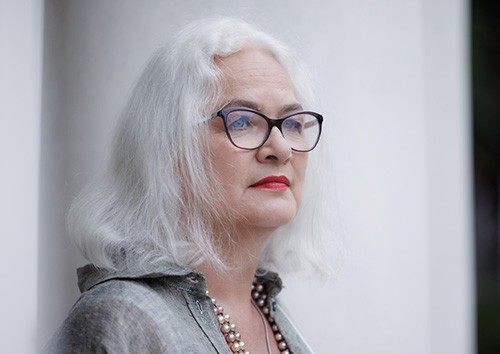 18.11.2026
Piano Extravaganza Festival 2026 - Piano recital of Ewa Poblocka (Poland)
Works of Bach and Chopin.
In partnership with the Polish Institute.
In partnership with the Polish Institute.
Festivals
18.09.2026 - 22.11.2026
DECHKO UZUNOV/IVAN PENKOV – DIRECTIONS
Memory Programme
DECHKO UZUNOV/IVAN PENKOV – DIRECTIONS
Opening: September 18, 6:00 p.m.
The exhibition Dechko Uzunov/Ivan Penkov: Directions is part of the Memory Programme at the Dechko Uzunov Art Gallery, a branch of the Sofia City Art Gallery, which aims to contribute to raising awareness of the life and work of Dechko Uzunov by presenting research-based exhibitions that reveal different aspects of his oeuvre through artists who were part of his journey. This exhibition showcases the different paths taken by two fellow townsmen and friends during the interwar period.
In 1919, Ivan Penkov and Dechko Uzunov enrolled at the State School of Drawing; that same year, Uzunov painted a portrait of his friend that poked fun at his fascination with folk art. Three years later, the two organised a joint exhibition in Sofia to fund their studies at the Munich Art Academy. The young artists’ exhibition was noticed by Joseph Herbst, who wrote:
“Now, on the occasion of their departure abroad, the two artists had exhibited most of their works, from which their strong talents could be seen quite well. Dechko Uzunov promises to develop most in portrait painting. [...] Ivan Penkov is primarily a decorator with a strong sense of composition and a keen sensitivity to line” (J.H., Razvigor, April 1, 1922, no. 60, p. 4).
In an ironic twist of fate, the older of the two, Penkov, would go on to graduate from the Academy of Art under Prof. Uzunov. In 1939, with Uzonov’s active support, Ivan Penkov won the competition for a permanent teaching position in decorative art.
The selected works invite us to seek similarities amidst the differences between these two constantly experimenting artists during the period when Bulgarian visual arts were coming of age.
Presented in this exhibition are pieces from the collections of the Sofia City Art Gallery, the Dechko Uzunov Art Gallery, the Kazanlak Art Gallery, the Central State Archives, and private collections.
The exhibition also features the film Ivan Penkov: The Crossed-Out Classic (Bulgarian National Television, 2006), by screenwriter: Oskar Kristanov; cinematographer: Yaroslav Yachev; directors: Oskar Kristanov and Kosta Bikov; sound engineer: Petar Yosifov; music arrangement: Georgi (Johnny) Penkov. Duration: 48 min.
DECHKO UZUNOV/IVAN PENKOV – DIRECTIONS
Opening: September 18, 6:00 p.m.
The exhibition Dechko Uzunov/Ivan Penkov: Directions is part of the Memory Programme at the Dechko Uzunov Art Gallery, a branch of the Sofia City Art Gallery, which aims to contribute to raising awareness of the life and work of Dechko Uzunov by presenting research-based exhibitions that reveal different aspects of his oeuvre through artists who were part of his journey. This exhibition showcases the different paths taken by two fellow townsmen and friends during the interwar period.
In 1919, Ivan Penkov and Dechko Uzunov enrolled at the State School of Drawing; that same year, Uzunov painted a portrait of his friend that poked fun at his fascination with folk art. Three years later, the two organised a joint exhibition in Sofia to fund their studies at the Munich Art Academy. The young artists’ exhibition was noticed by Joseph Herbst, who wrote:
“Now, on the occasion of their departure abroad, the two artists had exhibited most of their works, from which their strong talents could be seen quite well. Dechko Uzunov promises to develop most in portrait painting. [...] Ivan Penkov is primarily a decorator with a strong sense of composition and a keen sensitivity to line” (J.H., Razvigor, April 1, 1922, no. 60, p. 4).
In an ironic twist of fate, the older of the two, Penkov, would go on to graduate from the Academy of Art under Prof. Uzunov. In 1939, with Uzonov’s active support, Ivan Penkov won the competition for a permanent teaching position in decorative art.
The selected works invite us to seek similarities amidst the differences between these two constantly experimenting artists during the period when Bulgarian visual arts were coming of age.
Presented in this exhibition are pieces from the collections of the Sofia City Art Gallery, the Dechko Uzunov Art Gallery, the Kazanlak Art Gallery, the Central State Archives, and private collections.
The exhibition also features the film Ivan Penkov: The Crossed-Out Classic (Bulgarian National Television, 2006), by screenwriter: Oskar Kristanov; cinematographer: Yaroslav Yachev; directors: Oskar Kristanov and Kosta Bikov; sound engineer: Petar Yosifov; music arrangement: Georgi (Johnny) Penkov. Duration: 48 min.
Exhibitions
16.06.2026 - 16.06.2027
Temporary Exhibition New Acquisitions
from 10:00 to 18:00 o'clock
Entrance with museum tickets
Entrance with museum tickets
Exhibitions
12.02.2026 - 31.12.2026
Temporary exhibition "Copper - Ancient and Modern"
from 10:00 to 18:00 o'clock
Entrance with museum tickets.
Entrance with museum tickets.
Exhibitions
11.04.2025 - 31.12.2026
Temporary exhibition "Minerals and Colorful Creatures. Drawings by Nature"
The Minerals of Bulgaria exposition has been expanded with a new theme: Unique mineral finds from Bulgaria, a project financed by the Ministry of culture. In 6 display cases, minerals with the most beautiful crystals, rare colors and shapes are exhibited, selected for tens of years by hundreds of geologists and collectors from all over Bulgaria.
from 10:00 to 18:00 o'clock
Entrance with museum tickets
from 10:00 to 18:00 o'clock
Entrance with museum tickets
Exhibitions
01.04.2026 - 31.12.2026
Temporary exhibition "Natural Art from Chalcedony"
from 10:00 to 18:00 o'clock
Entrance with museum tickets.
Entrance with museum tickets.
Exhibitions
01.01.2023 - 31.12.2026
Temporary exhibition "Smart Minerals for Smartphones"
from 10:00 to 18:00 o'clock
Entrance with museum tickets.
Entrance with museum tickets.
Exhibitions
10.12.2025 - 30.01.2027
Zahari Zograph Immersive Exhibition
The National Gallery presents one of the most iconic figures in the history of Bulgarian art – Zahari Zograph. This first immersive exhibition introduces a new way of experiencing the masterpieces of the the museum’s collection. Harnessing new technologies, the 20-minute project, created by Senzor Studio, brings his religious and secular masterpieces to life, revealing essential elements of his creative process.
The initiative promotes Bulgarian Revival аrt, a period characterized by economic, social, and cultural growth, closely tied to the pursuit of ecclesiastical and national independence. The period traces its origins to the mid-18th century, when Paisius of Hilendar wrote Istoriya Slavyanobulgarskaya (History of the Slavs and Bulgarians) in 1762—which profoundly shaped the spiritual awakening of the population and contributed significantly to the development of national consciousness…
The exhibition features a selection of icons, drawings, copies, letters, documents, and secular portraits from the artist’s early period. It also showcases a substantive collection of murals, ranging from his earliest works—created in 1838 for the Chapel of St John the Baptist at the Church of the Holy Virgin—Annunciation in Asenovgrad—to what is considered as his “final masterpiece,” the murals adorning the narthex of the Great Lavra Monastery on Mount Athos, completed between 1851 and 1852.
Zahari Zograph emerged as a defining figure of Bulgarian Revival art. His relentlessly inquisitive artistic spirit was ahead of its era, and his extensive body of work reflects the vitality of the approaching modern age, the artistry of traditional imagery, the strength of line, and the emotive power of color.
The project is realised with the financial support of the National Culture Fund of Bulgaria under the Creation programme 2024.
Media partners: BTA / Bulgarian News Agency and SOF Connect.
The initiative promotes Bulgarian Revival аrt, a period characterized by economic, social, and cultural growth, closely tied to the pursuit of ecclesiastical and national independence. The period traces its origins to the mid-18th century, when Paisius of Hilendar wrote Istoriya Slavyanobulgarskaya (History of the Slavs and Bulgarians) in 1762—which profoundly shaped the spiritual awakening of the population and contributed significantly to the development of national consciousness…
The exhibition features a selection of icons, drawings, copies, letters, documents, and secular portraits from the artist’s early period. It also showcases a substantive collection of murals, ranging from his earliest works—created in 1838 for the Chapel of St John the Baptist at the Church of the Holy Virgin—Annunciation in Asenovgrad—to what is considered as his “final masterpiece,” the murals adorning the narthex of the Great Lavra Monastery on Mount Athos, completed between 1851 and 1852.
Zahari Zograph emerged as a defining figure of Bulgarian Revival art. His relentlessly inquisitive artistic spirit was ahead of its era, and his extensive body of work reflects the vitality of the approaching modern age, the artistry of traditional imagery, the strength of line, and the emotive power of color.
The project is realised with the financial support of the National Culture Fund of Bulgaria under the Creation programme 2024.
Media partners: BTA / Bulgarian News Agency and SOF Connect.
Exhibitions
18.09.2026 - 22.11.2026
DECHKO UZUNOV/IVAN PENKOV – DIRECTIONS
Memory Programme
DECHKO UZUNOV/IVAN PENKOV – DIRECTIONS
Opening: September 18, 6:00 p.m.
The exhibition Dechko Uzunov/Ivan Penkov: Directions is part of the Memory Programme at the Dechko Uzunov Art Gallery, a branch of the Sofia City Art Gallery, which aims to contribute to raising awareness of the life and work of Dechko Uzunov by presenting research-based exhibitions that reveal different aspects of his oeuvre through artists who were part of his journey. This exhibition showcases the different paths taken by two fellow townsmen and friends during the interwar period.
In 1919, Ivan Penkov and Dechko Uzunov enrolled at the State School of Drawing; that same year, Uzunov painted a portrait of his friend that poked fun at his fascination with folk art. Three years later, the two organised a joint exhibition in Sofia to fund their studies at the Munich Art Academy. The young artists’ exhibition was noticed by Joseph Herbst, who wrote:
“Now, on the occasion of their departure abroad, the two artists had exhibited most of their works, from which their strong talents could be seen quite well. Dechko Uzunov promises to develop most in portrait painting. [...] Ivan Penkov is primarily a decorator with a strong sense of composition and a keen sensitivity to line” (J.H., Razvigor, April 1, 1922, no. 60, p. 4).
In an ironic twist of fate, the older of the two, Penkov, would go on to graduate from the Academy of Art under Prof. Uzunov. In 1939, with Uzonov’s active support, Ivan Penkov won the competition for a permanent teaching position in decorative art.
The selected works invite us to seek similarities amidst the differences between these two constantly experimenting artists during the period when Bulgarian visual arts were coming of age.
Presented in this exhibition are pieces from the collections of the Sofia City Art Gallery, the Dechko Uzunov Art Gallery, the Kazanlak Art Gallery, the Central State Archives, and private collections.
The exhibition also features the film Ivan Penkov: The Crossed-Out Classic (Bulgarian National Television, 2006), by screenwriter: Oskar Kristanov; cinematographer: Yaroslav Yachev; directors: Oskar Kristanov and Kosta Bikov; sound engineer: Petar Yosifov; music arrangement: Georgi (Johnny) Penkov. Duration: 48 min.
DECHKO UZUNOV/IVAN PENKOV – DIRECTIONS
Opening: September 18, 6:00 p.m.
The exhibition Dechko Uzunov/Ivan Penkov: Directions is part of the Memory Programme at the Dechko Uzunov Art Gallery, a branch of the Sofia City Art Gallery, which aims to contribute to raising awareness of the life and work of Dechko Uzunov by presenting research-based exhibitions that reveal different aspects of his oeuvre through artists who were part of his journey. This exhibition showcases the different paths taken by two fellow townsmen and friends during the interwar period.
In 1919, Ivan Penkov and Dechko Uzunov enrolled at the State School of Drawing; that same year, Uzunov painted a portrait of his friend that poked fun at his fascination with folk art. Three years later, the two organised a joint exhibition in Sofia to fund their studies at the Munich Art Academy. The young artists’ exhibition was noticed by Joseph Herbst, who wrote:
“Now, on the occasion of their departure abroad, the two artists had exhibited most of their works, from which their strong talents could be seen quite well. Dechko Uzunov promises to develop most in portrait painting. [...] Ivan Penkov is primarily a decorator with a strong sense of composition and a keen sensitivity to line” (J.H., Razvigor, April 1, 1922, no. 60, p. 4).
In an ironic twist of fate, the older of the two, Penkov, would go on to graduate from the Academy of Art under Prof. Uzunov. In 1939, with Uzonov’s active support, Ivan Penkov won the competition for a permanent teaching position in decorative art.
The selected works invite us to seek similarities amidst the differences between these two constantly experimenting artists during the period when Bulgarian visual arts were coming of age.
Presented in this exhibition are pieces from the collections of the Sofia City Art Gallery, the Dechko Uzunov Art Gallery, the Kazanlak Art Gallery, the Central State Archives, and private collections.
The exhibition also features the film Ivan Penkov: The Crossed-Out Classic (Bulgarian National Television, 2006), by screenwriter: Oskar Kristanov; cinematographer: Yaroslav Yachev; directors: Oskar Kristanov and Kosta Bikov; sound engineer: Petar Yosifov; music arrangement: Georgi (Johnny) Penkov. Duration: 48 min.
Exhibitions
16.06.2026 - 16.06.2027
Temporary Exhibition New Acquisitions
from 10:00 to 18:00 o'clock
Entrance with museum tickets
Entrance with museum tickets
Exhibitions
12.02.2026 - 31.12.2026
Temporary exhibition "Copper - Ancient and Modern"
from 10:00 to 18:00 o'clock
Entrance with museum tickets.
Entrance with museum tickets.
Exhibitions
11.04.2025 - 31.12.2026
Temporary exhibition "Minerals and Colorful Creatures. Drawings by Nature"
The Minerals of Bulgaria exposition has been expanded with a new theme: Unique mineral finds from Bulgaria, a project financed by the Ministry of culture. In 6 display cases, minerals with the most beautiful crystals, rare colors and shapes are exhibited, selected for tens of years by hundreds of geologists and collectors from all over Bulgaria.
from 10:00 to 18:00 o'clock
Entrance with museum tickets
from 10:00 to 18:00 o'clock
Entrance with museum tickets
Exhibitions
01.04.2026 - 31.12.2026
Temporary exhibition "Natural Art from Chalcedony"
from 10:00 to 18:00 o'clock
Entrance with museum tickets.
Entrance with museum tickets.
Exhibitions
01.01.2023 - 31.12.2026
Temporary exhibition "Smart Minerals for Smartphones"
from 10:00 to 18:00 o'clock
Entrance with museum tickets.
Entrance with museum tickets.
Exhibitions
10.12.2025 - 30.01.2027
Zahari Zograph Immersive Exhibition
The National Gallery presents one of the most iconic figures in the history of Bulgarian art – Zahari Zograph. This first immersive exhibition introduces a new way of experiencing the masterpieces of the the museum’s collection. Harnessing new technologies, the 20-minute project, created by Senzor Studio, brings his religious and secular masterpieces to life, revealing essential elements of his creative process.
The initiative promotes Bulgarian Revival аrt, a period characterized by economic, social, and cultural growth, closely tied to the pursuit of ecclesiastical and national independence. The period traces its origins to the mid-18th century, when Paisius of Hilendar wrote Istoriya Slavyanobulgarskaya (History of the Slavs and Bulgarians) in 1762—which profoundly shaped the spiritual awakening of the population and contributed significantly to the development of national consciousness…
The exhibition features a selection of icons, drawings, copies, letters, documents, and secular portraits from the artist’s early period. It also showcases a substantive collection of murals, ranging from his earliest works—created in 1838 for the Chapel of St John the Baptist at the Church of the Holy Virgin—Annunciation in Asenovgrad—to what is considered as his “final masterpiece,” the murals adorning the narthex of the Great Lavra Monastery on Mount Athos, completed between 1851 and 1852.
Zahari Zograph emerged as a defining figure of Bulgarian Revival art. His relentlessly inquisitive artistic spirit was ahead of its era, and his extensive body of work reflects the vitality of the approaching modern age, the artistry of traditional imagery, the strength of line, and the emotive power of color.
The project is realised with the financial support of the National Culture Fund of Bulgaria under the Creation programme 2024.
Media partners: BTA / Bulgarian News Agency and SOF Connect.
The initiative promotes Bulgarian Revival аrt, a period characterized by economic, social, and cultural growth, closely tied to the pursuit of ecclesiastical and national independence. The period traces its origins to the mid-18th century, when Paisius of Hilendar wrote Istoriya Slavyanobulgarskaya (History of the Slavs and Bulgarians) in 1762—which profoundly shaped the spiritual awakening of the population and contributed significantly to the development of national consciousness…
The exhibition features a selection of icons, drawings, copies, letters, documents, and secular portraits from the artist’s early period. It also showcases a substantive collection of murals, ranging from his earliest works—created in 1838 for the Chapel of St John the Baptist at the Church of the Holy Virgin—Annunciation in Asenovgrad—to what is considered as his “final masterpiece,” the murals adorning the narthex of the Great Lavra Monastery on Mount Athos, completed between 1851 and 1852.
Zahari Zograph emerged as a defining figure of Bulgarian Revival art. His relentlessly inquisitive artistic spirit was ahead of its era, and his extensive body of work reflects the vitality of the approaching modern age, the artistry of traditional imagery, the strength of line, and the emotive power of color.
The project is realised with the financial support of the National Culture Fund of Bulgaria under the Creation programme 2024.
Media partners: BTA / Bulgarian News Agency and SOF Connect.
Exhibitions
18.09.2026 - 22.11.2026
DECHKO UZUNOV/IVAN PENKOV – DIRECTIONS
Memory Programme
DECHKO UZUNOV/IVAN PENKOV – DIRECTIONS
Opening: September 18, 6:00 p.m.
The exhibition Dechko Uzunov/Ivan Penkov: Directions is part of the Memory Programme at the Dechko Uzunov Art Gallery, a branch of the Sofia City Art Gallery, which aims to contribute to raising awareness of the life and work of Dechko Uzunov by presenting research-based exhibitions that reveal different aspects of his oeuvre through artists who were part of his journey. This exhibition showcases the different paths taken by two fellow townsmen and friends during the interwar period.
In 1919, Ivan Penkov and Dechko Uzunov enrolled at the State School of Drawing; that same year, Uzunov painted a portrait of his friend that poked fun at his fascination with folk art. Three years later, the two organised a joint exhibition in Sofia to fund their studies at the Munich Art Academy. The young artists’ exhibition was noticed by Joseph Herbst, who wrote:
“Now, on the occasion of their departure abroad, the two artists had exhibited most of their works, from which their strong talents could be seen quite well. Dechko Uzunov promises to develop most in portrait painting. [...] Ivan Penkov is primarily a decorator with a strong sense of composition and a keen sensitivity to line” (J.H., Razvigor, April 1, 1922, no. 60, p. 4).
In an ironic twist of fate, the older of the two, Penkov, would go on to graduate from the Academy of Art under Prof. Uzunov. In 1939, with Uzonov’s active support, Ivan Penkov won the competition for a permanent teaching position in decorative art.
The selected works invite us to seek similarities amidst the differences between these two constantly experimenting artists during the period when Bulgarian visual arts were coming of age.
Presented in this exhibition are pieces from the collections of the Sofia City Art Gallery, the Dechko Uzunov Art Gallery, the Kazanlak Art Gallery, the Central State Archives, and private collections.
The exhibition also features the film Ivan Penkov: The Crossed-Out Classic (Bulgarian National Television, 2006), by screenwriter: Oskar Kristanov; cinematographer: Yaroslav Yachev; directors: Oskar Kristanov and Kosta Bikov; sound engineer: Petar Yosifov; music arrangement: Georgi (Johnny) Penkov. Duration: 48 min.
DECHKO UZUNOV/IVAN PENKOV – DIRECTIONS
Opening: September 18, 6:00 p.m.
The exhibition Dechko Uzunov/Ivan Penkov: Directions is part of the Memory Programme at the Dechko Uzunov Art Gallery, a branch of the Sofia City Art Gallery, which aims to contribute to raising awareness of the life and work of Dechko Uzunov by presenting research-based exhibitions that reveal different aspects of his oeuvre through artists who were part of his journey. This exhibition showcases the different paths taken by two fellow townsmen and friends during the interwar period.
In 1919, Ivan Penkov and Dechko Uzunov enrolled at the State School of Drawing; that same year, Uzunov painted a portrait of his friend that poked fun at his fascination with folk art. Three years later, the two organised a joint exhibition in Sofia to fund their studies at the Munich Art Academy. The young artists’ exhibition was noticed by Joseph Herbst, who wrote:
“Now, on the occasion of their departure abroad, the two artists had exhibited most of their works, from which their strong talents could be seen quite well. Dechko Uzunov promises to develop most in portrait painting. [...] Ivan Penkov is primarily a decorator with a strong sense of composition and a keen sensitivity to line” (J.H., Razvigor, April 1, 1922, no. 60, p. 4).
In an ironic twist of fate, the older of the two, Penkov, would go on to graduate from the Academy of Art under Prof. Uzunov. In 1939, with Uzonov’s active support, Ivan Penkov won the competition for a permanent teaching position in decorative art.
The selected works invite us to seek similarities amidst the differences between these two constantly experimenting artists during the period when Bulgarian visual arts were coming of age.
Presented in this exhibition are pieces from the collections of the Sofia City Art Gallery, the Dechko Uzunov Art Gallery, the Kazanlak Art Gallery, the Central State Archives, and private collections.
The exhibition also features the film Ivan Penkov: The Crossed-Out Classic (Bulgarian National Television, 2006), by screenwriter: Oskar Kristanov; cinematographer: Yaroslav Yachev; directors: Oskar Kristanov and Kosta Bikov; sound engineer: Petar Yosifov; music arrangement: Georgi (Johnny) Penkov. Duration: 48 min.
Exhibitions
16.06.2026 - 16.06.2027
Temporary Exhibition New Acquisitions
from 10:00 to 18:00 o'clock
Entrance with museum tickets
Entrance with museum tickets
Exhibitions
12.02.2026 - 31.12.2026
Temporary exhibition "Copper - Ancient and Modern"
from 10:00 to 18:00 o'clock
Entrance with museum tickets.
Entrance with museum tickets.
Exhibitions
11.04.2025 - 31.12.2026
Temporary exhibition "Minerals and Colorful Creatures. Drawings by Nature"
The Minerals of Bulgaria exposition has been expanded with a new theme: Unique mineral finds from Bulgaria, a project financed by the Ministry of culture. In 6 display cases, minerals with the most beautiful crystals, rare colors and shapes are exhibited, selected for tens of years by hundreds of geologists and collectors from all over Bulgaria.
from 10:00 to 18:00 o'clock
Entrance with museum tickets
from 10:00 to 18:00 o'clock
Entrance with museum tickets
Exhibitions
01.04.2026 - 31.12.2026
Temporary exhibition "Natural Art from Chalcedony"
from 10:00 to 18:00 o'clock
Entrance with museum tickets.
Entrance with museum tickets.
Exhibitions
01.01.2023 - 31.12.2026
Temporary exhibition "Smart Minerals for Smartphones"
from 10:00 to 18:00 o'clock
Entrance with museum tickets.
Entrance with museum tickets.
Exhibitions
10.12.2025 - 30.01.2027
Zahari Zograph Immersive Exhibition
The National Gallery presents one of the most iconic figures in the history of Bulgarian art – Zahari Zograph. This first immersive exhibition introduces a new way of experiencing the masterpieces of the the museum’s collection. Harnessing new technologies, the 20-minute project, created by Senzor Studio, brings his religious and secular masterpieces to life, revealing essential elements of his creative process.
The initiative promotes Bulgarian Revival аrt, a period characterized by economic, social, and cultural growth, closely tied to the pursuit of ecclesiastical and national independence. The period traces its origins to the mid-18th century, when Paisius of Hilendar wrote Istoriya Slavyanobulgarskaya (History of the Slavs and Bulgarians) in 1762—which profoundly shaped the spiritual awakening of the population and contributed significantly to the development of national consciousness…
The exhibition features a selection of icons, drawings, copies, letters, documents, and secular portraits from the artist’s early period. It also showcases a substantive collection of murals, ranging from his earliest works—created in 1838 for the Chapel of St John the Baptist at the Church of the Holy Virgin—Annunciation in Asenovgrad—to what is considered as his “final masterpiece,” the murals adorning the narthex of the Great Lavra Monastery on Mount Athos, completed between 1851 and 1852.
Zahari Zograph emerged as a defining figure of Bulgarian Revival art. His relentlessly inquisitive artistic spirit was ahead of its era, and his extensive body of work reflects the vitality of the approaching modern age, the artistry of traditional imagery, the strength of line, and the emotive power of color.
The project is realised with the financial support of the National Culture Fund of Bulgaria under the Creation programme 2024.
Media partners: BTA / Bulgarian News Agency and SOF Connect.
The initiative promotes Bulgarian Revival аrt, a period characterized by economic, social, and cultural growth, closely tied to the pursuit of ecclesiastical and national independence. The period traces its origins to the mid-18th century, when Paisius of Hilendar wrote Istoriya Slavyanobulgarskaya (History of the Slavs and Bulgarians) in 1762—which profoundly shaped the spiritual awakening of the population and contributed significantly to the development of national consciousness…
The exhibition features a selection of icons, drawings, copies, letters, documents, and secular portraits from the artist’s early period. It also showcases a substantive collection of murals, ranging from his earliest works—created in 1838 for the Chapel of St John the Baptist at the Church of the Holy Virgin—Annunciation in Asenovgrad—to what is considered as his “final masterpiece,” the murals adorning the narthex of the Great Lavra Monastery on Mount Athos, completed between 1851 and 1852.
Zahari Zograph emerged as a defining figure of Bulgarian Revival art. His relentlessly inquisitive artistic spirit was ahead of its era, and his extensive body of work reflects the vitality of the approaching modern age, the artistry of traditional imagery, the strength of line, and the emotive power of color.
The project is realised with the financial support of the National Culture Fund of Bulgaria under the Creation programme 2024.
Media partners: BTA / Bulgarian News Agency and SOF Connect.
Exhibitions
18.09.2026 - 22.11.2026
DECHKO UZUNOV/IVAN PENKOV – DIRECTIONS
Memory Programme
DECHKO UZUNOV/IVAN PENKOV – DIRECTIONS
Opening: September 18, 6:00 p.m.
The exhibition Dechko Uzunov/Ivan Penkov: Directions is part of the Memory Programme at the Dechko Uzunov Art Gallery, a branch of the Sofia City Art Gallery, which aims to contribute to raising awareness of the life and work of Dechko Uzunov by presenting research-based exhibitions that reveal different aspects of his oeuvre through artists who were part of his journey. This exhibition showcases the different paths taken by two fellow townsmen and friends during the interwar period.
In 1919, Ivan Penkov and Dechko Uzunov enrolled at the State School of Drawing; that same year, Uzunov painted a portrait of his friend that poked fun at his fascination with folk art. Three years later, the two organised a joint exhibition in Sofia to fund their studies at the Munich Art Academy. The young artists’ exhibition was noticed by Joseph Herbst, who wrote:
“Now, on the occasion of their departure abroad, the two artists had exhibited most of their works, from which their strong talents could be seen quite well. Dechko Uzunov promises to develop most in portrait painting. [...] Ivan Penkov is primarily a decorator with a strong sense of composition and a keen sensitivity to line” (J.H., Razvigor, April 1, 1922, no. 60, p. 4).
In an ironic twist of fate, the older of the two, Penkov, would go on to graduate from the Academy of Art under Prof. Uzunov. In 1939, with Uzonov’s active support, Ivan Penkov won the competition for a permanent teaching position in decorative art.
The selected works invite us to seek similarities amidst the differences between these two constantly experimenting artists during the period when Bulgarian visual arts were coming of age.
Presented in this exhibition are pieces from the collections of the Sofia City Art Gallery, the Dechko Uzunov Art Gallery, the Kazanlak Art Gallery, the Central State Archives, and private collections.
The exhibition also features the film Ivan Penkov: The Crossed-Out Classic (Bulgarian National Television, 2006), by screenwriter: Oskar Kristanov; cinematographer: Yaroslav Yachev; directors: Oskar Kristanov and Kosta Bikov; sound engineer: Petar Yosifov; music arrangement: Georgi (Johnny) Penkov. Duration: 48 min.
DECHKO UZUNOV/IVAN PENKOV – DIRECTIONS
Opening: September 18, 6:00 p.m.
The exhibition Dechko Uzunov/Ivan Penkov: Directions is part of the Memory Programme at the Dechko Uzunov Art Gallery, a branch of the Sofia City Art Gallery, which aims to contribute to raising awareness of the life and work of Dechko Uzunov by presenting research-based exhibitions that reveal different aspects of his oeuvre through artists who were part of his journey. This exhibition showcases the different paths taken by two fellow townsmen and friends during the interwar period.
In 1919, Ivan Penkov and Dechko Uzunov enrolled at the State School of Drawing; that same year, Uzunov painted a portrait of his friend that poked fun at his fascination with folk art. Three years later, the two organised a joint exhibition in Sofia to fund their studies at the Munich Art Academy. The young artists’ exhibition was noticed by Joseph Herbst, who wrote:
“Now, on the occasion of their departure abroad, the two artists had exhibited most of their works, from which their strong talents could be seen quite well. Dechko Uzunov promises to develop most in portrait painting. [...] Ivan Penkov is primarily a decorator with a strong sense of composition and a keen sensitivity to line” (J.H., Razvigor, April 1, 1922, no. 60, p. 4).
In an ironic twist of fate, the older of the two, Penkov, would go on to graduate from the Academy of Art under Prof. Uzunov. In 1939, with Uzonov’s active support, Ivan Penkov won the competition for a permanent teaching position in decorative art.
The selected works invite us to seek similarities amidst the differences between these two constantly experimenting artists during the period when Bulgarian visual arts were coming of age.
Presented in this exhibition are pieces from the collections of the Sofia City Art Gallery, the Dechko Uzunov Art Gallery, the Kazanlak Art Gallery, the Central State Archives, and private collections.
The exhibition also features the film Ivan Penkov: The Crossed-Out Classic (Bulgarian National Television, 2006), by screenwriter: Oskar Kristanov; cinematographer: Yaroslav Yachev; directors: Oskar Kristanov and Kosta Bikov; sound engineer: Petar Yosifov; music arrangement: Georgi (Johnny) Penkov. Duration: 48 min.
Exhibitions
16.06.2026 - 16.06.2027
Temporary Exhibition New Acquisitions
from 10:00 to 18:00 o'clock
Entrance with museum tickets
Entrance with museum tickets
Exhibitions
12.02.2026 - 31.12.2026
Temporary exhibition "Copper - Ancient and Modern"
from 10:00 to 18:00 o'clock
Entrance with museum tickets.
Entrance with museum tickets.
Exhibitions
11.04.2025 - 31.12.2026
Temporary exhibition "Minerals and Colorful Creatures. Drawings by Nature"
The Minerals of Bulgaria exposition has been expanded with a new theme: Unique mineral finds from Bulgaria, a project financed by the Ministry of culture. In 6 display cases, minerals with the most beautiful crystals, rare colors and shapes are exhibited, selected for tens of years by hundreds of geologists and collectors from all over Bulgaria.
from 10:00 to 18:00 o'clock
Entrance with museum tickets
from 10:00 to 18:00 o'clock
Entrance with museum tickets
Exhibitions
01.04.2026 - 31.12.2026
Temporary exhibition "Natural Art from Chalcedony"
from 10:00 to 18:00 o'clock
Entrance with museum tickets.
Entrance with museum tickets.
Exhibitions
01.01.2023 - 31.12.2026
Temporary exhibition "Smart Minerals for Smartphones"
from 10:00 to 18:00 o'clock
Entrance with museum tickets.
Entrance with museum tickets.
Exhibitions
10.12.2025 - 30.01.2027
Zahari Zograph Immersive Exhibition
The National Gallery presents one of the most iconic figures in the history of Bulgarian art – Zahari Zograph. This first immersive exhibition introduces a new way of experiencing the masterpieces of the the museum’s collection. Harnessing new technologies, the 20-minute project, created by Senzor Studio, brings his religious and secular masterpieces to life, revealing essential elements of his creative process.
The initiative promotes Bulgarian Revival аrt, a period characterized by economic, social, and cultural growth, closely tied to the pursuit of ecclesiastical and national independence. The period traces its origins to the mid-18th century, when Paisius of Hilendar wrote Istoriya Slavyanobulgarskaya (History of the Slavs and Bulgarians) in 1762—which profoundly shaped the spiritual awakening of the population and contributed significantly to the development of national consciousness…
The exhibition features a selection of icons, drawings, copies, letters, documents, and secular portraits from the artist’s early period. It also showcases a substantive collection of murals, ranging from his earliest works—created in 1838 for the Chapel of St John the Baptist at the Church of the Holy Virgin—Annunciation in Asenovgrad—to what is considered as his “final masterpiece,” the murals adorning the narthex of the Great Lavra Monastery on Mount Athos, completed between 1851 and 1852.
Zahari Zograph emerged as a defining figure of Bulgarian Revival art. His relentlessly inquisitive artistic spirit was ahead of its era, and his extensive body of work reflects the vitality of the approaching modern age, the artistry of traditional imagery, the strength of line, and the emotive power of color.
The project is realised with the financial support of the National Culture Fund of Bulgaria under the Creation programme 2024.
Media partners: BTA / Bulgarian News Agency and SOF Connect.
The initiative promotes Bulgarian Revival аrt, a period characterized by economic, social, and cultural growth, closely tied to the pursuit of ecclesiastical and national independence. The period traces its origins to the mid-18th century, when Paisius of Hilendar wrote Istoriya Slavyanobulgarskaya (History of the Slavs and Bulgarians) in 1762—which profoundly shaped the spiritual awakening of the population and contributed significantly to the development of national consciousness…
The exhibition features a selection of icons, drawings, copies, letters, documents, and secular portraits from the artist’s early period. It also showcases a substantive collection of murals, ranging from his earliest works—created in 1838 for the Chapel of St John the Baptist at the Church of the Holy Virgin—Annunciation in Asenovgrad—to what is considered as his “final masterpiece,” the murals adorning the narthex of the Great Lavra Monastery on Mount Athos, completed between 1851 and 1852.
Zahari Zograph emerged as a defining figure of Bulgarian Revival art. His relentlessly inquisitive artistic spirit was ahead of its era, and his extensive body of work reflects the vitality of the approaching modern age, the artistry of traditional imagery, the strength of line, and the emotive power of color.
The project is realised with the financial support of the National Culture Fund of Bulgaria under the Creation programme 2024.
Media partners: BTA / Bulgarian News Agency and SOF Connect.
Exhibitions
16.06.2026 - 16.06.2027
Temporary Exhibition New Acquisitions
from 10:00 to 18:00 o'clock
Entrance with museum tickets
Entrance with museum tickets
Exhibitions
12.02.2026 - 31.12.2026
Temporary exhibition "Copper - Ancient and Modern"
from 10:00 to 18:00 o'clock
Entrance with museum tickets.
Entrance with museum tickets.
Exhibitions
11.04.2025 - 31.12.2026
Temporary exhibition "Minerals and Colorful Creatures. Drawings by Nature"
The Minerals of Bulgaria exposition has been expanded with a new theme: Unique mineral finds from Bulgaria, a project financed by the Ministry of culture. In 6 display cases, minerals with the most beautiful crystals, rare colors and shapes are exhibited, selected for tens of years by hundreds of geologists and collectors from all over Bulgaria.
from 10:00 to 18:00 o'clock
Entrance with museum tickets
from 10:00 to 18:00 o'clock
Entrance with museum tickets
Exhibitions
01.04.2026 - 31.12.2026
Temporary exhibition "Natural Art from Chalcedony"
from 10:00 to 18:00 o'clock
Entrance with museum tickets.
Entrance with museum tickets.
Exhibitions
01.01.2023 - 31.12.2026
Temporary exhibition "Smart Minerals for Smartphones"
from 10:00 to 18:00 o'clock
Entrance with museum tickets.
Entrance with museum tickets.
Exhibitions
10.12.2025 - 30.01.2027
Zahari Zograph Immersive Exhibition
The National Gallery presents one of the most iconic figures in the history of Bulgarian art – Zahari Zograph. This first immersive exhibition introduces a new way of experiencing the masterpieces of the the museum’s collection. Harnessing new technologies, the 20-minute project, created by Senzor Studio, brings his religious and secular masterpieces to life, revealing essential elements of his creative process.
The initiative promotes Bulgarian Revival аrt, a period characterized by economic, social, and cultural growth, closely tied to the pursuit of ecclesiastical and national independence. The period traces its origins to the mid-18th century, when Paisius of Hilendar wrote Istoriya Slavyanobulgarskaya (History of the Slavs and Bulgarians) in 1762—which profoundly shaped the spiritual awakening of the population and contributed significantly to the development of national consciousness…
The exhibition features a selection of icons, drawings, copies, letters, documents, and secular portraits from the artist’s early period. It also showcases a substantive collection of murals, ranging from his earliest works—created in 1838 for the Chapel of St John the Baptist at the Church of the Holy Virgin—Annunciation in Asenovgrad—to what is considered as his “final masterpiece,” the murals adorning the narthex of the Great Lavra Monastery on Mount Athos, completed between 1851 and 1852.
Zahari Zograph emerged as a defining figure of Bulgarian Revival art. His relentlessly inquisitive artistic spirit was ahead of its era, and his extensive body of work reflects the vitality of the approaching modern age, the artistry of traditional imagery, the strength of line, and the emotive power of color.
The project is realised with the financial support of the National Culture Fund of Bulgaria under the Creation programme 2024.
Media partners: BTA / Bulgarian News Agency and SOF Connect.
The initiative promotes Bulgarian Revival аrt, a period characterized by economic, social, and cultural growth, closely tied to the pursuit of ecclesiastical and national independence. The period traces its origins to the mid-18th century, when Paisius of Hilendar wrote Istoriya Slavyanobulgarskaya (History of the Slavs and Bulgarians) in 1762—which profoundly shaped the spiritual awakening of the population and contributed significantly to the development of national consciousness…
The exhibition features a selection of icons, drawings, copies, letters, documents, and secular portraits from the artist’s early period. It also showcases a substantive collection of murals, ranging from his earliest works—created in 1838 for the Chapel of St John the Baptist at the Church of the Holy Virgin—Annunciation in Asenovgrad—to what is considered as his “final masterpiece,” the murals adorning the narthex of the Great Lavra Monastery on Mount Athos, completed between 1851 and 1852.
Zahari Zograph emerged as a defining figure of Bulgarian Revival art. His relentlessly inquisitive artistic spirit was ahead of its era, and his extensive body of work reflects the vitality of the approaching modern age, the artistry of traditional imagery, the strength of line, and the emotive power of color.
The project is realised with the financial support of the National Culture Fund of Bulgaria under the Creation programme 2024.
Media partners: BTA / Bulgarian News Agency and SOF Connect.
Exhibitions
16.06.2026 - 16.06.2027
Temporary Exhibition New Acquisitions
from 10:00 to 18:00 o'clock
Entrance with museum tickets
Entrance with museum tickets
Exhibitions
12.02.2026 - 31.12.2026
Temporary exhibition "Copper - Ancient and Modern"
from 10:00 to 18:00 o'clock
Entrance with museum tickets.
Entrance with museum tickets.
Exhibitions
11.04.2025 - 31.12.2026
Temporary exhibition "Minerals and Colorful Creatures. Drawings by Nature"
The Minerals of Bulgaria exposition has been expanded with a new theme: Unique mineral finds from Bulgaria, a project financed by the Ministry of culture. In 6 display cases, minerals with the most beautiful crystals, rare colors and shapes are exhibited, selected for tens of years by hundreds of geologists and collectors from all over Bulgaria.
from 10:00 to 18:00 o'clock
Entrance with museum tickets
from 10:00 to 18:00 o'clock
Entrance with museum tickets
Exhibitions
01.04.2026 - 31.12.2026
Temporary exhibition "Natural Art from Chalcedony"
from 10:00 to 18:00 o'clock
Entrance with museum tickets.
Entrance with museum tickets.
Exhibitions
01.01.2023 - 31.12.2026
Temporary exhibition "Smart Minerals for Smartphones"
from 10:00 to 18:00 o'clock
Entrance with museum tickets.
Entrance with museum tickets.
Exhibitions
10.12.2025 - 30.01.2027
Zahari Zograph Immersive Exhibition
The National Gallery presents one of the most iconic figures in the history of Bulgarian art – Zahari Zograph. This first immersive exhibition introduces a new way of experiencing the masterpieces of the the museum’s collection. Harnessing new technologies, the 20-minute project, created by Senzor Studio, brings his religious and secular masterpieces to life, revealing essential elements of his creative process.
The initiative promotes Bulgarian Revival аrt, a period characterized by economic, social, and cultural growth, closely tied to the pursuit of ecclesiastical and national independence. The period traces its origins to the mid-18th century, when Paisius of Hilendar wrote Istoriya Slavyanobulgarskaya (History of the Slavs and Bulgarians) in 1762—which profoundly shaped the spiritual awakening of the population and contributed significantly to the development of national consciousness…
The exhibition features a selection of icons, drawings, copies, letters, documents, and secular portraits from the artist’s early period. It also showcases a substantive collection of murals, ranging from his earliest works—created in 1838 for the Chapel of St John the Baptist at the Church of the Holy Virgin—Annunciation in Asenovgrad—to what is considered as his “final masterpiece,” the murals adorning the narthex of the Great Lavra Monastery on Mount Athos, completed between 1851 and 1852.
Zahari Zograph emerged as a defining figure of Bulgarian Revival art. His relentlessly inquisitive artistic spirit was ahead of its era, and his extensive body of work reflects the vitality of the approaching modern age, the artistry of traditional imagery, the strength of line, and the emotive power of color.
The project is realised with the financial support of the National Culture Fund of Bulgaria under the Creation programme 2024.
Media partners: BTA / Bulgarian News Agency and SOF Connect.
The initiative promotes Bulgarian Revival аrt, a period characterized by economic, social, and cultural growth, closely tied to the pursuit of ecclesiastical and national independence. The period traces its origins to the mid-18th century, when Paisius of Hilendar wrote Istoriya Slavyanobulgarskaya (History of the Slavs and Bulgarians) in 1762—which profoundly shaped the spiritual awakening of the population and contributed significantly to the development of national consciousness…
The exhibition features a selection of icons, drawings, copies, letters, documents, and secular portraits from the artist’s early period. It also showcases a substantive collection of murals, ranging from his earliest works—created in 1838 for the Chapel of St John the Baptist at the Church of the Holy Virgin—Annunciation in Asenovgrad—to what is considered as his “final masterpiece,” the murals adorning the narthex of the Great Lavra Monastery on Mount Athos, completed between 1851 and 1852.
Zahari Zograph emerged as a defining figure of Bulgarian Revival art. His relentlessly inquisitive artistic spirit was ahead of its era, and his extensive body of work reflects the vitality of the approaching modern age, the artistry of traditional imagery, the strength of line, and the emotive power of color.
The project is realised with the financial support of the National Culture Fund of Bulgaria under the Creation programme 2024.
Media partners: BTA / Bulgarian News Agency and SOF Connect.
Exhibitions
 25.11.2026 - 26.11.2026
Balkan Entertainment and Gaming Expo (BEGE)
BEGE is among the leading events where industry professionals in the European region meet annually, including manufacturers and suppliers, land-based and online operators, affiliates, payment service providers, etc.
Business Events
16.06.2026 - 16.06.2027
Temporary Exhibition New Acquisitions
from 10:00 to 18:00 o'clock
Entrance with museum tickets
Entrance with museum tickets
Exhibitions
12.02.2026 - 31.12.2026
Temporary exhibition "Copper - Ancient and Modern"
from 10:00 to 18:00 o'clock
Entrance with museum tickets.
Entrance with museum tickets.
Exhibitions
11.04.2025 - 31.12.2026
Temporary exhibition "Minerals and Colorful Creatures. Drawings by Nature"
The Minerals of Bulgaria exposition has been expanded with a new theme: Unique mineral finds from Bulgaria, a project financed by the Ministry of culture. In 6 display cases, minerals with the most beautiful crystals, rare colors and shapes are exhibited, selected for tens of years by hundreds of geologists and collectors from all over Bulgaria.
from 10:00 to 18:00 o'clock
Entrance with museum tickets
from 10:00 to 18:00 o'clock
Entrance with museum tickets
Exhibitions
01.04.2026 - 31.12.2026
Temporary exhibition "Natural Art from Chalcedony"
from 10:00 to 18:00 o'clock
Entrance with museum tickets.
Entrance with museum tickets.
Exhibitions
01.01.2023 - 31.12.2026
Temporary exhibition "Smart Minerals for Smartphones"
from 10:00 to 18:00 o'clock
Entrance with museum tickets.
Entrance with museum tickets.
Exhibitions
10.12.2025 - 30.01.2027
Zahari Zograph Immersive Exhibition
The National Gallery presents one of the most iconic figures in the history of Bulgarian art – Zahari Zograph. This first immersive exhibition introduces a new way of experiencing the masterpieces of the the museum’s collection. Harnessing new technologies, the 20-minute project, created by Senzor Studio, brings his religious and secular masterpieces to life, revealing essential elements of his creative process.
The initiative promotes Bulgarian Revival аrt, a period characterized by economic, social, and cultural growth, closely tied to the pursuit of ecclesiastical and national independence. The period traces its origins to the mid-18th century, when Paisius of Hilendar wrote Istoriya Slavyanobulgarskaya (History of the Slavs and Bulgarians) in 1762—which profoundly shaped the spiritual awakening of the population and contributed significantly to the development of national consciousness…
The exhibition features a selection of icons, drawings, copies, letters, documents, and secular portraits from the artist’s early period. It also showcases a substantive collection of murals, ranging from his earliest works—created in 1838 for the Chapel of St John the Baptist at the Church of the Holy Virgin—Annunciation in Asenovgrad—to what is considered as his “final masterpiece,” the murals adorning the narthex of the Great Lavra Monastery on Mount Athos, completed between 1851 and 1852.
Zahari Zograph emerged as a defining figure of Bulgarian Revival art. His relentlessly inquisitive artistic spirit was ahead of its era, and his extensive body of work reflects the vitality of the approaching modern age, the artistry of traditional imagery, the strength of line, and the emotive power of color.
The project is realised with the financial support of the National Culture Fund of Bulgaria under the Creation programme 2024.
Media partners: BTA / Bulgarian News Agency and SOF Connect.
The initiative promotes Bulgarian Revival аrt, a period characterized by economic, social, and cultural growth, closely tied to the pursuit of ecclesiastical and national independence. The period traces its origins to the mid-18th century, when Paisius of Hilendar wrote Istoriya Slavyanobulgarskaya (History of the Slavs and Bulgarians) in 1762—which profoundly shaped the spiritual awakening of the population and contributed significantly to the development of national consciousness…
The exhibition features a selection of icons, drawings, copies, letters, documents, and secular portraits from the artist’s early period. It also showcases a substantive collection of murals, ranging from his earliest works—created in 1838 for the Chapel of St John the Baptist at the Church of the Holy Virgin—Annunciation in Asenovgrad—to what is considered as his “final masterpiece,” the murals adorning the narthex of the Great Lavra Monastery on Mount Athos, completed between 1851 and 1852.
Zahari Zograph emerged as a defining figure of Bulgarian Revival art. His relentlessly inquisitive artistic spirit was ahead of its era, and his extensive body of work reflects the vitality of the approaching modern age, the artistry of traditional imagery, the strength of line, and the emotive power of color.
The project is realised with the financial support of the National Culture Fund of Bulgaria under the Creation programme 2024.
Media partners: BTA / Bulgarian News Agency and SOF Connect.
Exhibitions
25.11.2026 - 26.11.2026
Balkan Entertainment and Gaming Expo (BEGE)
BEGE is among the leading events where industry professionals in the European region meet annually, including manufacturers and suppliers, land-based and online operators, affiliates, payment service providers, etc.
Business Events
16.06.2026 - 16.06.2027
Temporary Exhibition New Acquisitions
from 10:00 to 18:00 o'clock
Entrance with museum tickets
Entrance with museum tickets
Exhibitions
12.02.2026 - 31.12.2026
Temporary exhibition "Copper - Ancient and Modern"
from 10:00 to 18:00 o'clock
Entrance with museum tickets.
Entrance with museum tickets.
Exhibitions
11.04.2025 - 31.12.2026
Temporary exhibition "Minerals and Colorful Creatures. Drawings by Nature"
The Minerals of Bulgaria exposition has been expanded with a new theme: Unique mineral finds from Bulgaria, a project financed by the Ministry of culture. In 6 display cases, minerals with the most beautiful crystals, rare colors and shapes are exhibited, selected for tens of years by hundreds of geologists and collectors from all over Bulgaria.
from 10:00 to 18:00 o'clock
Entrance with museum tickets
from 10:00 to 18:00 o'clock
Entrance with museum tickets
Exhibitions
01.04.2026 - 31.12.2026
Temporary exhibition "Natural Art from Chalcedony"
from 10:00 to 18:00 o'clock
Entrance with museum tickets.
Entrance with museum tickets.
Exhibitions
01.01.2023 - 31.12.2026
Temporary exhibition "Smart Minerals for Smartphones"
from 10:00 to 18:00 o'clock
Entrance with museum tickets.
Entrance with museum tickets.
Exhibitions
10.12.2025 - 30.01.2027
Zahari Zograph Immersive Exhibition
The National Gallery presents one of the most iconic figures in the history of Bulgarian art – Zahari Zograph. This first immersive exhibition introduces a new way of experiencing the masterpieces of the the museum’s collection. Harnessing new technologies, the 20-minute project, created by Senzor Studio, brings his religious and secular masterpieces to life, revealing essential elements of his creative process.
The initiative promotes Bulgarian Revival аrt, a period characterized by economic, social, and cultural growth, closely tied to the pursuit of ecclesiastical and national independence. The period traces its origins to the mid-18th century, when Paisius of Hilendar wrote Istoriya Slavyanobulgarskaya (History of the Slavs and Bulgarians) in 1762—which profoundly shaped the spiritual awakening of the population and contributed significantly to the development of national consciousness…
The exhibition features a selection of icons, drawings, copies, letters, documents, and secular portraits from the artist’s early period. It also showcases a substantive collection of murals, ranging from his earliest works—created in 1838 for the Chapel of St John the Baptist at the Church of the Holy Virgin—Annunciation in Asenovgrad—to what is considered as his “final masterpiece,” the murals adorning the narthex of the Great Lavra Monastery on Mount Athos, completed between 1851 and 1852.
Zahari Zograph emerged as a defining figure of Bulgarian Revival art. His relentlessly inquisitive artistic spirit was ahead of its era, and his extensive body of work reflects the vitality of the approaching modern age, the artistry of traditional imagery, the strength of line, and the emotive power of color.
The project is realised with the financial support of the National Culture Fund of Bulgaria under the Creation programme 2024.
Media partners: BTA / Bulgarian News Agency and SOF Connect.
The initiative promotes Bulgarian Revival аrt, a period characterized by economic, social, and cultural growth, closely tied to the pursuit of ecclesiastical and national independence. The period traces its origins to the mid-18th century, when Paisius of Hilendar wrote Istoriya Slavyanobulgarskaya (History of the Slavs and Bulgarians) in 1762—which profoundly shaped the spiritual awakening of the population and contributed significantly to the development of national consciousness…
The exhibition features a selection of icons, drawings, copies, letters, documents, and secular portraits from the artist’s early period. It also showcases a substantive collection of murals, ranging from his earliest works—created in 1838 for the Chapel of St John the Baptist at the Church of the Holy Virgin—Annunciation in Asenovgrad—to what is considered as his “final masterpiece,” the murals adorning the narthex of the Great Lavra Monastery on Mount Athos, completed between 1851 and 1852.
Zahari Zograph emerged as a defining figure of Bulgarian Revival art. His relentlessly inquisitive artistic spirit was ahead of its era, and his extensive body of work reflects the vitality of the approaching modern age, the artistry of traditional imagery, the strength of line, and the emotive power of color.
The project is realised with the financial support of the National Culture Fund of Bulgaria under the Creation programme 2024.
Media partners: BTA / Bulgarian News Agency and SOF Connect.
Exhibitions
 16.06.2026 - 16.06.2027
Temporary Exhibition New Acquisitions
from 10:00 to 18:00 o'clock
Entrance with museum tickets
Entrance with museum tickets
Exhibitions
12.02.2026 - 31.12.2026
Temporary exhibition "Copper - Ancient and Modern"
from 10:00 to 18:00 o'clock
Entrance with museum tickets.
Entrance with museum tickets.
Exhibitions
11.04.2025 - 31.12.2026
Temporary exhibition "Minerals and Colorful Creatures. Drawings by Nature"
The Minerals of Bulgaria exposition has been expanded with a new theme: Unique mineral finds from Bulgaria, a project financed by the Ministry of culture. In 6 display cases, minerals with the most beautiful crystals, rare colors and shapes are exhibited, selected for tens of years by hundreds of geologists and collectors from all over Bulgaria.
from 10:00 to 18:00 o'clock
Entrance with museum tickets
from 10:00 to 18:00 o'clock
Entrance with museum tickets
Exhibitions
01.04.2026 - 31.12.2026
Temporary exhibition "Natural Art from Chalcedony"
from 10:00 to 18:00 o'clock
Entrance with museum tickets.
Entrance with museum tickets.
Exhibitions
01.01.2023 - 31.12.2026
Temporary exhibition "Smart Minerals for Smartphones"
from 10:00 to 18:00 o'clock
Entrance with museum tickets.
Entrance with museum tickets.
Exhibitions
10.12.2025 - 30.01.2027
Zahari Zograph Immersive Exhibition
The National Gallery presents one of the most iconic figures in the history of Bulgarian art – Zahari Zograph. This first immersive exhibition introduces a new way of experiencing the masterpieces of the the museum’s collection. Harnessing new technologies, the 20-minute project, created by Senzor Studio, brings his religious and secular masterpieces to life, revealing essential elements of his creative process.
The initiative promotes Bulgarian Revival аrt, a period characterized by economic, social, and cultural growth, closely tied to the pursuit of ecclesiastical and national independence. The period traces its origins to the mid-18th century, when Paisius of Hilendar wrote Istoriya Slavyanobulgarskaya (History of the Slavs and Bulgarians) in 1762—which profoundly shaped the spiritual awakening of the population and contributed significantly to the development of national consciousness…
The exhibition features a selection of icons, drawings, copies, letters, documents, and secular portraits from the artist’s early period. It also showcases a substantive collection of murals, ranging from his earliest works—created in 1838 for the Chapel of St John the Baptist at the Church of the Holy Virgin—Annunciation in Asenovgrad—to what is considered as his “final masterpiece,” the murals adorning the narthex of the Great Lavra Monastery on Mount Athos, completed between 1851 and 1852.
Zahari Zograph emerged as a defining figure of Bulgarian Revival art. His relentlessly inquisitive artistic spirit was ahead of its era, and his extensive body of work reflects the vitality of the approaching modern age, the artistry of traditional imagery, the strength of line, and the emotive power of color.
The project is realised with the financial support of the National Culture Fund of Bulgaria under the Creation programme 2024.
Media partners: BTA / Bulgarian News Agency and SOF Connect.
The initiative promotes Bulgarian Revival аrt, a period characterized by economic, social, and cultural growth, closely tied to the pursuit of ecclesiastical and national independence. The period traces its origins to the mid-18th century, when Paisius of Hilendar wrote Istoriya Slavyanobulgarskaya (History of the Slavs and Bulgarians) in 1762—which profoundly shaped the spiritual awakening of the population and contributed significantly to the development of national consciousness…
The exhibition features a selection of icons, drawings, copies, letters, documents, and secular portraits from the artist’s early period. It also showcases a substantive collection of murals, ranging from his earliest works—created in 1838 for the Chapel of St John the Baptist at the Church of the Holy Virgin—Annunciation in Asenovgrad—to what is considered as his “final masterpiece,” the murals adorning the narthex of the Great Lavra Monastery on Mount Athos, completed between 1851 and 1852.
Zahari Zograph emerged as a defining figure of Bulgarian Revival art. His relentlessly inquisitive artistic spirit was ahead of its era, and his extensive body of work reflects the vitality of the approaching modern age, the artistry of traditional imagery, the strength of line, and the emotive power of color.
The project is realised with the financial support of the National Culture Fund of Bulgaria under the Creation programme 2024.
Media partners: BTA / Bulgarian News Agency and SOF Connect.
Exhibitions
16.06.2026 - 16.06.2027
Temporary Exhibition New Acquisitions
from 10:00 to 18:00 o'clock
Entrance with museum tickets
Entrance with museum tickets
Exhibitions
12.02.2026 - 31.12.2026
Temporary exhibition "Copper - Ancient and Modern"
from 10:00 to 18:00 o'clock
Entrance with museum tickets.
Entrance with museum tickets.
Exhibitions
11.04.2025 - 31.12.2026
Temporary exhibition "Minerals and Colorful Creatures. Drawings by Nature"
The Minerals of Bulgaria exposition has been expanded with a new theme: Unique mineral finds from Bulgaria, a project financed by the Ministry of culture. In 6 display cases, minerals with the most beautiful crystals, rare colors and shapes are exhibited, selected for tens of years by hundreds of geologists and collectors from all over Bulgaria.
from 10:00 to 18:00 o'clock
Entrance with museum tickets
from 10:00 to 18:00 o'clock
Entrance with museum tickets
Exhibitions
01.04.2026 - 31.12.2026
Temporary exhibition "Natural Art from Chalcedony"
from 10:00 to 18:00 o'clock
Entrance with museum tickets.
Entrance with museum tickets.
Exhibitions
01.01.2023 - 31.12.2026
Temporary exhibition "Smart Minerals for Smartphones"
from 10:00 to 18:00 o'clock
Entrance with museum tickets.
Entrance with museum tickets.
Exhibitions
10.12.2025 - 30.01.2027
Zahari Zograph Immersive Exhibition
The National Gallery presents one of the most iconic figures in the history of Bulgarian art – Zahari Zograph. This first immersive exhibition introduces a new way of experiencing the masterpieces of the the museum’s collection. Harnessing new technologies, the 20-minute project, created by Senzor Studio, brings his religious and secular masterpieces to life, revealing essential elements of his creative process.
The initiative promotes Bulgarian Revival аrt, a period characterized by economic, social, and cultural growth, closely tied to the pursuit of ecclesiastical and national independence. The period traces its origins to the mid-18th century, when Paisius of Hilendar wrote Istoriya Slavyanobulgarskaya (History of the Slavs and Bulgarians) in 1762—which profoundly shaped the spiritual awakening of the population and contributed significantly to the development of national consciousness…
The exhibition features a selection of icons, drawings, copies, letters, documents, and secular portraits from the artist’s early period. It also showcases a substantive collection of murals, ranging from his earliest works—created in 1838 for the Chapel of St John the Baptist at the Church of the Holy Virgin—Annunciation in Asenovgrad—to what is considered as his “final masterpiece,” the murals adorning the narthex of the Great Lavra Monastery on Mount Athos, completed between 1851 and 1852.
Zahari Zograph emerged as a defining figure of Bulgarian Revival art. His relentlessly inquisitive artistic spirit was ahead of its era, and his extensive body of work reflects the vitality of the approaching modern age, the artistry of traditional imagery, the strength of line, and the emotive power of color.
The project is realised with the financial support of the National Culture Fund of Bulgaria under the Creation programme 2024.
Media partners: BTA / Bulgarian News Agency and SOF Connect.
The initiative promotes Bulgarian Revival аrt, a period characterized by economic, social, and cultural growth, closely tied to the pursuit of ecclesiastical and national independence. The period traces its origins to the mid-18th century, when Paisius of Hilendar wrote Istoriya Slavyanobulgarskaya (History of the Slavs and Bulgarians) in 1762—which profoundly shaped the spiritual awakening of the population and contributed significantly to the development of national consciousness…
The exhibition features a selection of icons, drawings, copies, letters, documents, and secular portraits from the artist’s early period. It also showcases a substantive collection of murals, ranging from his earliest works—created in 1838 for the Chapel of St John the Baptist at the Church of the Holy Virgin—Annunciation in Asenovgrad—to what is considered as his “final masterpiece,” the murals adorning the narthex of the Great Lavra Monastery on Mount Athos, completed between 1851 and 1852.
Zahari Zograph emerged as a defining figure of Bulgarian Revival art. His relentlessly inquisitive artistic spirit was ahead of its era, and his extensive body of work reflects the vitality of the approaching modern age, the artistry of traditional imagery, the strength of line, and the emotive power of color.
The project is realised with the financial support of the National Culture Fund of Bulgaria under the Creation programme 2024.
Media partners: BTA / Bulgarian News Agency and SOF Connect.
Exhibitions
16.06.2026 - 16.06.2027
Temporary Exhibition New Acquisitions
from 10:00 to 18:00 o'clock
Entrance with museum tickets
Entrance with museum tickets
Exhibitions
12.02.2026 - 31.12.2026
Temporary exhibition "Copper - Ancient and Modern"
from 10:00 to 18:00 o'clock
Entrance with museum tickets.
Entrance with museum tickets.
Exhibitions
11.04.2025 - 31.12.2026
Temporary exhibition "Minerals and Colorful Creatures. Drawings by Nature"
The Minerals of Bulgaria exposition has been expanded with a new theme: Unique mineral finds from Bulgaria, a project financed by the Ministry of culture. In 6 display cases, minerals with the most beautiful crystals, rare colors and shapes are exhibited, selected for tens of years by hundreds of geologists and collectors from all over Bulgaria.
from 10:00 to 18:00 o'clock
Entrance with museum tickets
from 10:00 to 18:00 o'clock
Entrance with museum tickets
Exhibitions
01.04.2026 - 31.12.2026
Temporary exhibition "Natural Art from Chalcedony"
from 10:00 to 18:00 o'clock
Entrance with museum tickets.
Entrance with museum tickets.
Exhibitions
01.01.2023 - 31.12.2026
Temporary exhibition "Smart Minerals for Smartphones"
from 10:00 to 18:00 o'clock
Entrance with museum tickets.
Entrance with museum tickets.
Exhibitions
10.12.2025 - 30.01.2027
Zahari Zograph Immersive Exhibition
The National Gallery presents one of the most iconic figures in the history of Bulgarian art – Zahari Zograph. This first immersive exhibition introduces a new way of experiencing the masterpieces of the the museum’s collection. Harnessing new technologies, the 20-minute project, created by Senzor Studio, brings his religious and secular masterpieces to life, revealing essential elements of his creative process.
The initiative promotes Bulgarian Revival аrt, a period characterized by economic, social, and cultural growth, closely tied to the pursuit of ecclesiastical and national independence. The period traces its origins to the mid-18th century, when Paisius of Hilendar wrote Istoriya Slavyanobulgarskaya (History of the Slavs and Bulgarians) in 1762—which profoundly shaped the spiritual awakening of the population and contributed significantly to the development of national consciousness…
The exhibition features a selection of icons, drawings, copies, letters, documents, and secular portraits from the artist’s early period. It also showcases a substantive collection of murals, ranging from his earliest works—created in 1838 for the Chapel of St John the Baptist at the Church of the Holy Virgin—Annunciation in Asenovgrad—to what is considered as his “final masterpiece,” the murals adorning the narthex of the Great Lavra Monastery on Mount Athos, completed between 1851 and 1852.
Zahari Zograph emerged as a defining figure of Bulgarian Revival art. His relentlessly inquisitive artistic spirit was ahead of its era, and his extensive body of work reflects the vitality of the approaching modern age, the artistry of traditional imagery, the strength of line, and the emotive power of color.
The project is realised with the financial support of the National Culture Fund of Bulgaria under the Creation programme 2024.
Media partners: BTA / Bulgarian News Agency and SOF Connect.
The initiative promotes Bulgarian Revival аrt, a period characterized by economic, social, and cultural growth, closely tied to the pursuit of ecclesiastical and national independence. The period traces its origins to the mid-18th century, when Paisius of Hilendar wrote Istoriya Slavyanobulgarskaya (History of the Slavs and Bulgarians) in 1762—which profoundly shaped the spiritual awakening of the population and contributed significantly to the development of national consciousness…
The exhibition features a selection of icons, drawings, copies, letters, documents, and secular portraits from the artist’s early period. It also showcases a substantive collection of murals, ranging from his earliest works—created in 1838 for the Chapel of St John the Baptist at the Church of the Holy Virgin—Annunciation in Asenovgrad—to what is considered as his “final masterpiece,” the murals adorning the narthex of the Great Lavra Monastery on Mount Athos, completed between 1851 and 1852.
Zahari Zograph emerged as a defining figure of Bulgarian Revival art. His relentlessly inquisitive artistic spirit was ahead of its era, and his extensive body of work reflects the vitality of the approaching modern age, the artistry of traditional imagery, the strength of line, and the emotive power of color.
The project is realised with the financial support of the National Culture Fund of Bulgaria under the Creation programme 2024.
Media partners: BTA / Bulgarian News Agency and SOF Connect.
Exhibitions
16.06.2026 - 16.06.2027
Temporary Exhibition New Acquisitions
from 10:00 to 18:00 o'clock
Entrance with museum tickets
Entrance with museum tickets
Exhibitions
12.02.2026 - 31.12.2026
Temporary exhibition "Copper - Ancient and Modern"
from 10:00 to 18:00 o'clock
Entrance with museum tickets.
Entrance with museum tickets.
Exhibitions
11.04.2025 - 31.12.2026
Temporary exhibition "Minerals and Colorful Creatures. Drawings by Nature"
The Minerals of Bulgaria exposition has been expanded with a new theme: Unique mineral finds from Bulgaria, a project financed by the Ministry of culture. In 6 display cases, minerals with the most beautiful crystals, rare colors and shapes are exhibited, selected for tens of years by hundreds of geologists and collectors from all over Bulgaria.
from 10:00 to 18:00 o'clock
Entrance with museum tickets
from 10:00 to 18:00 o'clock
Entrance with museum tickets
Exhibitions
01.04.2026 - 31.12.2026
Temporary exhibition "Natural Art from Chalcedony"
from 10:00 to 18:00 o'clock
Entrance with museum tickets.
Entrance with museum tickets.
Exhibitions
01.01.2023 - 31.12.2026
Temporary exhibition "Smart Minerals for Smartphones"
from 10:00 to 18:00 o'clock
Entrance with museum tickets.
Entrance with museum tickets.
Exhibitions
10.12.2025 - 30.01.2027
Zahari Zograph Immersive Exhibition
The National Gallery presents one of the most iconic figures in the history of Bulgarian art – Zahari Zograph. This first immersive exhibition introduces a new way of experiencing the masterpieces of the the museum’s collection. Harnessing new technologies, the 20-minute project, created by Senzor Studio, brings his religious and secular masterpieces to life, revealing essential elements of his creative process.
The initiative promotes Bulgarian Revival аrt, a period characterized by economic, social, and cultural growth, closely tied to the pursuit of ecclesiastical and national independence. The period traces its origins to the mid-18th century, when Paisius of Hilendar wrote Istoriya Slavyanobulgarskaya (History of the Slavs and Bulgarians) in 1762—which profoundly shaped the spiritual awakening of the population and contributed significantly to the development of national consciousness…
The exhibition features a selection of icons, drawings, copies, letters, documents, and secular portraits from the artist’s early period. It also showcases a substantive collection of murals, ranging from his earliest works—created in 1838 for the Chapel of St John the Baptist at the Church of the Holy Virgin—Annunciation in Asenovgrad—to what is considered as his “final masterpiece,” the murals adorning the narthex of the Great Lavra Monastery on Mount Athos, completed between 1851 and 1852.
Zahari Zograph emerged as a defining figure of Bulgarian Revival art. His relentlessly inquisitive artistic spirit was ahead of its era, and his extensive body of work reflects the vitality of the approaching modern age, the artistry of traditional imagery, the strength of line, and the emotive power of color.
The project is realised with the financial support of the National Culture Fund of Bulgaria under the Creation programme 2024.
Media partners: BTA / Bulgarian News Agency and SOF Connect.
The initiative promotes Bulgarian Revival аrt, a period characterized by economic, social, and cultural growth, closely tied to the pursuit of ecclesiastical and national independence. The period traces its origins to the mid-18th century, when Paisius of Hilendar wrote Istoriya Slavyanobulgarskaya (History of the Slavs and Bulgarians) in 1762—which profoundly shaped the spiritual awakening of the population and contributed significantly to the development of national consciousness…
The exhibition features a selection of icons, drawings, copies, letters, documents, and secular portraits from the artist’s early period. It also showcases a substantive collection of murals, ranging from his earliest works—created in 1838 for the Chapel of St John the Baptist at the Church of the Holy Virgin—Annunciation in Asenovgrad—to what is considered as his “final masterpiece,” the murals adorning the narthex of the Great Lavra Monastery on Mount Athos, completed between 1851 and 1852.
Zahari Zograph emerged as a defining figure of Bulgarian Revival art. His relentlessly inquisitive artistic spirit was ahead of its era, and his extensive body of work reflects the vitality of the approaching modern age, the artistry of traditional imagery, the strength of line, and the emotive power of color.
The project is realised with the financial support of the National Culture Fund of Bulgaria under the Creation programme 2024.
Media partners: BTA / Bulgarian News Agency and SOF Connect.
Exhibitions